
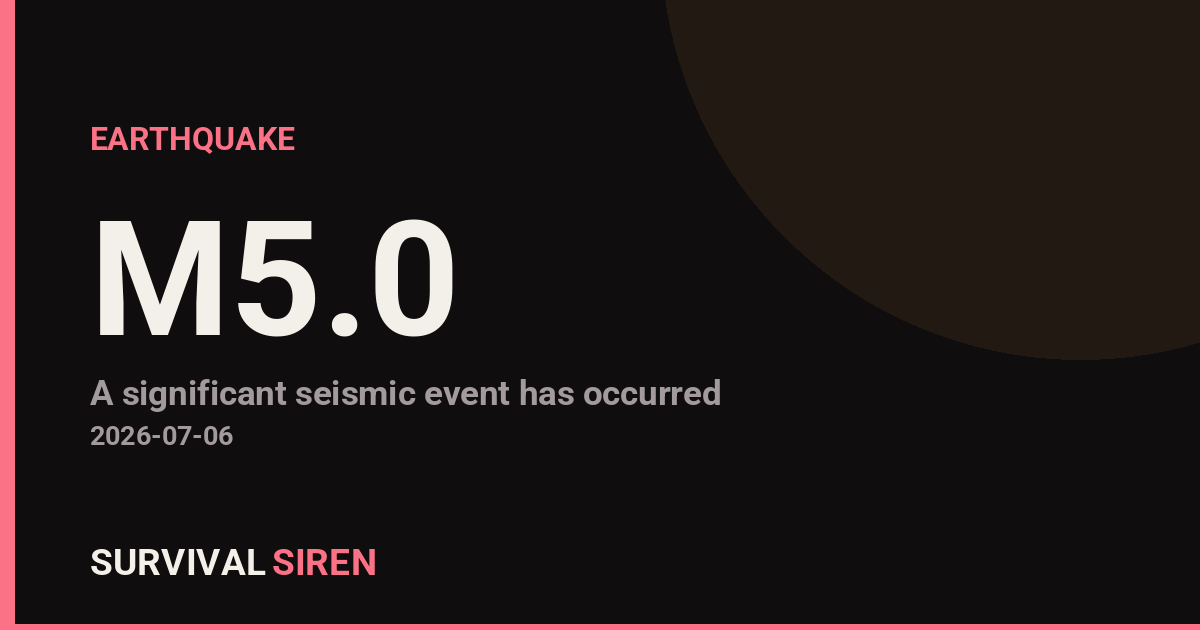
A magnitude 5.0 earthquake occurred approximately 106 kilometers northwest of Coquimbo, Chile at 10 km depth, according to the U.S. Geological Survey. This moderate-strength quake struck in a seismically active region of South America and would have produced noticeable shaking across the surrounding area.
Residents within roughly 100 km of the epicenter likely felt the ground movement. People in Coquimbo and nearby communities may have experienced moderate shaking strong enough to move objects on shelves or cause minor items to fall. The coastal location and relatively shallow 10 km depth meant energy was efficiently transmitted to the surface.
Who Is Affected
Coquimbo’s population of around 150,000 residents and those in adjacent towns were in the primary impact zone. While magnitude 5.0 earthquakes rarely cause widespread structural damage in well-built areas, older buildings or those in steep terrain can experience localized effects. No tsunami was generated from this event.
What to Watch:
1. Aftershock Activity — Monitor official USGS and Chilean seismic agency updates over the next 24-48 hours. Moderate quakes often produce smaller follow-up earthquakes. Keep emergency supplies accessible in case of additional disruptions.
2. Structural Assessment — If you live in the affected region, inspect your home and workplace for new cracks, shifted items, or damaged utilities. Document any changes with photos for insurance purposes.
3. Communication Readiness — Have battery-powered or hand-crank radios and fully charged phones available. Earthquakes can temporarily disrupt cell networks, so knowing alternate communication methods helps during the response phase.
If you felt this earthquake or live in Chile, report your experience to the USGS at earthquake.usgs.gov. Real-time data helps scientists better understand regional seismic patterns and refine future hazard assessments.
For live earthquake tracking and space weather monitoring, visit the SurvivalSiren dashboard at https://survivalsiren.com/spaceweather/feed.html.
Sky Conditions at the Time
Moon: Last Quarter (64% illuminated), in Pisces.
Notable planetary angles: Sun square Saturn (90°), Moon trine Jupiter (123°), Moon trine Mercury (116°).
This is a factual snapshot (timed to this post’s publish time, as an approximation), not a claim of cause and effect – researchers are divided on whether lunar, planetary or solar factors influence seismic or weather activity. It’s included so readers can track the pattern for themselves over time.