

Top 10 YouTube Videos on Building a DIY Water Filter Bucket
If you’d rather learn by watching than reading, this list is for you. We’ve pulled together the ten most-viewed YouTube videos on…
 News
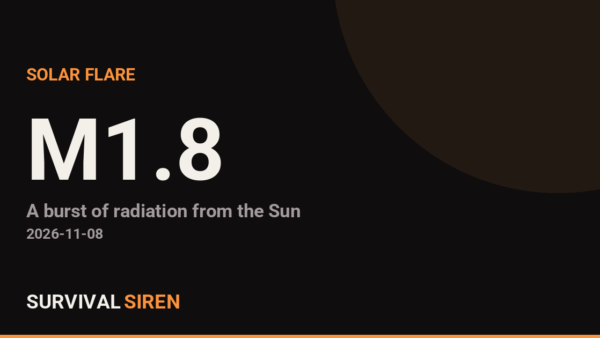
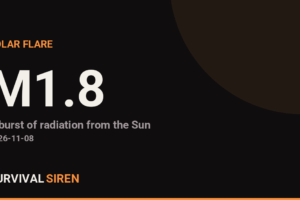
M1.8 Solar Flare Detected — Minor Radio Blackouts Possible on Earth’s Sunlit Side
 News
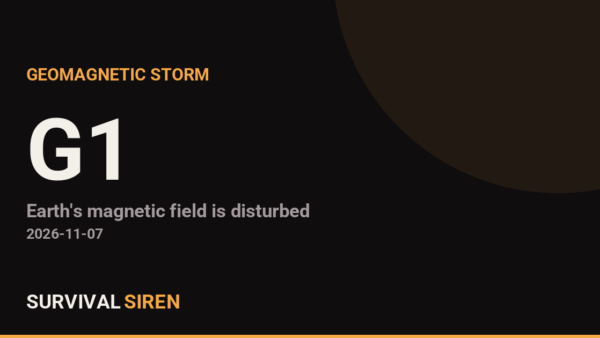
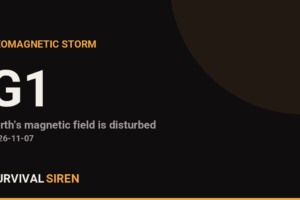
G1 (Minor) Geomagnetic Storm In Progress — Kp 5.3, Aurora Possible in Northern-Tier States
 News
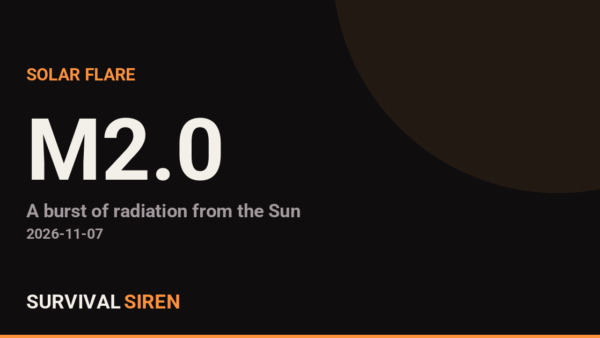
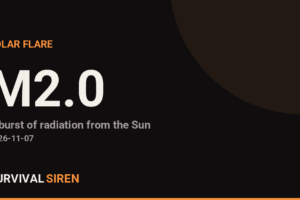
Moderate M2.0 Solar Flare Detected on the Sun – Brief Radio Effects Possible
 Video Guides
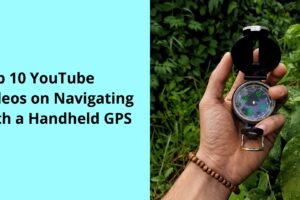
Top 10 YouTube Videos on Navigating with a Handheld GPS
If you’d rather learn by watching than reading, this list is for you. We’ve pulled together the ten most-viewed YouTube videos on…
Handheld GPS units are still one of the most reliable ways to find your way off-grid, and YouTube has no shortage of…
Here are the 10 most-watched YouTube videos on how to prepare for a hurricane, ranked by actual view count. This list is…
The figure four deadfall is one of the most-taught traps on YouTube, and the quality of instruction varies a lot. This list…
Home canning is one of the most useful preservation skills a prepper or gardener can pick up, and YouTube has no shortage…
Tarp shelters are one of those skills where watching someone actually do it beats reading about it, so we’ve rounded up the…
GOES satellites measured a M1.8-class solar flare peaking at 2026-11-08T07:46:00Z (X-ray flux 1.8e-5 W/m2, radio-blackout scale ~R1). Flares cause immediate shortwave radio blackouts on Earth's sunlit side. If this flare launched a CME toward Earth, a geomagnetic storm could follow in 1-3 days - worth watching the Kp index.
Planetary Kp index has reached 5.3, which is NOAA level G1 (Minor geomagnetic storm). Aurora likely at high latitudes (northern-tier US states, Scotland, Scandinavia, Canada). Possible impacts: minor power grid fluctuations, minor satellite operation impacts, migratory animals affected.
GOES satellites measured a M2.0-class solar flare peaking at 2026-11-07T18:42:00Z (X-ray flux 2.0e-5 W/m2, radio-blackout scale ~R1). Flares cause immediate shortwave radio blackouts on Earth's sunlit side. If this flare launched a CME toward Earth, a geomagnetic storm could follow in 1-3 days - worth watching the Kp index.
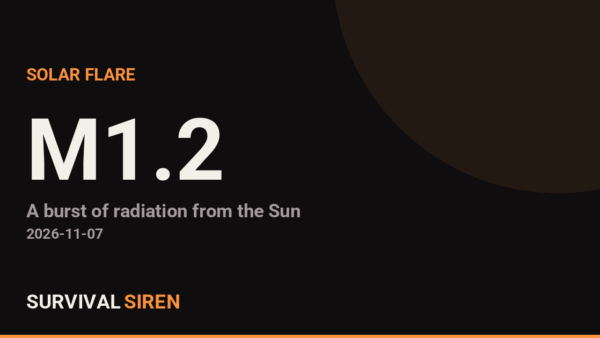
GOES satellites measured a M1.2-class solar flare peaking at 2026-11-07T12:41:00Z (X-ray flux 1.2e-5 W/m2, radio-blackout scale ~R1). Flares cause immediate shortwave radio blackouts on Earth's sunlit side. If this flare launched a CME toward Earth, a geomagnetic storm could follow in 1-3 days - worth watching the Kp index.
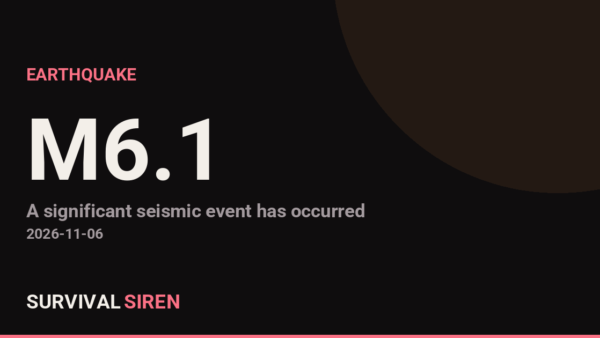
A magnitude 6.1 earthquake struck 156 km SE of Hasaki, Japan at a depth of about 10 km, reported by the USGS. Earthquakes of this size can cause significant damage to vulnerable structures near the epicenter. This is at least the 9th magnitude 5.0+ earthquake recorded within roughly 300 km of this location in the past year (8 others in that window). The nearest major population center is Tokyo, Japan, roughly 246 km away (population ~37.4 million).
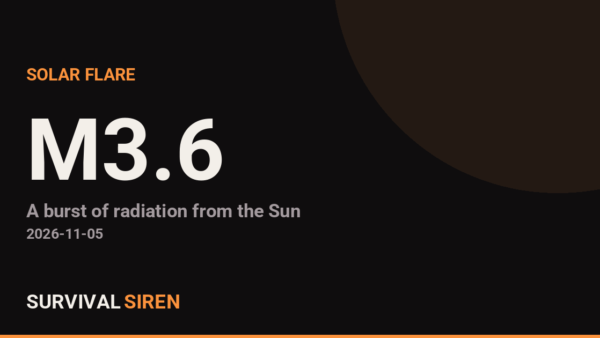
GOES satellites measured a M3.6-class solar flare peaking at 2026-11-05T18:33:00Z (X-ray flux 3.6e-5 W/m2, radio-blackout scale ~R1). Flares cause immediate shortwave radio blackouts on Earth's sunlit side. If this flare launched a CME toward Earth, a geomagnetic storm could follow in 1-3 days - worth watching the Kp index.
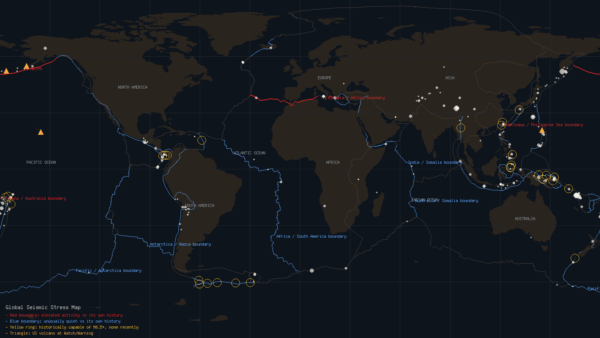
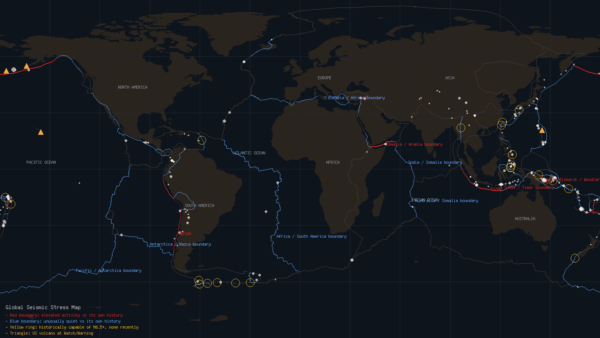
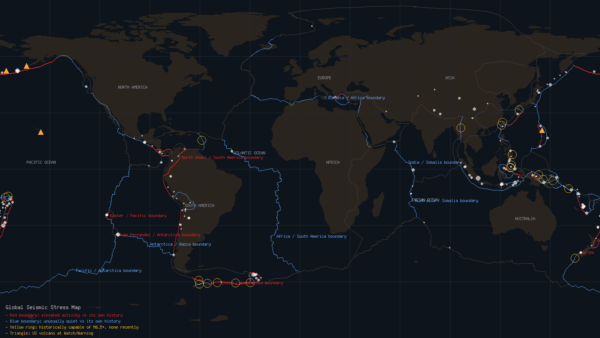
Every two weeks, we compare earthquake activity in major fault zones worldwide against each zone’s own long-term average. A zone that’s normally…
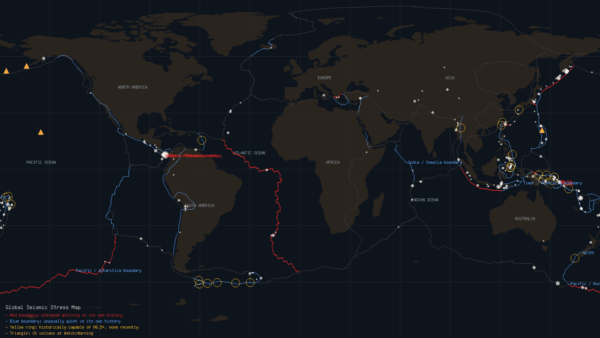
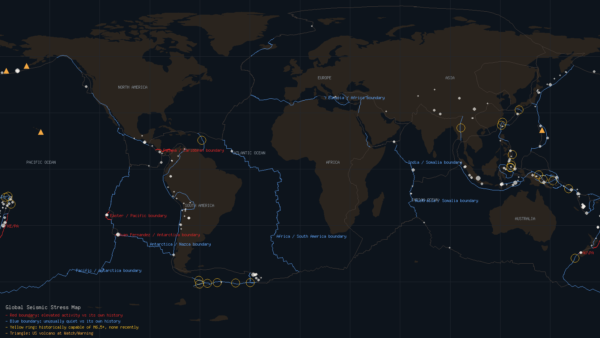
Every two weeks, we compare earthquake activity in major fault zones worldwide against each zone’s own long-term average. A zone that’s normally…
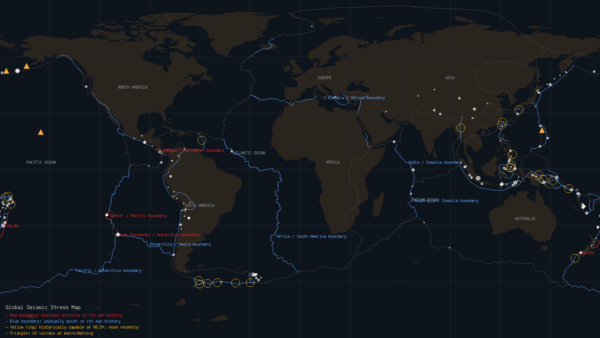
Every two weeks, we compare earthquake activity in major fault zones worldwide against each zone’s own long-term average. A zone that’s normally…
What We Found We looked at 200 earthquakes (magnitude 4.5 or bigger) recorded worldwide in the last 14 days, and compared activity…
What We Found We looked at 200 earthquakes (magnitude 4.5 or bigger) recorded worldwide in the last 14 days, and compared activity…
What We Found We looked at 198 earthquakes (magnitude 4.5 or bigger) recorded worldwide in the last 14 days, and compared activity…
Drop, Cover, and Hold On remains the science-backed protocol during a quake, but 2026's real story is how early warning systems and Cascadia research are reshaping what preparedness actually means.
Earthquakes are unpredictable and can be incredibly destructive. Moreover, as our sun moves into itssolar maximum phase, the earthquake frequency is going to increase over the next few years. So, while it's crucial to know what actions to take during an earthquake, it's equally important to understand what not to do during an earthquake.
Build a family communication plan for network outages, with written contacts, school collection arrangements, accessible meeting options and a worked example.
During Hurricane Milton, over 12 percent of Florida's cell sites went dark. Here is how GMRS, ham radio, satellite messengers, and NOAA weather radio actually compare as backups when the towers fail.
In our modern world, it's easy to take communication for granted. We have access to our phones, the internet, and other forms of communication at all times. But what happens when that access is suddenly taken away? Whether due to natural disasters, civil unrest or other unforeseen events, communication blackouts can happen at any time. So, how do you survive if you find yourself in the middle of a communication blackout?
A polar vortex storm is a severe weather condition that brings extremely low temperatures, high winds, and heavy snow. During such harsh weather, it’s important to stay warm to avoid hypothermia, frostbite, and other cold-related illnesses. Here are 20 ways to keep yourself warm during a polar vortex storm:
The ocean gives you a warning before a tsunami arrives, but only if you know what you are looking at. Real survivor accounts from 2004 and 2011 show why reading the signs matters more than waiting for a siren.
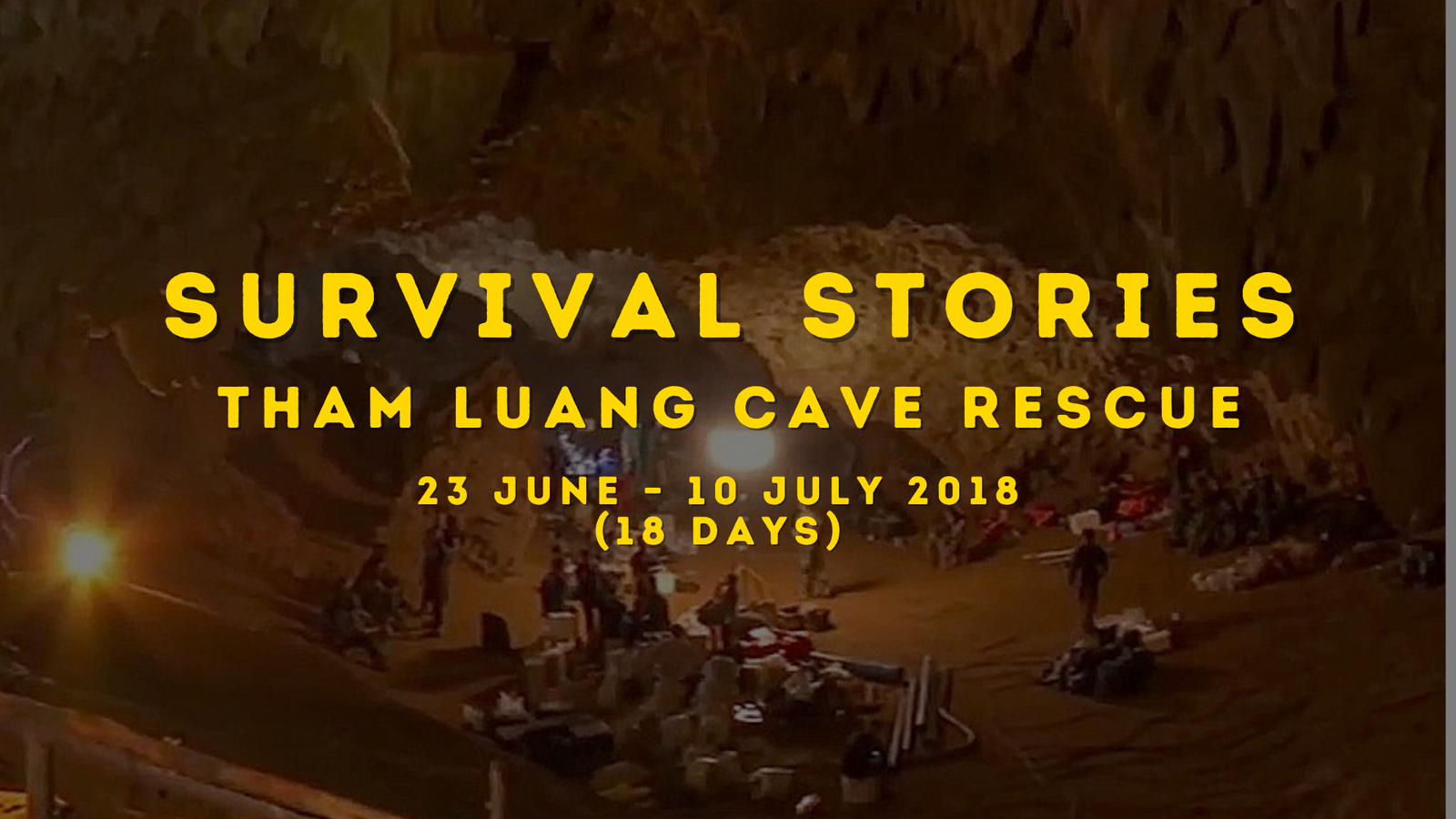
In the annals of survival stories, the Tham Luang cave rescue stands as a testament to human tenacity, courage, and the power of teamwork. It unfolded in the summer of 2018, when a junior football team known as the Wild Boars embarked on an adventure that turned into a global rescue mission. Here’s a deeper look at their incredible survival story.
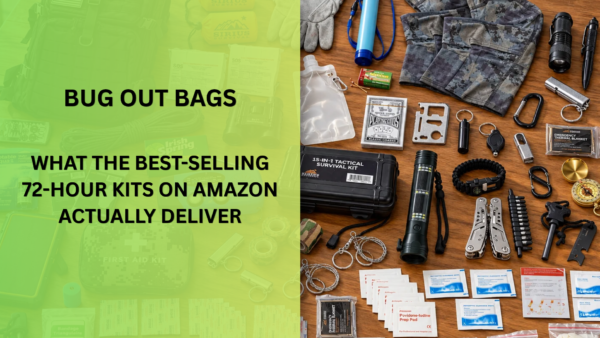
We did the water and calorie maths on five best-selling bug out bags. None holds more than a day's water for the two people it's sold for.
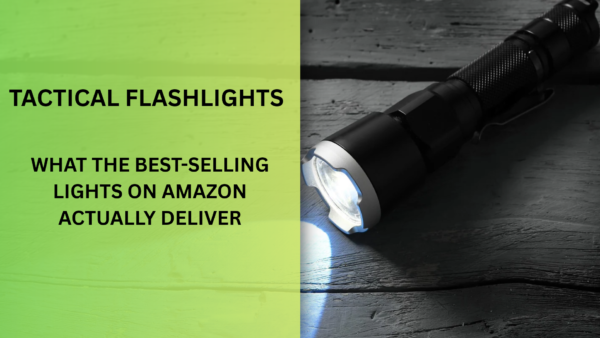
We checked five bestselling tactical flashlights against physics, manufacturer specs, and owner reports. One brand's own listing contradicts itself by 10x.