
The U.S. State Department has reissued its travel advisory for North Korea (officially the Democratic People’s Republic of Korea, or DPRK) at Level 4: Do Not Travel — the highest warning tier on its four-level scale. The advisory was renewed after a periodic review with minor edits, keeping in place the government’s strongest possible warning against travel to the country.
The reason for the Level 4 rating is straightforward: the continuing serious risk of arrest, long-term detention, and the threat of wrongful detention of U.S. nationals. The United States has no diplomatic or consular presence in North Korea, which means there is no U.S. embassy to assist Americans who run into trouble there. Sweden acts as the protecting power for U.S. interests, but its ability to help detained Americans is extremely limited, and the DPRK government has frequently delayed or denied consular access.
One practical detail many readers may not realize: U.S. passports are not valid for travel to, in, or through North Korea unless the Secretary of State grants a special validation. These validations are rare and generally reserved for narrowly defined purposes, such as certain humanitarian or journalistic work. Traveling there on a standard U.S. passport can itself create legal problems, separate from the safety risks.
Who this affects and what to watch
This advisory is most relevant to U.S. citizens and dual nationals considering travel in Northeast Asia, aid workers, journalists, and anyone with family who has expressed interest in visiting the region. There is no sign of any imminent change to this policy.
Sensible pointers: first, if you or someone you know has a genuinely compelling reason to consider travel to the DPRK, review the special-validation passport requirements with the State Department well in advance — do not assume a visa from a third country makes the trip legal or safe. Second, travelers heading to South Korea, Japan, or China should simply confirm their itineraries do not transit DPRK territory. Third, anyone with a family member already in North Korea should contact the State Department’s Office of Overseas Citizens Services for guidance.
This information comes from the U.S. Department of State’s Bureau of Consular Affairs travel advisory program.
Frequently Asked Questions
What does Level 4: Do Not Travel actually mean?
It is the State Department's highest advisory level, issued when there is a serious risk to travelers such as wrongful detention, armed conflict, or life-threatening danger. It is a strong warning, not a legal ban for most destinations — but North Korea is different, because U.S. passports are invalid there without special validation.
Can I legally travel to North Korea on a U.S. passport?
No. U.S. passports cannot be used for travel to, in, or through North Korea unless the Secretary of State grants a special validation, which is rare and limited to specific purposes like certain humanitarian work.
What happens if an American is detained in North Korea?
The U.S. has no embassy in the DPRK, so there is no direct consular help available. Sweden serves as the protecting power for U.S. citizens, but North Korean authorities have often delayed or denied access to detained Americans, and past detentions have lasted months or years.
Does this advisory affect travel to South Korea or other parts of Asia?
No. The Level 4 warning applies only to North Korea. Travel to South Korea, Japan, and China is covered by separate, lower-level advisories, though travelers should make sure their itineraries do not route through DPRK territory.
Keep tracking this:
Source: U.S. Department of State
Related Reading
Sky & Solar Conditions at the Time
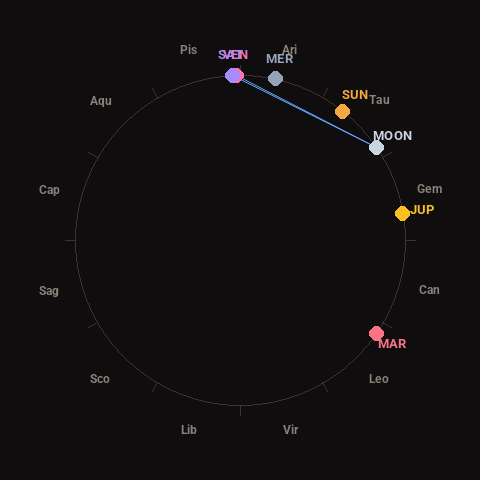
Moon: New Moon (2% illuminated), in Taurus.
Notable planetary angles: Venus conjunct Saturn (1°), Moon sextile Saturn (58°), Moon sextile Venus (57°).
Concurrent space weather: planetary Kp index 0.7; strongest recent solar flare: nothing notable.
This is a factual snapshot, not a claim of cause and effect – researchers are divided on whether lunar, planetary or solar factors influence seismic or weather activity. It’s included so readers can track the pattern for themselves over time.