
The U.S. State Department has reissued its travel advisory for North Korea (officially the Democratic People’s Republic of Korea, or DPRK) at Level 4 — the highest tier on its four-level scale, meaning “Do Not Travel.” The advisory applies to all U.S. citizens, for any reason, at any time.
The core concern is the continuing serious risk of arrest, long-term detention, and wrongful detention of U.S. citizens inside the country. The United States has no diplomatic relations with North Korea and no embassy in Pyongyang, which means the U.S. government has no ability to provide routine or emergency consular services to Americans there. If a U.S. citizen is detained, there is effectively no channel for help.
The advisory also underscores a restriction many travelers don’t realize exists: U.S. passports are not valid for travel to, in, or through North Korea unless specially validated by the Secretary of State. Standard tourist or business travel is not authorized.
What this means for you
For the vast majority of readers, nothing changes in daily life — this is a government warning, not an unfolding incident. But it is relevant if you or someone you know has any connection to travel plans in the region, particularly through tour operators based in China or elsewhere that have historically marketed trips to the DPRK.
Practical watch-items: First, if you know anyone considering travel to North Korea, share the advisory — the risk of detention without outside help is the single biggest factor. Second, if you have family or friends currently anywhere in Northeast Asia, note that this advisory does not affect South Korea, Japan, or China, which remain at lower advisory levels. Third, U.S. citizens abroad anywhere can enroll in the State Department’s Smart Traveler Enrollment Program (STEP) so the nearest embassy can reach them in an emergency.
Data source: U.S. Department of State, Bureau of Consular Affairs travel advisory system.
Frequently Asked Questions
Is this a new warning or has it been in place for a while?
North Korea has carried the Level 4 designation for years. This is a reissue/reaffirmation of the standing advisory, not a response to a new incident.
Can a U.S. citizen legally visit North Korea at all?
Not with a standard passport. U.S. passports are invalid for travel to, in, or through North Korea unless the Secretary of State grants a special validation, which is rare and typically limited to narrow purposes like journalism or humanitarian work.
Does this affect travel to South Korea?
No. South Korea is a separate country with its own, much lower advisory level, and routine travel there continues normally.
What happens if an American is detained in North Korea?
The U.S. has no embassy or diplomatic presence in the DPRK, so the State Department cannot provide consular help directly. This lack of any assistance channel is the central reason for the Level 4 rating.
Keep tracking this:
Source: U.S. Department of State
Related Reading
Sky & Solar Conditions at the Time
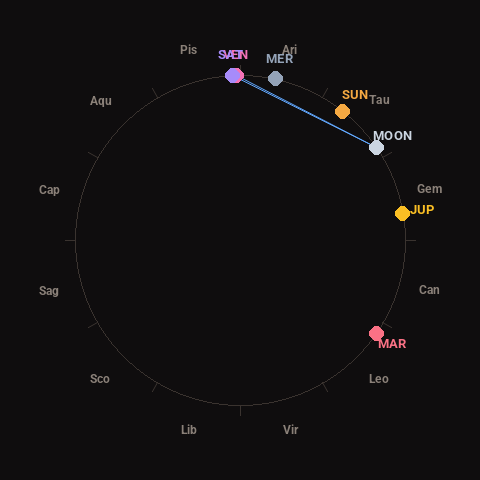
Moon: New Moon (2% illuminated), in Taurus.
Notable planetary angles: Venus conjunct Saturn (1°), Moon sextile Saturn (58°), Moon sextile Venus (57°).
Concurrent space weather: planetary Kp index 0.7; strongest recent solar flare: nothing notable.
This is a factual snapshot, not a claim of cause and effect – researchers are divided on whether lunar, planetary or solar factors influence seismic or weather activity. It’s included so readers can track the pattern for themselves over time.