
The U.S. State Department has raised its travel advisory for North Korea (officially the Democratic People’s Republic of Korea, or DPRK) to Level 4: Do Not Travel — the highest warning level it issues. The advisory cites the continuing serious risk of arrest, long-term detention, and the threat of wrongful detention of U.S. citizens.
Level 4 is reserved for countries where the U.S. government believes the risk to travelers is severe and where its ability to help citizens in trouble is extremely limited. The United States has no diplomatic presence in North Korea, so there is no embassy to call if something goes wrong. Sweden serves as the U.S. protecting power there, but access to detained Americans has historically been limited or denied.
One detail many readers may not know: U.S. passports are legally invalid for travel to, in, or through North Korea unless the Secretary of State grants a special validation. Those are rare and typically reserved for narrowly defined purposes such as journalism or humanitarian work. Anyone traveling on a U.S. passport without that validation would be doing so against federal law.
Who is affected
This advisory primarily affects U.S. citizens, but it is a useful signal for anyone considering travel through the region, including dual nationals and people joining tours that transit near the DPRK border. Tour operators, aid organizations, and journalists planning work in northeast Asia should factor this in. It does not affect routine travel to South Korea, Japan, or China, which carry separate, lower advisory levels.
Practical pointers
1) Do not attempt travel to North Korea for any reason, and do not rely on third-country tour operators offering DPRK entry — the U.S. government cannot meaningfully assist if you are detained. 2) If you are traveling elsewhere in the region, enroll in the State Department’s free STEP program (Smart Traveler Enrollment Program) so the nearest embassy can reach you in an emergency. 3) Family members of anyone believed detained in the DPRK should contact the State Department’s Office of American Citizens Services immediately.
Frequently Asked Questions
What does Level 4 actually mean?
Level 4: Do Not Travel is the State Department's highest advisory level, used when the risk of life-threatening danger or wrongful detention is considered severe and U.S. government assistance is very limited.
Can a U.S. citizen legally travel to North Korea at all?
Not on a standard passport. U.S. passports are invalid for travel to, in, or through the DPRK unless specially validated by the Secretary of State, which is granted only in rare, narrowly defined cases.
Why is wrongful detention the main concern?
North Korea has a documented history of arresting foreign visitors, including tourists, and holding them for long periods, sometimes for years, often over minor or unclear alleged offenses.
Does this advisory affect travel to South Korea or Japan?
No. This Level 4 advisory applies only to North Korea; South Korea and Japan remain at much lower advisory levels and routine travel there is unaffected.
Keep tracking this:
Source: U.S. Department of State
Related Reading
Sky & Solar Conditions at the Time
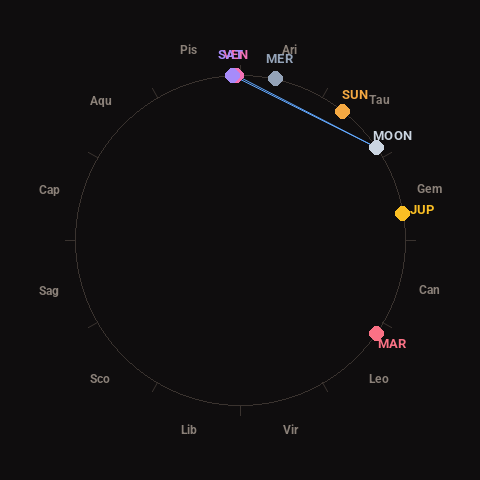
Moon: New Moon (2% illuminated), in Taurus.
Notable planetary angles: Venus conjunct Saturn (1°), Moon sextile Saturn (58°), Moon sextile Venus (57°).
Concurrent space weather: planetary Kp index 0.7; strongest recent solar flare: nothing notable.
This is a factual snapshot, not a claim of cause and effect – researchers are divided on whether lunar, planetary or solar factors influence seismic or weather activity. It’s included so readers can track the pattern for themselves over time.