
The U.S. State Department has raised its travel advisory for Gaza to Level 4, the highest tier on its four-level scale, with a simple instruction: Do Not Travel. The advisory cites terrorism, civil unrest, and severely limited health infrastructure as the driving risks behind the escalation.
Level 4 is reserved for destinations where the U.S. government considers the risk to travelers life-threatening. In practical terms, the advisory confirms that terrorist groups, lone-actor attackers, and other violent extremists continue to plot possible attacks in Gaza, and that the security environment can deteriorate without warning.
Two details matter for everyday readers. First, U.S. government employees are prohibited from traveling to Gaza for any reason due to the safety risks. Second, and more importantly for private citizens: the U.S. government is unable to provide routine or emergency consular services to U.S. citizens in Gaza. That means if an American in Gaza is injured, detained, or caught in violence, there is no embassy support, no evacuation guarantee, and no standard assistance available on the ground.
What this means for travelers and families
Most Americans will never travel to Gaza, but this advisory matters to a real group of people: dual nationals with family in the region, journalists, aid workers, and anyone with humanitarian or business reasons to consider travel. The Level 4 rating also affects practical matters — most travel insurance policies exclude coverage in Level 4 destinations, and employers or NGOs often restrict staff movement once an advisory reaches this tier.
What you might notice: airlines and aid organizations adjusting operations, family members abroad reassessing plans, and neighboring destinations (Israel, the West Bank, Egypt’s Sinai border areas) carrying their own elevated advisory levels. This advisory is about Gaza specifically, but regional conditions can shift quickly and spill over.
Sensible steps right now:
1. If you or a family member is in the region, enroll in the State Department’s Smart Traveler Enrollment Program (STEP) so you receive security updates and can be contacted where services exist. 2. If travel to Gaza was being considered for any reason — including family visits or aid work — defer it; the advisory explicitly warns the U.S. government cannot assist you if something goes wrong. 3. Monitor advisories for neighboring areas too, since border crossings and regional airspace can close with little notice.
This alert is based on the official travel advisory issued by the U.S. Department of State’s Bureau of Consular Affairs.
Frequently Asked Questions
Can the U.S. government help me if I'm an American currently in Gaza?
No. The advisory explicitly states the U.S. government cannot provide routine or emergency consular services in Gaza, and U.S. government employees are barred from traveling there for any reason. Americans in Gaza should not rely on embassy assistance or evacuation.
Does Level 4 mean it's illegal for me to travel to Gaza?
No. A Level 4 advisory is a strong warning, not a legal ban on private travel — U.S. passports remain valid. However, you would be traveling with no consular safety net, and most travel insurance will not cover you in a Level 4 destination.
Does this advisory affect travel to Israel or Egypt?
This advisory applies to Gaza specifically, but Israel, the West Bank, and parts of Egypt carry their own separate advisory levels. Check the State Department's current advisory for each destination before booking, as regional conditions can change quickly.
What should I do if I have family in Gaza?
Stay in regular contact, encourage them to follow guidance from local authorities and humanitarian organizations on the ground, and enroll yourself in the State Department's STEP program for official updates. Be aware that communication networks in Gaza can be unreliable.
Keep tracking this:
Source: U.S. Department of State
Related Reading
Sky & Solar Conditions at the Time
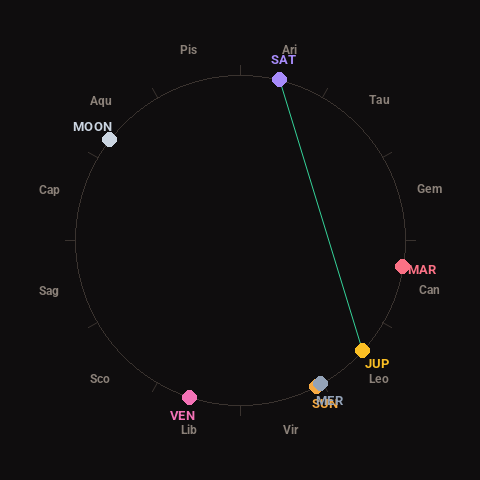
Moon: Waxing Gibbous (95% illuminated), in Aquarius.
Notable planetary angles: Jupiter trine Saturn (118°), Sun conjunct Mercury (2°).
Concurrent space weather: planetary Kp index 0.3; strongest recent solar flare: nothing notable.
This is a factual snapshot, not a claim of cause and effect – researchers are divided on whether lunar, planetary or solar factors influence seismic or weather activity. It’s included so readers can track the pattern for themselves over time.