
A powerful nor’easter moving through the U.S. Northeast has left tens of thousands of customers without electricity and is being blamed for at least one death, according to early reports. Utilities across the region are reporting widespread outages as strong winds and heavy precipitation bring down tree limbs and power lines.
What happened: The storm system intensified off the Atlantic coast, a classic setup for a nor’easter – a type of storm that pulls in cold air and moisture while driving strong northeasterly winds into the coastline. Gusts have been strong enough to snap branches and topple trees onto lines, while wet, heavy precipitation adds weight to already-stressed infrastructure. Crews are being dispatched as conditions allow, though high winds can delay bucket-truck work for safety reasons.
What you might notice: If you’re in the affected area, expect flickering lights or full outages, downed branches, possible road closures from fallen trees or flooding, and slower travel on major routes. Traffic signals may be dark in some intersections – treat them as four-way stops. Coastal communities could also see minor flooding and erosion from the onshore winds.
Who is affected: Tens of thousands of households and businesses across the Northeast, with outage numbers fluctuating as crews restore some circuits while new failures occur. The fatality underscores the real hazard of falling trees and downed lines during these storms.
What to do and watch for
Stay clear of downed lines. Assume every fallen wire is live. Report it to your utility and keep others – and pets – away. Never drive over a downed line.
Keep food safe. A closed refrigerator keeps food cold for about 4 hours; a full freezer holds temperature for roughly 48 hours. Keep doors shut and use coolers with ice if the outage stretches on.
Use generators safely. If you run a generator, keep it outdoors and at least 20 feet from windows and doors. Carbon monoxide from indoor or garage use is a leading cause of storm-related deaths.
Outage figures and storm conditions are tracked by local utilities and the National Weather Service (NWS), which continues to issue wind and coastal flood statements for the region.
Frequently Asked Questions
How long until my power is restored?
Restoration times vary by location and damage severity – some customers may be back within hours, while areas with downed trees and broken poles can take a day or more. Check your utility's outage map for a local estimate, and note that high winds can slow crew work.
Is this outage connected to space weather or a geomagnetic storm?
No. These outages are caused by the nor'easter's strong winds and heavy precipitation bringing down trees and power lines – a purely weather-driven event, not a grid disturbance from solar activity.
Is it safe to stay in my home without power?
Generally yes, as long as you can stay warm and avoid unsafe heating methods – never use ovens, grills, or outdoor generators indoors due to carbon monoxide risk. If your home gets dangerously cold or you rely on powered medical equipment, consider relocating to a warming center or a friend's home.
Should I worry about more outages as the storm continues?
Additional outages are possible while winds remain strong and soil stays saturated, since weakened trees can fall later. Keep devices charged, flashlights handy, and your fridge closed until the storm fully passes.
Keep tracking this:
Source: Watching the world evolve and transform
Related Reading
Sky & Solar Conditions at the Time
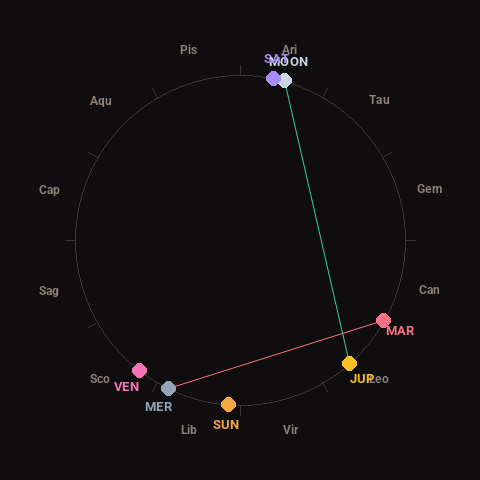
Moon: Full Moon (99% illuminated), in Aries.
Notable planetary angles: Moon trine Jupiter (123°), Mercury square Mars (86°), Moon conjunct Saturn (4°).
Concurrent space weather: planetary Kp index 1.3; strongest recent solar flare: nothing notable.
This is a factual snapshot, not a claim of cause and effect – researchers are divided on whether lunar, planetary or solar factors influence seismic or weather activity. It’s included so readers can track the pattern for themselves over time.