
A major A-road in Devon has been closed in both directions following a road traffic accident, with emergency services on scene. The closure is expected to remain in place for several hours while collision investigators work and the carriageway is cleared.
Closures of this scale on A-roads typically mean one of three things: a serious collision requiring police investigation, a vehicle fire or fuel spill, or a structural or weather-related hazard making the road unsafe. In this case, the closure follows a reported accident, and full investigation and recovery work on a serious collision scene often takes between three and eight hours.
What You Might Notice
If you are in the area or travelling through Devon today, expect heavy traffic on surrounding routes as drivers are diverted onto local roads that are not designed for high volumes. Journey times in the area are likely to be significantly longer than normal, and public transport using the affected corridor may be delayed or rerouted. Emergency vehicles may also affect traffic flow on adjacent roads.
Residents near the diversion routes may notice unusual levels of traffic through villages and smaller roads. Drivers unfamiliar with rural Devon lanes should take extra care, as these roads can be narrow, winding, and without street lighting.
Who Is Affected
Anyone commuting, travelling for work, or planning journeys through Devon today should assume delays. This includes local residents, delivery drivers, holidaymakers heading to or from the South West, and anyone catching trains, ferries, or flights with a road connection in the area.
Practical Steps
Check before you travel: Look at live traffic updates from National Highways or your local council before setting off, and allow significant extra time if you must travel in the area.
Do not follow sat-nav blindly: Navigation apps often route large numbers of drivers onto unsuitable minor roads. Follow official signed diversion routes where they are in place.
Drive carefully on diversion routes: Rural lanes will be busier than usual and may include oncoming traffic in both directions on narrow stretches. Slow down and be patient.
Road closure information in the UK comes from local police forces, National Highways, and local authority traffic teams; this report is based on live incident updates from those sources.
Frequently Asked Questions
How long will the road stay closed?
Serious collision closures on A-roads typically last three to eight hours, depending on the investigation, vehicle recovery, and any carriageway repairs needed. Check National Highways or local police updates for the latest estimated reopening time.
Can I just follow my sat-nav around the closure?
It's better to follow the official signed diversion, which is chosen to handle diverted traffic safely. Sat-navs often send drivers onto narrow rural lanes that can quickly become gridlocked or hazardous.
Was anyone seriously hurt in the accident?
Full closures in both directions usually indicate a serious incident, but casualty details are confirmed by police only after families are informed. Official police statements will carry confirmed information.
I have a flight or ferry to catch — what should I do?
Leave significantly earlier than planned and check live traffic before you set off, building in a buffer for diversion delays. If you're already stuck, contact your airline or ferry operator — many can advise on rebooking options if you're delayed by a major incident.
Keep tracking this:
Source: Devon Live
Related Reading
Sky & Solar Conditions at the Time
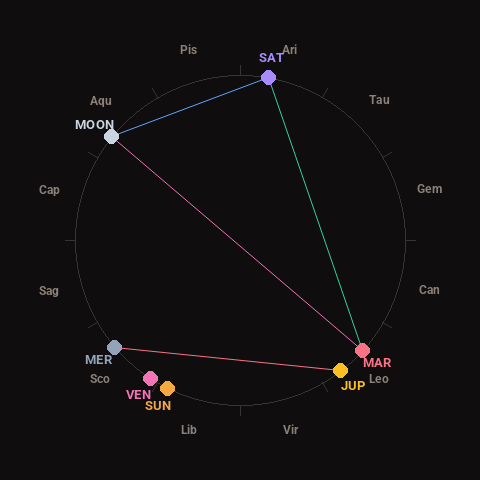
Moon: First Quarter (61% illuminated), in Aquarius.
Notable planetary angles: Moon sextile Saturn (61°), Mars trine Saturn (122°), Mercury square Jupiter (87°), Moon opposite Mars (177°).
Concurrent space weather: planetary Kp index 0.7; strongest recent solar flare: nothing notable.
This is a factual snapshot, not a claim of cause and effect – researchers are divided on whether lunar, planetary or solar factors influence seismic or weather activity. It’s included so readers can track the pattern for themselves over time.