
The National Weather Service office in Flagstaff, Arizona, has issued a Flash Flood Warning in effect from 12:21 AM MST on October 22 until 8:15 AM MST the same morning. The warning currently covers three areas: Apache and Coconino counties in Arizona, and the Santa Barbara area in California.
A flash flood warning means flooding is already happening or is imminent – this is a step above a flood watch, which only means conditions are favorable. In northern Arizona, fast-moving water is most likely in slot canyons, normally dry washes and arroyos, low-water road crossings, and burn-scar areas where rain runs off hard ground instead of soaking in. In the Santa Barbara area, the main concerns are creek rises and debris flows on steep terrain, especially below recent burn scars.
If you are in one of the warned areas overnight, here is what you may notice: rapidly rising water in washes and creeks, water covering roads that are normally dry, and ponding in low spots and underpasses. Remember that floodwater is often deeper and faster than it looks, and it only takes about 12 inches of moving water to carry off a small car.
What to do right now
First, never drive or walk through flooded roads – turn around and find another route. Second, if you live near a wash, creek, canyon, or burn scar, be ready to move to higher ground quickly, and keep a phone charged and nearby in case conditions worsen. Third, delay any backcountry or canyon travel in the Flagstaff and Coconino County area until the warning expires and conditions are reassessed this morning.
The warning is scheduled to end at 8:15 AM MST, but it could be extended or followed by additional advisories if rain continues. This alert is based on data from the National Weather Service (NWS Flagstaff, AZ), part of NOAA.
Frequently Asked Questions
What should I do right now if I'm in the warned area?
Stay off flooded roads and away from washes, creeks, and low-water crossings, since most flash flood deaths involve vehicles. If you are near a canyon, arroyo, or burn scar, be prepared to move to higher ground immediately.
How long will this warning last?
The current warning runs until 8:15 AM MST on October 22, roughly an eight-hour overnight window. The NWS may extend it or issue follow-up advisories if heavy rain continues past that time.
Is it safe to drive through standing water on the road?
No – water depth and speed are very hard to judge, especially at night, and about 12 inches of moving water can sweep away a small vehicle. Turn around and use an alternate route instead.
Why is Santa Barbara, CA included in a warning from an Arizona office?
The NWS alert lists all three areas – Apache and Coconino counties in Arizona plus the Santa Barbara area – under the same product as issued. If you are in Southern California, follow your local NWS office and county emergency alerts for area-specific details.
Keep tracking this:
Source: National Weather Service (NWS)
Related Reading
- Emergency Communication: Staying Connected When Towers Go Down
- Earthquake Survival: Precautions, Kit & Early Warning in 2026
- Essential Guide to Preparing for a Nuclear War
Sky & Solar Conditions at the Time
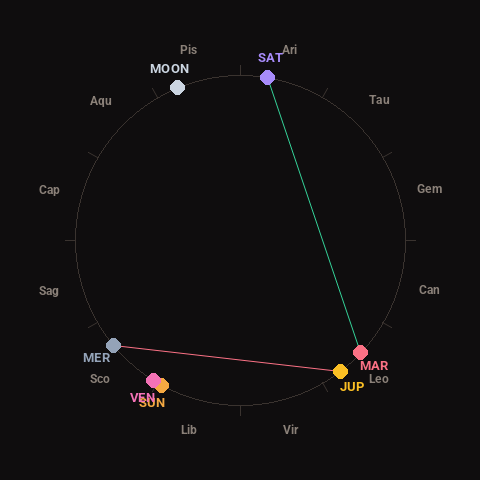
Moon: Waxing Gibbous (82% illuminated), in Pisces.
Notable planetary angles: Mercury square Jupiter (88°), Sun conjunct Venus (3°), Mars trine Saturn (123°).
Concurrent space weather: planetary Kp index 3.0; strongest recent solar flare: nothing notable.
This is a factual snapshot, not a claim of cause and effect – researchers are divided on whether lunar, planetary or solar factors influence seismic or weather activity. It’s included so readers can track the pattern for themselves over time.