
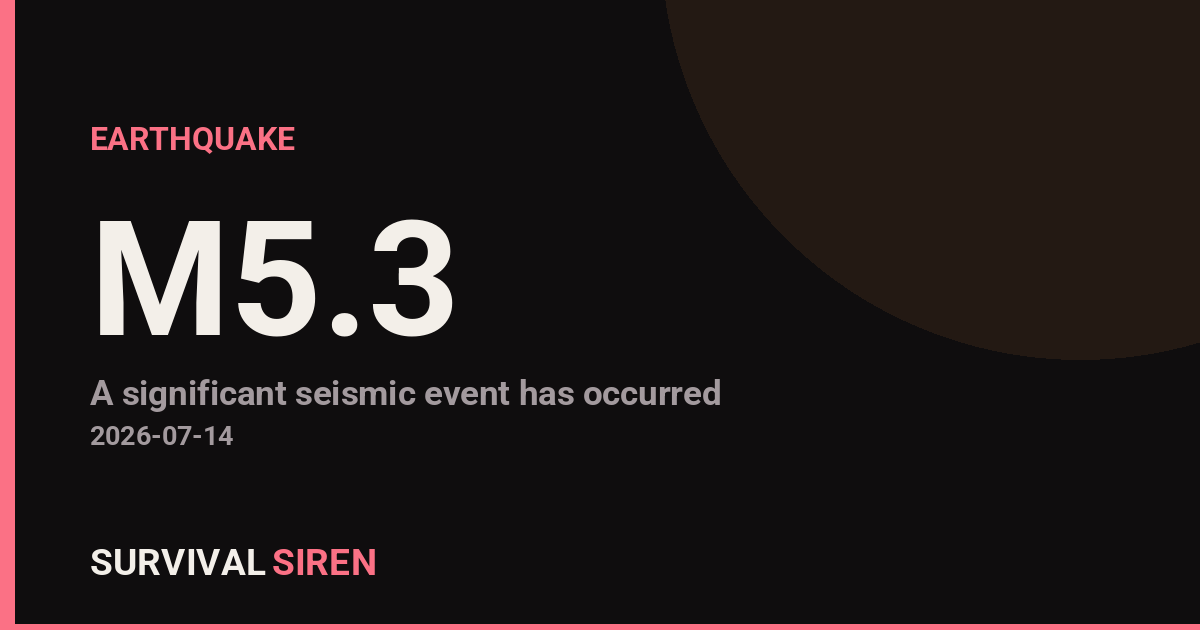
A magnitude 5.3 earthquake occurred approximately 96 kilometers southeast of False Pass, Alaska, at a depth of about 41 kilometers, according to the U.S. Geological Survey. This moderate-strength quake struck in the Aleutian region, an area known for frequent seismic activity due to its position along the Pacific Ring of Fire.
Residents in surrounding communities likely felt noticeable shaking. A magnitude 5.3 earthquake typically produces strong shaking that can be felt over a wide area, though damage is generally limited unless structures are poorly constructed or located very close to the epicenter. The 41-kilometer depth helped distribute the energy across a broader region, which typically reduces localized damage compared to shallower earthquakes.
Who This Affects
Communities nearest to False Pass—including Unalaska, Adak, and other nearby settlements—experienced the strongest shaking. People across the broader Aleutian Islands and potentially parts of southwestern Alaska felt the quake. The sparse population in this region means widespread impact on people is limited, though anyone in affected areas should have checked for minor damage to structures, unsecured items, or utility disruptions.
Practical Next Steps
Check your surroundings: If you felt this quake, do a quick walk-through of your home or workplace to look for any fallen objects, cracked walls, or damaged utilities. Report any damage to local authorities.
Review your earthquake kit: This is a good reminder to ensure you have water, non-perishable food, first aid supplies, and a battery-powered radio accessible in case of future quakes.
Know your building’s safety: If you live in an earthquake-prone area, familiarize yourself with structural safety features and designated safe spots during shaking—under sturdy tables or against interior walls, away from windows.
For ongoing seismic monitoring and updates, check NOAA’s space weather and geological alert dashboard at https://survivalsiren.com/spaceweather/feed.html.
Source: USGS