
The National Weather Service office in Tucson, Arizona issued a Flash Flood Warning at 9:27 PM MST on September 16, in effect until 10:30 PM MST. The warning covers 11 areas, including Pima and Pinal counties in Arizona, along with listed areas in Colorado, New Mexico, and Ohio — a wide footprint that readers should confirm against their own county before acting.
A Flash Flood Warning means flooding is already happening or is imminent — it is more urgent than a watch. In the affected Arizona counties, heavy monsoon-season rain can send water rushing through normally dry washes, low-water crossings, and underpasses within minutes, often with little visible warning at night.
If you are in a warned area, here is what to do now:
What to watch for and do
Stay off the roads if possible. Most flash flood deaths happen in vehicles. Never drive through water covering a roadway — even six inches of moving water can knock an adult down, and two feet can carry away most vehicles. Arizona’s “Stupid Motorist Law” exists because of exactly these situations.
Move to higher ground if you are in a low-lying area, near a wash, arroyo, or small stream. Do not camp or park along waterways overnight.
Monitor official alerts. The warning currently expires at 10:30 PM MST, but it can be extended if heavy rain continues. Keep a weather radio or phone alerts active, and watch for follow-up statements from NWS Tucson or your local forecast office.
Data for this alert comes from the National Weather Service (NOAA), specifically the NWS Tucson forecast office.
Frequently Asked Questions
What should I do right now if I'm in a warned area?
Move away from washes, streams, and low spots, and avoid driving until the warning expires at 10:30 PM MST. If water is rising around you, get to higher ground immediately — do not wait.
How long will this warning last?
The warning is currently in effect until 10:30 PM MST, about an hour after issuance. NWS Tucson can extend it or issue new warnings if heavy rain continues, so keep alerts on.
Why are counties in Colorado, Ohio, and New Mexico listed alongside Arizona?
The alert feed groups 11 areas under this warning event, but your local conditions are what matter — check your own county against your local NWS forecast office to confirm whether a warning actually applies to you.
Is it safe to drive through a flooded road if it looks shallow?
No. Flash flood water is often deeper and faster than it appears, especially at night, and the road underneath may be washed out. Turn around and find another route.
Keep tracking this:
Source: National Weather Service (NWS)
Related Reading
- Emergency Communication: Staying Connected When Towers Go Down
- Earthquake Survival: Precautions, Kit & Early Warning in 2026
- Essential Guide to Preparing for a Nuclear War
Sky & Solar Conditions at the Time
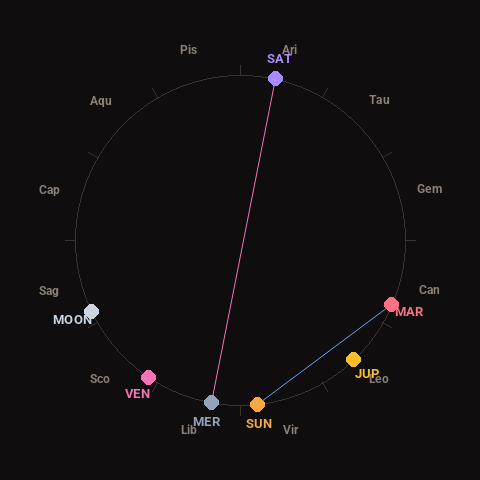
Moon: First Quarter (33% illuminated), in Sagittarius.
Notable planetary angles: Sun sextile Mars (61°), Mercury opposite Saturn (178°).
Concurrent space weather: planetary Kp index 3.0; strongest recent solar flare: nothing notable.
This is a factual snapshot, not a claim of cause and effect – researchers are divided on whether lunar, planetary or solar factors influence seismic or weather activity. It’s included so readers can track the pattern for themselves over time.