
The U.S. State Department has reissued its travel advisory for North Korea at Level 4: Do Not Travel — the highest of its four-tier warning scale. The advisory was updated after a routine periodic review with minor edits, and it keeps in place the long-standing warning that Americans should not travel to the Democratic People’s Republic of Korea (DPRK) for any reason.
The core concern is unchanged: the continuing serious risk of arrest, long-term detention, and wrongful detention of U.S. nationals. In practical terms, the U.S. government has very limited ability to help citizens inside North Korea, because the United States has no diplomatic or consular relations with the country. Sweden serves as the protecting power for U.S. interests there, but access to detained Americans has often been delayed or denied entirely.
There is also a legal restriction many travelers don’t realize exists: a standard U.S. passport is not valid for travel to, in, or through North Korea unless the Secretary of State grants a special validation. These validations are rare and are typically limited to narrow categories such as journalists, Red Cross representatives, or travelers whose trip is demonstrably in the U.S. national interest. Traveling on a regular passport anyway can carry federal penalties.
What this means for you
For most readers, this advisory changes nothing day to day — there is no new incident driving it, and it is a reissuance of an existing warning, not a sudden escalation tied to a specific event. It matters mainly for anyone considering humanitarian, journalistic, or family-related travel to the region, and for travelers planning trips to neighboring countries such as South Korea, Japan, or China.
Sensible watch-items and preparedness pointers:
• If you are planning travel anywhere in Northeast Asia, check the State Department advisory for each country on your itinerary — South Korea and Japan remain at much lower advisory levels.
• If you believe you qualify for a special passport validation, apply well in advance through the State Department; do not attempt travel on a regular passport.
• If you have family or colleagues in the region, make sure they are enrolled in the Smart Traveler Enrollment Program (STEP) so the nearest U.S. embassy can reach them in an emergency.
This alert is based on the official travel advisory issued by the U.S. Department of State’s Bureau of Consular Affairs.
Frequently Asked Questions
Did something specific happen to trigger this advisory?
No. This is a routine reissuance after a periodic review with only minor edits. North Korea has been at Level 4 for years; the update reflects an ongoing risk assessment, not a new incident.
Can I legally travel to North Korea as an American?
Not on a regular U.S. passport. U.S. passports are invalid for travel to, in, or through North Korea unless specially validated by the Secretary of State, and those validations are granted only in limited circumstances.
Does this affect my trip to South Korea or Japan?
No. This advisory applies only to North Korea. South Korea and Japan are separate destinations with their own, much lower advisory levels, and normal tourism to those countries is unaffected.
What happens if an American is detained in North Korea?
The U.S. has no embassy in Pyongyang and cannot provide normal consular services; Sweden acts as the protecting power for U.S. citizens. The State Department warns its ability to assist detained Americans is extremely limited, which is the core reason for the Level 4 rating.
Keep tracking this:
Source: U.S. Department of State
Related Reading
Sky & Solar Conditions at the Time
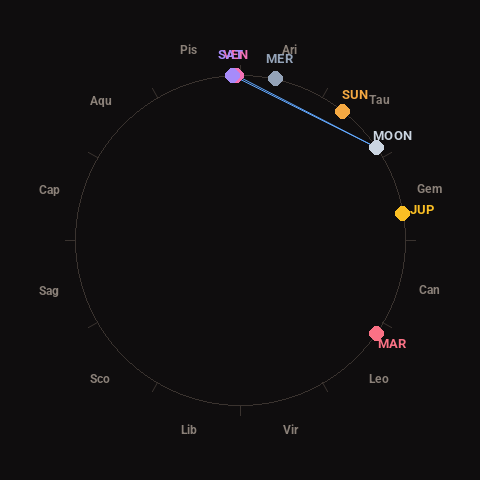
Moon: New Moon (2% illuminated), in Taurus.
Notable planetary angles: Venus conjunct Saturn (1°), Moon sextile Saturn (58°), Moon sextile Venus (57°).
Concurrent space weather: planetary Kp index 0.7; strongest recent solar flare: nothing notable.
This is a factual snapshot, not a claim of cause and effect – researchers are divided on whether lunar, planetary or solar factors influence seismic or weather activity. It’s included so readers can track the pattern for themselves over time.