
The U.S. State Department has raised its travel advisory for North Korea (the Democratic People’s Republic of Korea, or DPRK) to Level 4, the highest warning level, telling Americans: do not travel there for any reason.
The advisory cites the continuing serious risk of arrest, long-term detention, and the threat of wrongful detention of U.S. citizens. Under Level 4, the State Department is making clear that the risks to travelers are severe enough that no travel is recommended, even for tourism, journalism, or humanitarian work.
What this means in practice
U.S. passports are not valid for travel to, in, or through North Korea unless they are specially validated by the Secretary of State. These special validations are granted only in limited circumstances, typically for narrowly defined national interest or humanitarian purposes. If you do not hold one of these validations, attempting to enter the DPRK with a U.S. passport is not permitted.
There is no U.S. embassy in North Korea, which means the U.S. government has extremely limited ability to assist any American detained there. Sweden serves as the U.S. protecting power in the DPRK, but consular access for detained Americans has historically been difficult or delayed.
Who is affected
Any U.S. citizen considering travel to North Korea, Americans with family or business ties in the region, journalists planning assignments, and humanitarian workers. Travelers booking multi-country trips to East Asia should also double-check itineraries to ensure no routing passes through North Korean territory or airspace restrictions.
Sensible next steps
1. If you had any travel plans involving the DPRK, cancel them. No U.S. tour operators legally offer trips for ordinary passport holders, and any offer suggesting otherwise should be treated with extreme caution.
2. If you have a relative or contact currently in North Korea, know that the State Department’s assistance options there are very limited; register concerns through the State Department’s travel assistance channels.
3. For travel elsewhere in East Asia, check the State Department’s current advisory levels for South Korea, China, and Japan before booking, as regional conditions can change.
This advisory and its language come from the U.S. State Department’s Bureau of Consular Affairs.
Frequently Asked Questions
Can I still travel to North Korea if I really want to?
Not legally with a U.S. passport. Passports are invalid for travel to, in, or through North Korea unless specially validated by the Secretary of State, and those validations are rare and limited to specific national interest or humanitarian cases.
Does Level 4 mean war is coming?
No. This advisory is about the risk of wrongful arrest and detention of U.S. citizens in North Korea. Level 4 is a traveler-risk rating, not a statement about imminent military conflict.
What happens if an American is detained in North Korea?
Because the U.S. has no embassy in the DPRK, consular help is extremely limited. Sweden acts as the U.S. protecting power, but access to detained Americans has historically been slow or denied, which is the core reason for the Level 4 warning.
Does this affect travel to South Korea or Japan?
No. This advisory applies only to North Korea. South Korea and Japan have their own, much lower advisory levels, but it's still worth checking the State Department's current ratings for those countries before you book.
Keep tracking this:
Source: U.S. Department of State
Related Reading
Sky & Solar Conditions at the Time
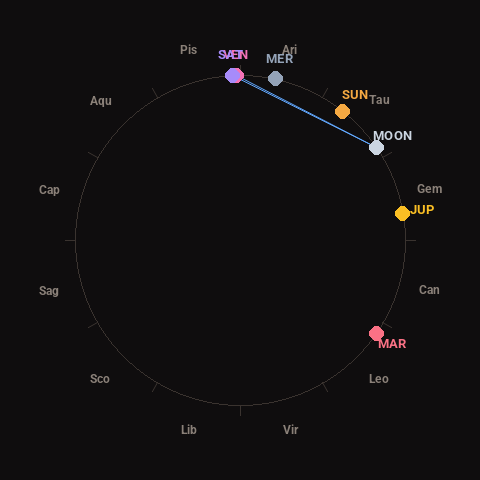
Moon: New Moon (2% illuminated), in Taurus.
Notable planetary angles: Venus conjunct Saturn (1°), Moon sextile Saturn (58°), Moon sextile Venus (57°).
Concurrent space weather: planetary Kp index 0.7; strongest recent solar flare: nothing notable.
This is a factual snapshot, not a claim of cause and effect – researchers are divided on whether lunar, planetary or solar factors influence seismic or weather activity. It’s included so readers can track the pattern for themselves over time.