
The U.S. State Department has raised its travel advisory for Gaza to Level 4, the highest warning on its four-level scale, instructing all U.S. citizens not to travel there. The advisory cites terrorism, civil unrest, and severely limited health infrastructure as the reasons behind the escalation.
Under this advisory, U.S. government employees are prohibited from traveling to Gaza for any reason due to safety risks. The State Department is also explicit that the U.S. government cannot provide routine or emergency consular services to Americans inside Gaza. In practical terms, that means if a U.S. citizen in Gaza is injured, arrested, or needs evacuation, there is no embassy support available on the ground.
The advisory notes that terrorist groups, lone-actor terrorists, and other violent extremists continue to plot possible attacks in Gaza. Combined with ongoing unrest and a health system under extreme strain, officials say the risks to travelers are beyond what can be managed through normal precautions.
What this means for readers
For most Americans, this advisory changes little day to day – it does not close U.S. airports, restrict flights elsewhere in the region, or affect domestic travel. It matters most to anyone with family, work, aid operations, or planned travel connected to Gaza or the surrounding region. Travelers with itineraries involving nearby areas, including Israel and Egypt’s border crossings, should expect heightened security and possible sudden closures of crossing points.
A few sensible steps to consider:
1. If you or family members are in Gaza, the State Department urges U.S. citizens to leave when it is safe to do so and to enroll in the Smart Traveler Enrollment Program (STEP) so officials can reach you with updates.
2. Keep copies of travel documents, maintain multiple ways to communicate with family, and agree on a check-in schedule in case phone or internet service is interrupted.
3. If you have upcoming travel near the region, monitor your airline and the nearest U.S. embassy for updated guidance, as border and crossing conditions can change quickly.
This information comes from the U.S. Department of State’s Bureau of Consular Affairs travel advisory system.
Frequently Asked Questions
What does Level 4 actually mean?
Level 4 is the State Department's highest travel advisory level. It means 'Do Not Travel' – the government considers the risk of life-threatening danger too high for any U.S. citizen to visit.
I have family in Gaza. Can the U.S. government help them?
The State Department states plainly that it cannot provide routine or emergency consular services inside Gaza. Family members there should register through official channels where possible and follow guidance on departing when conditions allow.
Does this affect flights to Tel Aviv or other nearby destinations?
This advisory applies specifically to Gaza, but travelers to the wider region should check the separate advisories for Israel and neighboring countries, as conditions and airline schedules there can shift.
Is this advisory permanent?
No. Travel advisories are reviewed and updated as conditions change. The State Department can raise or lower the level at any time based on the security situation.
Keep tracking this:
Source: U.S. Department of State
Related Reading
Sky & Solar Conditions at the Time
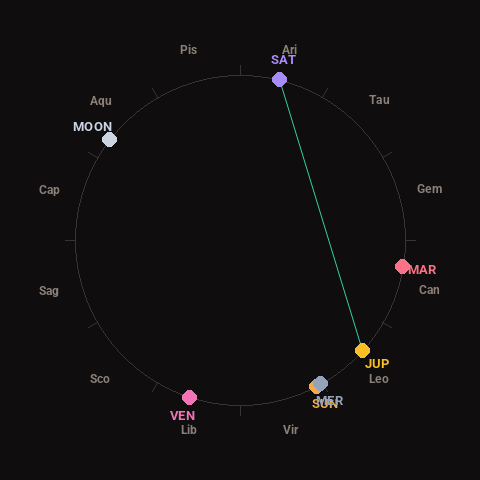
Moon: Waxing Gibbous (95% illuminated), in Aquarius.
Notable planetary angles: Jupiter trine Saturn (118°), Sun conjunct Mercury (2°).
Concurrent space weather: planetary Kp index 0.7; strongest recent solar flare: nothing notable.
This is a factual snapshot, not a claim of cause and effect – researchers are divided on whether lunar, planetary or solar factors influence seismic or weather activity. It’s included so readers can track the pattern for themselves over time.