


A ground stop has been issued at Austin-Bergstrom International Airport (AUS) on Wednesday, halting departing flights and causing significant disruption for travelers across the region. A ground stop means the Federal Aviation Administration (FAA) has ordered aircraft bound for — or departing from — the airport to hold on the ground until conditions allow safe operations to resume.
Events like this are typically triggered by one of three causes: severe weather moving through the area, a major technical or communications outage, or a security or safety incident on the airfield. While the exact cause in this case is still developing, large-scale ground stops routinely produce ripple effects far beyond the airport itself, since Austin is a busy hub for connecting flights.
What readers might notice
If you are flying into or out of Austin today, expect departure boards showing widespread delays and some cancellations. Flights already in the air may be diverted to nearby airports such as San Antonio or Houston. Roads around the airport and cell phone service may be congested as travelers rebook. Even travelers in other cities could see delays if their aircraft or crew was scheduled to come through Austin.
Anyone with travel plans through AUS today or this evening is affected, along with people picking up passengers. Connecting passengers across the southern United States may also feel knock-on effects into Thursday morning as airlines reposition planes and crews.
Practical steps to take now:
1. Check your flight status directly with your airline app or website before leaving for the airport — do not rely on old confirmation emails. 2. If your flight is canceled, rebook through the airline’s app first; phone lines and airport counters will have long waits. 3. If you are stuck for several hours, know that U.S. airlines generally owe you rebooking at no extra cost, and in some cases meal vouchers — ask politely at the gate.
Data for this alert comes from FAA air traffic status reports and National Weather Service observations in the Austin area.
Frequently Asked Questions
Is it safe to fly — does a ground stop mean something dangerous happened?
Not necessarily. Ground stops are a routine safety tool the FAA uses to pause traffic during storms, equipment issues, or runway problems. Most are precautionary and lifted once conditions improve.
My flight goes through Austin later today. Should I still go to the airport?
Check your flight status with your airline first. If it shows on time, head out as normal, but build in extra time since schedules can change quickly during a ground stop.
Will I get my money back if my flight is canceled?
Yes. Under U.S. Department of Transportation rules, if your flight is canceled and you choose not to travel, you are entitled to a full refund, even on a non-refundable ticket. If you still want to fly, the airline must rebook you at no additional charge.
How long will the disruption last?
Ground stops often last from under an hour to several hours, but knock-on delays and crew repositioning can ripple into the evening or next morning. Keep monitoring your airline's app for updates.
Keep tracking this:
Source: KVUE
Related Reading
Sky & Solar Conditions at the Time
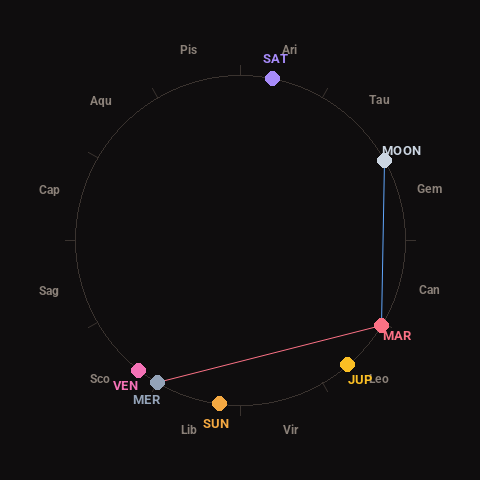
Moon: Waning Gibbous (79% illuminated), in Gemini.
Notable planetary angles: Moon sextile Mars (60°), Mercury square Mars (89°).
Concurrent space weather: planetary Kp index 0.3; strongest recent solar flare: nothing notable.
This is a factual snapshot, not a claim of cause and effect – researchers are divided on whether lunar, planetary or solar factors influence seismic or weather activity. It’s included so readers can track the pattern for themselves over time.