
GOES satellites registered an M1.2-class solar flare on the Sun, peaking at 14:12 UTC on October 10, 2026. The flare’s X-ray output measured 1.2e-5 watts per square meter, placing it at the low end of the ‘M’ (moderate) category — strong enough to register, but far below the most powerful X-class events.
On the NOAA radio-blackout scale, this event rates around R1 (minor). That means shortwave (high-frequency) radio operators on the sunlit side of Earth may notice brief fading or dropouts lasting minutes to tens of minutes around the peak time. Aviation and maritime radio can occasionally be affected at this level, but for most people there will be nothing noticeable at all — no effects on phones, home internet, or power grids from the flare itself.
The part worth watching comes next. Solar flares sometimes launch coronal mass ejections (CMEs) — large clouds of charged solar material. If this flare produced a CME aimed at Earth, it would arrive in roughly 1 to 3 days and could trigger a geomagnetic storm. At this flare’s modest strength, any resulting storm would most likely be minor, but forecasters will be analyzing satellite imagery to confirm whether a CME was ejected and whether it is Earth-directed.
What to watch
Check the Kp index over the next 2-3 days. Kp is the standard 0-9 measure of geomagnetic activity. A rising Kp would signal an arriving CME; quiet values mean nothing is headed our way. If you use shortwave radio, expect possible brief signal degradation on daytime frequencies near the peak time — this is normal and temporary. Aurora watchers can keep an eye on forecasts: even minor storms occasionally push auroras into slightly lower latitudes than usual, though nothing is guaranteed from an M1.2 event. No special preparedness steps are needed for everyday readers; this is a routine, well-monitored class of event.
Data for this alert comes from NOAA’s Space Weather Prediction Center and GOES satellite measurements.
Frequently Asked Questions
Will this solar flare affect my power, phone, or internet?
No. An M1.2-class flare is moderate and its direct effects are limited to brief shortwave radio fading on Earth's sunlit side. Household electricity, cell service, and internet are not affected by flares of this size.
Could a bigger geomagnetic storm follow in the next few days?
Possibly, but only if the flare launched a coronal mass ejection (CME) aimed at Earth, which would arrive in 1-3 days. Forecasters are reviewing satellite imagery now; watch the Kp index for confirmation.
I'm a ham radio operator — should I expect problems?
You may notice brief fading or blackouts on high-frequency (shortwave) bands on the daytime side of Earth around the peak at 14:12 UTC, consistent with an R1 (minor) radio blackout. Conditions typically recover within minutes to tens of minutes.
Will there be auroras from this event?
Not from the flare itself. If an Earth-directed CME follows and sparks a geomagnetic storm, auroras could become visible at somewhat lower latitudes than usual over the next few nights, but an M1.2 event makes that a possibility, not a promise.
Keep tracking this:
Source: NOAA GOES X-ray Flux
Sky & Solar Conditions at the Time
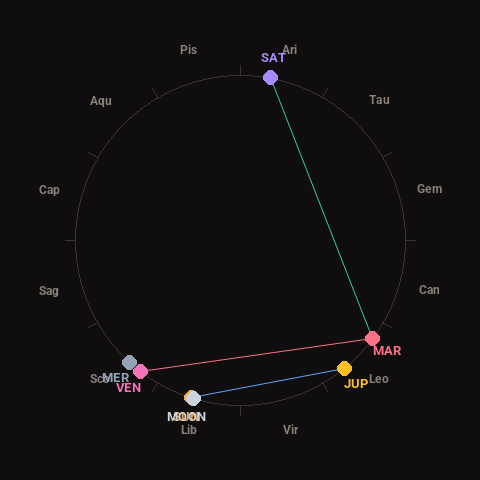
Moon: New Moon (0% illuminated), in Libra.
Notable planetary angles: Venus square Mars (90°), Sun conjunct Moon (0°), Mars trine Saturn (116°), Sun sextile Jupiter (56°).
Concurrent space weather: planetary Kp index 2.3; strongest recent solar flare: M1.2-class.
This is a factual snapshot, not a claim of cause and effect – researchers are divided on whether lunar, planetary or solar factors influence seismic or weather activity. It’s included so readers can track the pattern for themselves over time.