
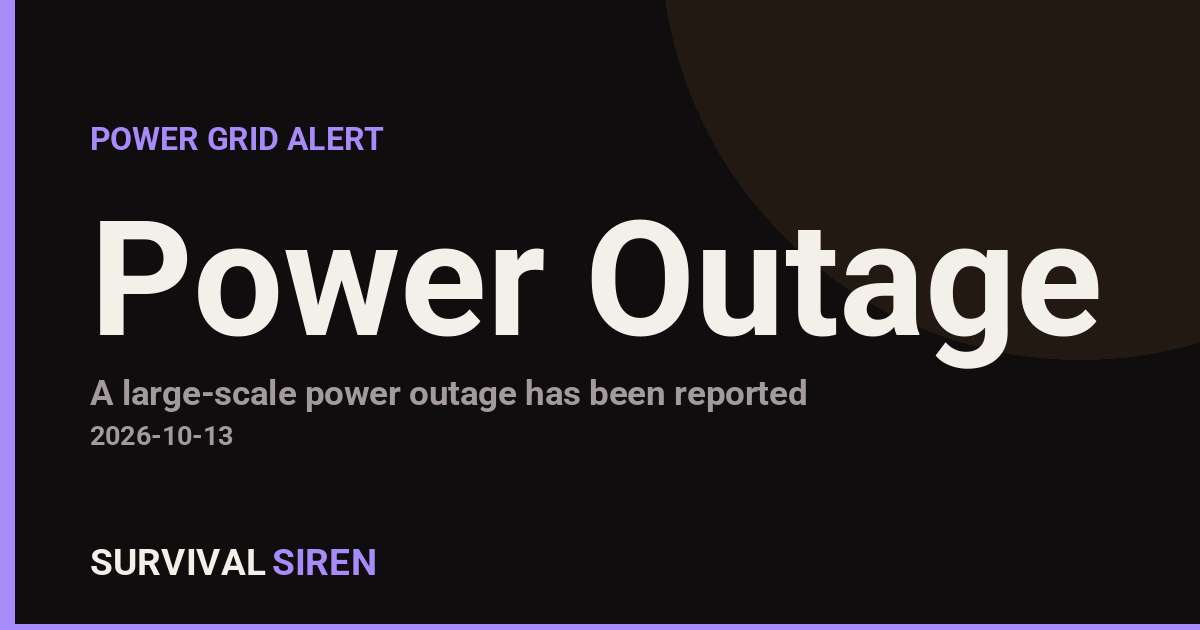
Severe storms moving through the region have left hundreds of thousands of customers without electricity, according to utility outage reports. The outages are widespread rather than isolated to a single town, which points to damage across transmission and distribution lines rather than a single substation failure. Crews are being dispatched as conditions allow, but restoration in storm-damaged areas typically takes longer when downed trees and blocked roads slow access to damaged equipment.
If you are in the affected area, you may notice flickering lights, brief power dips before a full outage, or internet and cell service degrading as backup batteries at cell towers run down – usually after four to eight hours. Traffic signals may be dark at some intersections; treat these as four-way stops.
What to keep an eye on
First, watch for updated outage estimates from your utility – most publish restoration maps, and initial estimates are often revised as crews assess damage. Second, if you rely on refrigerated food or medicine, remember that a closed refrigerator keeps food safe for about four hours and a full freezer for roughly 48 hours. Third, check on neighbors who depend on powered medical devices, and never run a generator or grill indoors or in a garage, since carbon monoxide poisoning is the most common serious injury in outages like this one.
There is no indication at this time that these outages are connected to anything other than the storms themselves. Downed lines and wind-damaged equipment fully account for the scale of the disruption being reported.
This report is based on storm and outage data tracked by NOAA’s National Weather Service and utility outage reporting systems.
Frequently Asked Questions
How long until power is restored?
Utilities typically restore the largest outages first, so urban areas often come back within hours while rural or heavily damaged areas can take one to three days or more. Check your utility's outage map for an estimate specific to your address.
Is this connected to space weather or a geomagnetic storm?
No. These outages are directly attributed to severe storms bringing down lines and damaging equipment. NOAA's Space Weather Prediction Center has not issued any geomagnetic storm warnings tied to this event.
What should I do right now if my power is out?
Keep fridge and freezer doors closed, unplug sensitive electronics to protect them from surges when power returns, and use flashlights rather than candles. Report your outage to your utility so it is counted in their restoration queue.
Is it safe to use a generator?
Yes, but only outdoors and at least 20 feet from windows and doors, since generators produce deadly carbon monoxide. Never plug one directly into a wall outlet, which can endanger line workers.
Keep tracking this:
Source: NBC News
Related Reading
Sky & Solar Conditions at the Time
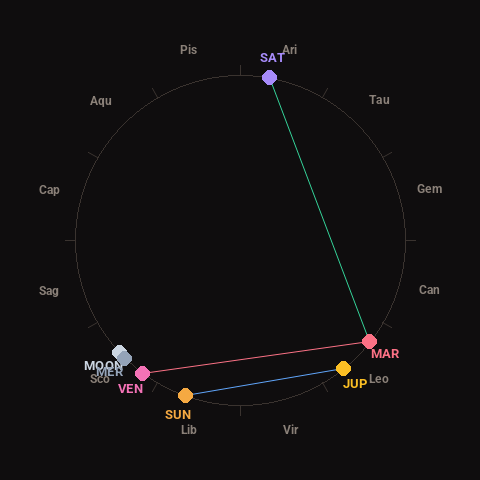
Moon: Waxing Crescent (6% illuminated), in Scorpio.
Notable planetary angles: Venus square Mars (88°), Sun sextile Jupiter (58°), Mars trine Saturn (118°), Moon conjunct Mercury (3°).
Concurrent space weather: planetary Kp index 3.3; strongest recent solar flare: nothing notable.
This is a factual snapshot, not a claim of cause and effect – researchers are divided on whether lunar, planetary or solar factors influence seismic or weather activity. It’s included so readers can track the pattern for themselves over time.