
The U.S. State Department has issued a Worldwide Caution for American citizens, urging increased vigilance at home and abroad as tensions tied to the U.S.-Iran conflict continue to rise. This is one of the broadest travel advisories the State Department can issue – it applies globally, not to a single country, and is typically prompted by heightened global tensions or an active conflict where U.S. interests or citizens could face elevated risk.
President Trump has publicly stated the U.S. is “winning” in Iran, but the economic ripple effects are already reaching American households. Oil markets are reacting to the conflict, and readers may notice higher prices at the gas pump and, over the coming weeks, potentially higher airline fuel surcharges and shipping costs on everyday goods.
What This Means for You
A Worldwide Caution does not mean Americans should cancel all travel or shelter in place. It means the government assesses a higher-than-usual chance of protests, unrest, or anti-American incidents in some regions, and it asks travelers to stay alert. If you have international trips planned, expect possible flight rerouting around Middle East airspace, longer travel times on some routes, and heightened security screening at airports.
Practical watch-items:
- Enroll in the State Department’s STEP program (Smart Traveler Enrollment Program) if you or family members are abroad, so embassies can reach you in an emergency.
- Check your specific destination’s country-level advisory before travel – a Worldwide Caution sits on top of individual country ratings, and some may be elevated further.
- Budget for continued volatility in fuel prices; filling up sooner rather than later and reducing non-essential driving can soften the short-term impact.
This alert is based on the U.S. State Department’s official Worldwide Caution advisory and related travel guidance.
Frequently Asked Questions
What does a 'Worldwide Caution' actually mean?
It's the State Department's broadest advisory level, issued when global tensions – like the current U.S.-Iran conflict – raise the risk of unrest or incidents affecting Americans anywhere. It urges extra vigilance, not the cancellation of travel plans.
Should I cancel my upcoming international trip?
Not automatically. Check the country-specific advisory for your destination, as risks vary widely by region, and enroll in the free STEP program so the nearest embassy can contact you if conditions change.
Why is my gas bill going up if the conflict is overseas?
Global oil prices react quickly to conflict in the Middle East, especially any threat to supply routes like the Strait of Hormuz. Higher crude costs filter down to the pump within days to weeks.
Will flights be affected?
Some airlines are rerouting flights away from Middle East airspace, which can mean longer flight times and possible delays or higher fares on certain routes. Check directly with your airline before departure.
Keep tracking this:
Source: U.S. Department of State
Related Reading
Sky & Solar Conditions at the Time
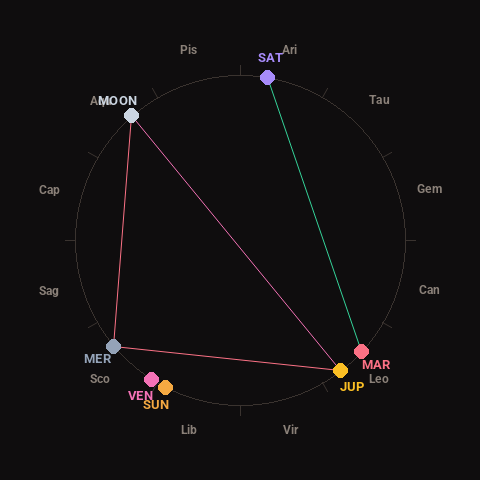
Moon: First Quarter (69% illuminated), in Aquarius.
Notable planetary angles: Moon square Mercury (89°), Mars trine Saturn (123°), Mercury square Jupiter (87°), Moon opposite Jupiter (176°).
Concurrent space weather: planetary Kp index 4.0; strongest recent solar flare: nothing notable.
This is a factual snapshot, not a claim of cause and effect – researchers are divided on whether lunar, planetary or solar factors influence seismic or weather activity. It’s included so readers can track the pattern for themselves over time.