
The National Weather Service office in Melbourne, Florida issued a Flood Warning at 3:52 PM EDT on October 20. The warning currently covers three areas: Lake County and Volusia County in Florida, and Brantley County in Georgia.
A Flood Warning means flooding is already occurring or is expected shortly – it is a step above a Flood Watch, which only signals that conditions are favorable for flooding. Residents in the affected counties may notice water pooling on roads, rising levels in creeks, streams, and drainage ditches, and standing water in low-lying neighborhoods, yards, and underpasses. Some local roads may become impassable, and drivers should not attempt to cross any water-covered roadway, since even shallow moving water can stall or sweep away a vehicle.
People most affected are those living near rivers, creeks, and flood-prone intersections in Lake and Volusia counties, including communities along the St. Johns River basin, as well as residents of Brantley County in southeast Georgia, where the Satilla River and its tributaries can rise quickly after heavy rain.
What to keep in mind
First, avoid driving through flooded roads – turn around and find another route, because the depth of water is hard to judge, especially at night. Second, if you live in a low-lying spot, move vehicles to higher ground and keep phones charged in case conditions worsen. Third, monitor local weather radio or your county’s emergency alerts for updates, since Flood Warnings can be extended or upgraded if rain continues. If water begins entering your home, move to higher floors and avoid contact with floodwater, which can carry debris and contamination.
This information comes from the National Weather Service (NWS) Melbourne, Florida office, part of NOAA.
Frequently Asked Questions
What's the difference between this Flood Warning and a Flood Watch?
A watch means flooding is possible; a warning means it is happening or imminent in the warned areas – in this case, Lake and Volusia counties in Florida and Brantley County in Georgia. Treat it as a 'take action now' alert rather than a heads-up.
What should I do right now if I'm in one of these counties?
Stay off flooded roads, move away from creeks and low-lying areas, and keep an eye on local alerts. If water is rising near your home, be ready to move to higher ground quickly.
How long will the flooding last?
That depends on how much more rain falls and how quickly rivers and drainage systems can drain. The NWS will extend, expand, or cancel the warning as conditions change, so check for updates through the evening.
Is it safe to drive through water that looks shallow?
No. Around six inches of moving water can knock a person down, and about a foot can float most cars. Water depth and road damage underneath are impossible to judge from the driver's seat, so turn around instead.
Keep tracking this:
Source: National Weather Service (NWS)
Related Reading
- Emergency Communication: Staying Connected When Towers Go Down
- Earthquake Survival: Precautions, Kit & Early Warning in 2026
- Essential Guide to Preparing for a Nuclear War
Sky & Solar Conditions at the Time
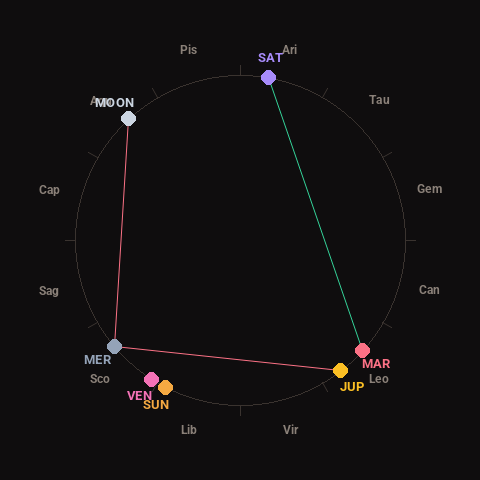
Moon: First Quarter (68% illuminated), in Aquarius.
Notable planetary angles: Moon square Mercury (88°), Mars trine Saturn (122°), Mercury square Jupiter (87°).
Concurrent space weather: planetary Kp index 2.7; strongest recent solar flare: nothing notable.
This is a factual snapshot, not a claim of cause and effect – researchers are divided on whether lunar, planetary or solar factors influence seismic or weather activity. It’s included so readers can track the pattern for themselves over time.