

A large-scale flight disruption is being reported, and travelers may be hearing the term “ground stop” over airport announcements and airline apps. Understanding what that actually means can help you make better decisions in the hours ahead.
A ground stop is a decision by air traffic controllers or the Federal Aviation Administration (FAA) to temporarily hold aircraft at their departure airports, rather than letting them take off and circle or divert near a congested or affected destination. According to pilots, it is one of the most common tools used to manage large-scale disruptions. Ground stops are typically triggered by severe weather (thunderstorms, snow, high winds, or low visibility), a major technical or communications outage, or a security or safety event on the ground.
What Travelers May Notice
If your departure airport is under a ground stop, expect departure boards to show cascading delays, with flights pushed back in increments of 30 to 90 minutes. Cancellations may follow if the stop lasts several hours, because flight crews can “time out” of their legal duty limits and aircraft end up out of position for later flights. Even travelers far from the affected airport can feel the effects, since one delayed aircraft often operates several flights in a day.
Who is affected: passengers flying into, out of, or connecting through the affected airport, plus anyone on flights whose aircraft or crew is coming from that hub. Ripple delays can spread across the national network within a few hours.
Practical steps: (1) Check your airline’s app before leaving for the airport and enable push notifications for your flight. (2) If your flight is canceled, rebook through the app or website while also getting in line at the gate desk — the app is often faster. (3) If a ground stop is in effect, ask about rebooking through an alternate connecting city, and remember you are entitled to a refund if you choose not to travel after a significant cancellation or delay.
This report is based on publicly available aviation reporting and FAA operational guidance; specific stop durations and airport impacts are updated by the FAA and individual airlines.
Frequently Asked Questions
Is my flight canceled or just delayed?
A ground stop usually starts as a delay, not a cancellation. Cancellations tend to follow only if the stop lasts several hours or crews exceed their legal duty-time limits, so check your airline's app for the latest status on your specific flight.
Will flights at other airports be affected too?
Yes, ripple effects are common. Aircraft and crews scheduled to pass through the affected airport operate later flights elsewhere, so delays can spread across the national network within a few hours.
Can I get a refund if I don't want to wait?
Under U.S. rules, if your flight is canceled or significantly delayed and you choose not to travel, you are entitled to a full refund, even on a nonrefundable ticket. Rebooking through the airline's app is usually the fastest option.
Is a ground stop a safety emergency?
No. A ground stop is a routine traffic-management tool used for weather, technical outages, or security events. Holding planes on the ground is actually the safer option — it prevents aircraft from circling congested airspace or diverting in poor conditions.
Keep tracking this:
Source: شبكة تواصل الإخبارية
Related Reading
Sky & Solar Conditions at the Time
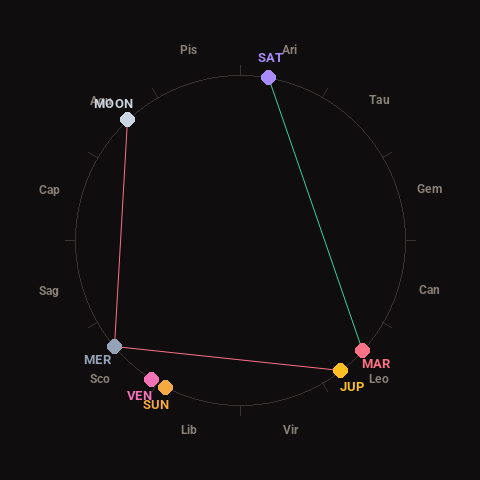
Moon: First Quarter (67% illuminated), in Aquarius.
Notable planetary angles: Mars trine Saturn (122°), Moon square Mercury (87°), Mercury square Jupiter (87°).
Concurrent space weather: planetary Kp index 1.0; strongest recent solar flare: nothing notable.
This is a factual snapshot, not a claim of cause and effect – researchers are divided on whether lunar, planetary or solar factors influence seismic or weather activity. It’s included so readers can track the pattern for themselves over time.