

North Korea is experiencing a widespread internet outage, with multiple state-run websites — including those of the official Korean Central News Agency and the Foreign Ministry — going dark. Monitoring firms that track the country’s small, tightly controlled internet presence reported that key sites became unreachable from outside the country, suggesting a disruption affecting core network infrastructure rather than a single server failure.
Because North Korea’s domestic internet is closed to ordinary citizens and only a sliver of its systems are visible to the outside world, the practical impact inside the country is hard to measure. The outage primarily affects the regime’s ability to publish state media abroad and any government communications that rely on those servers. There is no indication at this time that the disruption extends beyond North Korea’s borders or affects networks in South Korea, China, or elsewhere.
What this means for readers
For most people outside North Korea, the direct effect is minimal — state news sites may simply fail to load. However, large infrastructure outages in the region are worth watching, because they can sometimes signal broader technical or power problems. Readers should keep a few things in mind:
1. Outages like this can have many causes: equipment failure, cyberattacks, deliberate shutdowns, or power supply problems. There is no confirmed cause yet, and speculation should be treated cautiously.
2. If you follow North Korean state media for news or research, expect gaps or delays in official announcements until services are restored.
3. As a general preparedness habit, events like this are a reminder that internet access can disappear suddenly anywhere — keeping offline copies of important documents and an emergency contact plan is always sensible.
Some readers may wonder whether this could be related to geomagnetic activity. There is currently no evidence linking this outage to space weather; regional network failures of this kind are far more commonly caused by technical faults or deliberate action. Data on this event comes from independent internet monitoring organizations and open-source network measurements, not from NOAA, USGS, or NWS, which do not track foreign internet outages.
Frequently Asked Questions
Is this blackout connected to a geomagnetic storm or space weather?
There is no evidence of that. No significant geomagnetic storm conditions have been reported in connection with this event, and outages confined to one country's state-run websites are typically caused by technical failures or deliberate shutdowns.
Could this affect internet or power in South Korea, China, or the US?
No. The outage appears limited to North Korea's own state-controlled web infrastructure, which is isolated from global networks. Services outside the country are unaffected.
Was this a cyberattack?
The cause has not been confirmed. Possibilities include equipment failure, power problems, a deliberate shutdown by the regime, or an external attack — past North Korean outages have had varied causes.
How long will the outage last?
Previous North Korean internet outages have lasted from a few hours to more than a day. Monitoring groups are watching for state websites to come back online, which will be the clearest sign of restoration.
Keep tracking this:
Source: Howl.link
Related Reading
Sky & Solar Conditions at the Time
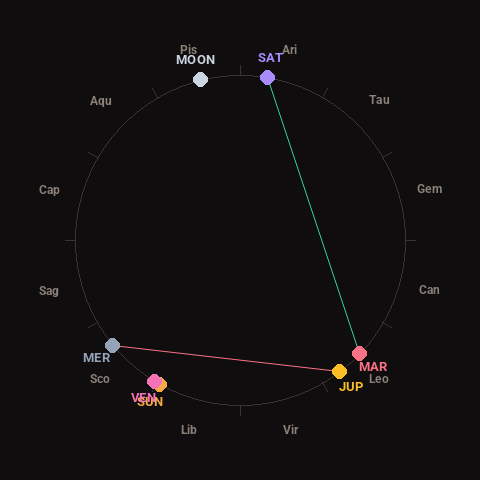
Moon: Waxing Gibbous (87% illuminated), in Pisces.
Notable planetary angles: Sun conjunct Venus (2°), Mercury square Jupiter (88°), Mars trine Saturn (124°).
Concurrent space weather: planetary Kp index 3.7; strongest recent solar flare: nothing notable.
This is a factual snapshot, not a claim of cause and effect – researchers are divided on whether lunar, planetary or solar factors influence seismic or weather activity. It’s included so readers can track the pattern for themselves over time.