
The U.S. State Department has raised its travel advisory for Israel to Level 3: Reconsider Travel, citing terrorism and unrest. This is the first change to Israel’s advisory level we have tracked, and it means the U.S. government is formally urging Americans to think carefully before booking or continuing travel there.
Level 3 is the second-highest of the State Department’s four advisory tiers. It stops short of Level 4 (Do Not Travel) but signals elevated risk that could affect tourists, business travelers, and Americans visiting family. The advisory notes that some areas carry increased risk beyond the countrywide level.
The advisory also details restrictions on U.S. government employees working in Israel, which are a useful guide to where officials see the greatest danger. Government personnel are barred from: areas north of Route 85 to Route 90 (south) to Route 87 in the north; anywhere within 11.3 kilometers (about 7 miles) of the Gaza Strip; and areas within 2.4 kilometers (about 1.5 miles) of certain sensitive boundaries. In a notable side update, as of August 26, 2026, family members may again join U.S. government employees stationed in Israel — a sign that conditions in some parts of the country are viewed as stable enough for dependents even as the overall advisory level rises.
What this means for you
If you have upcoming travel to Israel, you are not banned from going — advisories are guidance, not law. However, airlines, tour operators, and travel insurers often respond to Level 3 changes. Check your policy: some travel insurance will not cover trips taken against a Level 3 advisory, and cancellation terms may now shift in your favor.
Practical steps:
1. Enroll in the State Department’s free STEP program (Smart Traveler Enrollment Program) so the embassy can reach you in an emergency. 2. If you are already in Israel, avoid the restricted zones listed above and monitor local news and embassy alerts. 3. If you have not yet departed, contact your airline and insurer now to understand rebooking and refund options before making a decision.
This advisory reflects security conditions on the ground, not a single incident, and levels can move up or down as conditions change. We will continue to track any further changes.
Data source: U.S. Department of State Bureau of Consular Affairs travel advisory system.
Frequently Asked Questions
Does Level 3 mean I can't travel to Israel?
No. A Level 3 advisory is a strong recommendation to reconsider travel, not a ban. U.S. citizens may still travel, but the government is warning of terrorism and unrest risks.
Which parts of Israel are considered highest risk?
The advisory restricts U.S. government employees from northern areas north of Route 85 to Route 90 (south) to Route 87, anywhere within 7 miles of the Gaza Strip, and within 1.5 miles of certain boundary areas — a good indicator of where risk is greatest.
Will my travel insurance still cover a trip to Israel?
Many policies exclude or limit coverage for travel undertaken against a Level 3 advisory. Contact your insurer before departure to confirm what is and isn't covered.
I'm already in Israel — should I leave immediately?
The advisory does not call for immediate departure, but you should enroll in STEP, avoid the restricted areas, stay aware of your surroundings, and follow U.S. Embassy guidance. Family members are now permitted to join U.S. government employees in Israel, which suggests some areas are viewed as manageable.
Keep tracking this:
Source: U.S. Department of State
Related Reading
Sky & Solar Conditions at the Time
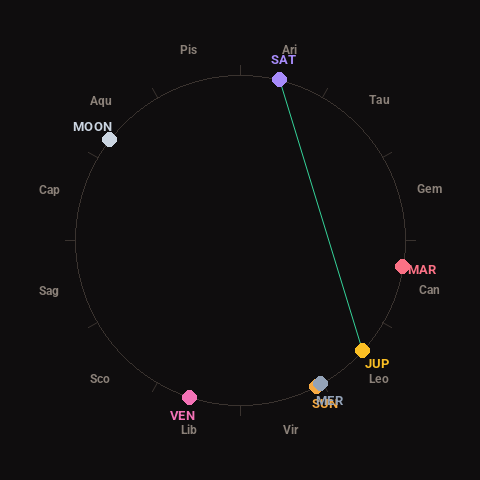
Moon: Waxing Gibbous (95% illuminated), in Aquarius.
Notable planetary angles: Jupiter trine Saturn (118°), Sun conjunct Mercury (2°).
Concurrent space weather: planetary Kp index 4.0; strongest recent solar flare: nothing notable.
This is a factual snapshot, not a claim of cause and effect – researchers are divided on whether lunar, planetary or solar factors influence seismic or weather activity. It’s included so readers can track the pattern for themselves over time.