
The National Weather Service office in Albuquerque, New Mexico, has issued a Flash Flood Warning covering eight areas across New Mexico and Arizona. The warning was issued at 8:42 PM MDT on October 22 and remains in effect until 11:30 PM MDT.
The warning covers Cibola, McKinley, Sandoval, Catron, and San Juan counties in New Mexico, along with Yavapai, Gila, and Coconino counties in Arizona. This is a broad, multi-county alert spanning much of the Four Corners region and parts of central and eastern Arizona.
What You Might Notice
Flash flood warnings are issued when flooding is already happening or expected imminently. Residents in the warned areas may see rapidly rising water in normally dry washes and arroyos, water flowing across roads, swollen creeks and streams, and ponding in low-lying areas. In the desert Southwest, even modest rainfall can produce fast-moving floodwater because hard, dry ground absorbs water slowly.
Who Is Affected
Anyone living in, traveling through, or recreating in the eight warned counties should take this seriously through late tonight. This includes drivers on rural highways and interstates crossing the region, campers in national forest and canyon country, and residents near burn scars, washes, or low-water crossings, where flooding risk is highest.
What To Do
First, never drive or walk through floodwater – as little as six inches of moving water can knock a person down, and one to two feet can carry away a vehicle. Turn around, don’t drown. Second, if you are in a canyon, wash, or low-lying area, move to higher ground now rather than waiting for water to arrive. Third, keep a phone charged and weather alerts enabled through the warning period, since conditions can change quickly overnight. If a road is barricaded, do not go around the barrier – it is there because the road ahead is unsafe or washed out.
Data for this alert comes from the National Weather Service (NWS) office in Albuquerque, New Mexico.
Frequently Asked Questions
What should I do right now if I'm in one of the warned counties?
Move away from washes, arroyos, and low-water crossings, and avoid driving until the warning expires at 11:30 PM MDT. If you encounter water over a roadway, turn around – do not attempt to cross it.
How long will this warning last?
The current warning runs until 11:30 PM MDT on October 22. The National Weather Service may extend it or issue new warnings if heavy rain continues, so keep alerts enabled overnight.
I'm traveling through the Four Corners area tonight – is it safe to drive?
Travel through Cibola, McKinley, Sandoval, Catron, San Juan, Yavapai, Gila, and Coconino counties carries real risk tonight due to possible flooded roads. If you can delay travel until after the warning expires, that is the safest choice.
Why is flash flooding so dangerous in the desert Southwest?
Dry, hard desert soil absorbs rain slowly, so water runs off quickly into washes and canyons, sometimes miles downstream from where the rain actually fell. Flooding can arrive with little warning even under a clear sky overhead.
Keep tracking this:
Source: National Weather Service (NWS)
Related Reading
- Emergency Communication: Staying Connected When Towers Go Down
- Earthquake Survival: Precautions, Kit & Early Warning in 2026
- Essential Guide to Preparing for a Nuclear War
Sky & Solar Conditions at the Time
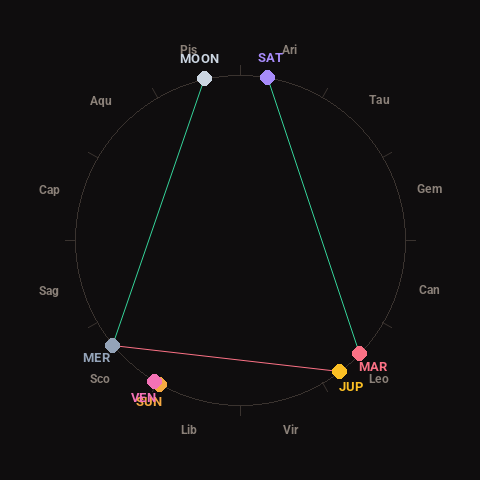
Moon: Waxing Gibbous (87% illuminated), in Pisces.
Notable planetary angles: Sun conjunct Venus (2°), Mercury square Jupiter (88°), Moon trine Mercury (117°), Mars trine Saturn (124°).
Concurrent space weather: planetary Kp index 3.3; strongest recent solar flare: nothing notable.
This is a factual snapshot, not a claim of cause and effect – researchers are divided on whether lunar, planetary or solar factors influence seismic or weather activity. It’s included so readers can track the pattern for themselves over time.