
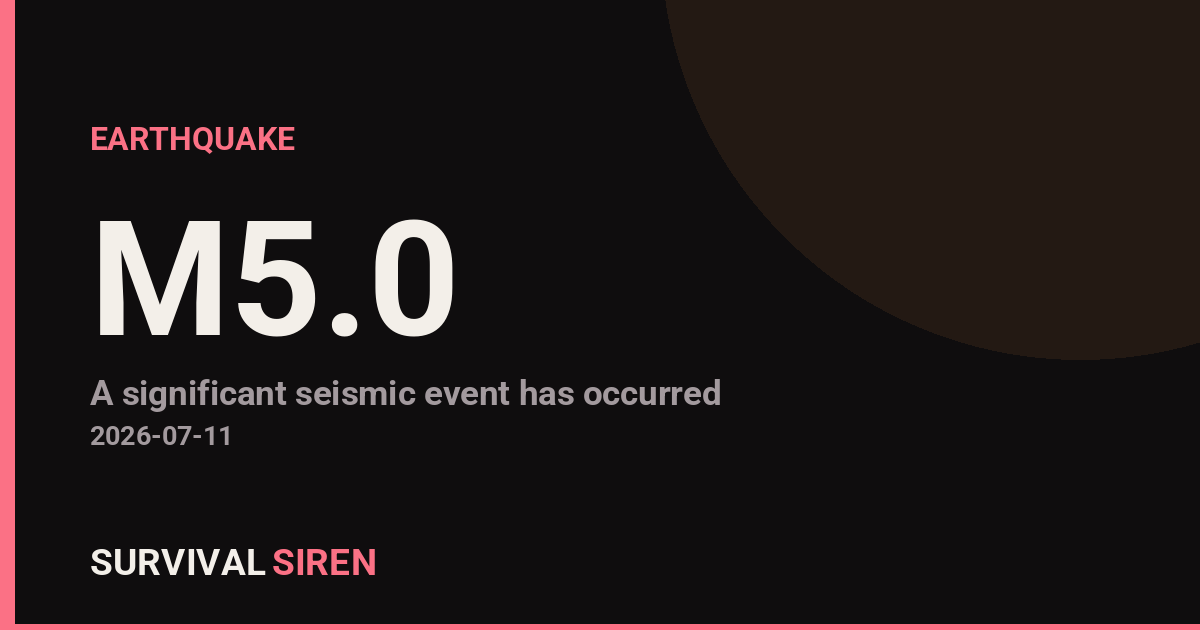
A magnitude 5.0 earthquake occurred approximately 299 kilometers west of Neiafu, Tonga, at a depth of roughly 368 kilometers, according to the U.S. Geological Survey (USGS). The deep depth of this quake means energy dissipated gradually through rock layers, reducing shaking intensity at the surface.
Residents in the surrounding region, particularly in Tonga and nearby Pacific island nations, likely felt noticeable shaking. At magnitude 5.0, people indoors typically experience moderate shaking, and objects may shift or fall. Outdoors, people generally feel vibrations clearly. However, because this earthquake occurred well below the surface, damage is unlikely to be significant.
What You Might Notice
If you’re in the affected area, expect brief to moderate shaking lasting several seconds to a minute. You may hear a low rumbling sound before or during the quake. Aftershocks—smaller earthquakes following the main event—are common and should be anticipated over the next hours or days, though they typically decrease in frequency and strength.
Who Is Affected: Tonga and surrounding Pacific communities are the primary regions where shaking would be noticeable. The deep ocean location means there is no tsunami risk from this event.
What to Monitor: Keep an eye on USGS earthquake updates for any aftershock activity. If you live in seismically active areas, maintain your emergency kit with water, first aid supplies, and a battery-powered radio. Review your household’s earthquake safety plan—knowing how to drop, cover, and hold on during shaking saves lives. Finally, ensure family members know where to meet if separated.
For real-time space weather and earthquake data, visit the live dashboard at https://survivalsiren.com/spaceweather/feed.html, powered by NOAA and USGS monitoring networks.
Source: USGS
Related Reading
Sky Conditions at the Time
Moon: Waning Crescent (15% illuminated), in Gemini.
Notable planetary angles: Moon sextile Jupiter (59°), Moon square Venus (88°), Sun conjunct Mercury (3°).
This is a factual snapshot, not a claim of cause and effect – researchers are divided on whether lunar, planetary or solar factors influence seismic or weather activity. It’s included so readers can track the pattern for themselves over time.
Earthquakes Within ~400 km, Past 30 Days
For context, here is other recent seismic activity in the surrounding region (M2.5+, via USGS):
| Date & Time (UTC) | Magnitude | Location |
|---|---|---|
| 2026-07-20 21:11 UTC | M4.9 | 62 km WNW of Pangai, Tonga |
| 2026-07-19 14:28 UTC | M4.2 | 239 km E of Levuka, Fiji |
| 2026-07-17 06:44 UTC | M4.4 | Fiji region |
| 2026-07-16 13:56 UTC | M4.5 | 189 km W of Neiafu, Tonga |
| 2026-07-14 22:50 UTC | M5.5 | Fiji region |
| 2026-07-12 14:35 UTC | M4.1 | Fiji region |
| 2026-07-12 10:10 UTC | M4.2 | Fiji region |
| 2026-07-12 08:45 UTC | M4.1 | 232 km E of Levuka, Fiji |
| 2026-07-11 06:32 UTC | M4.3 | 261 km WNW of Houma, Tonga |
| 2026-07-11 06:26 UTC | M4.5 | Fiji region |
| 2026-07-10 10:43 UTC | M4.2 | 296 km WNW of Houma, Tonga |
| 2026-07-09 21:37 UTC | M4.8 | 288 km SSE of Alo, Wallis and Futuna |
| 2026-07-07 18:04 UTC | M4.3 | 122 km SW of Hihifo, Tonga |
| 2026-07-07 06:08 UTC | M4.3 | 263 km WNW of Houma, Tonga |
| 2026-07-06 08:07 UTC | M4.6 | 112 km NNW of Neiafu, Tonga |
| 2026-07-05 23:53 UTC | M4.2 | 251 km ESE of Labasa, Fiji |
| 2026-07-05 14:22 UTC | M5.8 | 268 km SE of Levuka, Fiji |
| 2026-07-04 05:46 UTC | M4.3 | 124 km WSW of Hihifo, Tonga |
| 2026-07-04 00:00 UTC | M4.5 | Fiji region |
| 2026-07-02 01:13 UTC | M4.7 | Fiji region |
Emergency number for Tonga: 911 (General guidance – always verify locally, as this can vary by region.)