
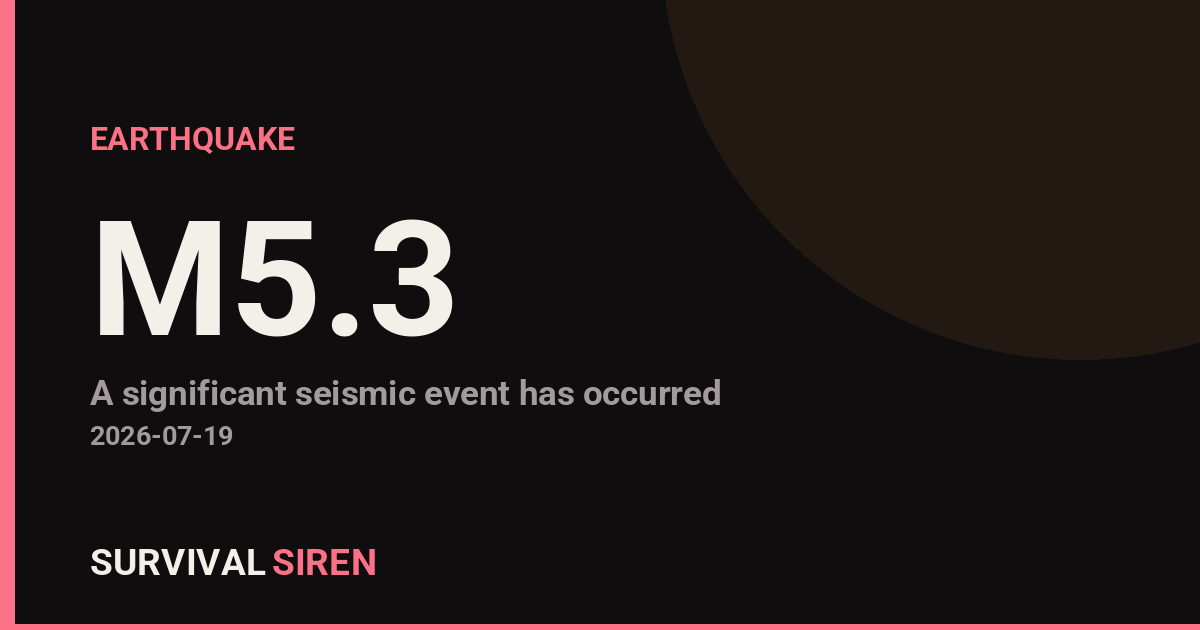
A magnitude 5.3 earthquake occurred approximately 59 kilometers southwest of Puerto Madero, Mexico, at a depth of roughly 20 kilometers, according to the U.S. Geological Survey (USGS). While significant, this moderate-strength quake poses manageable risks for the region.
At magnitude 5.3, this earthquake falls into the moderate range—strong enough to be felt widely but typically not destructive in most areas. People in Puerto Madero and surrounding communities likely experienced noticeable shaking lasting several seconds. Older buildings or those in close proximity to the epicenter may have sustained minor damage, though structural collapse is uncommon at this magnitude unless construction standards are very poor.
What You Might Notice
Residents within 50-100 km of the epicenter probably felt clear shaking. Distant areas experienced gentler motion. Aftershocks—typically smaller quakes following the main event—are common and can continue for hours or days. These are usually weaker than the initial quake but worth monitoring.
Who This Affects: The primary impact zone includes Puerto Madero and nearby settlements in Chiapas, Mexico. The Pacific coast of southern Mexico sits along active tectonic zones, making earthquakes routine for the region. Communities here generally have baseline earthquake preparedness in place.
What to Watch
1. Aftershock Activity: Monitor USGS updates for follow-up earthquakes over the next 24-72 hours. Most will be minor, but stay alert if you’re in the region.
2. Local Infrastructure Reports: If you live nearby, check local authorities for any damage assessments or road closures affecting your area.
3. Tsunami Risk: Undersea earthquakes can trigger tsunamis. Coastal residents should monitor official channels for any tsunami warnings, though shallower quakes like this one carry lower risk than deeper oceanic events.
For real-time seismic data and updates, visit the USGS Earthquake Hazards Program website directly or check your local emergency management agency.
Source: USGS