
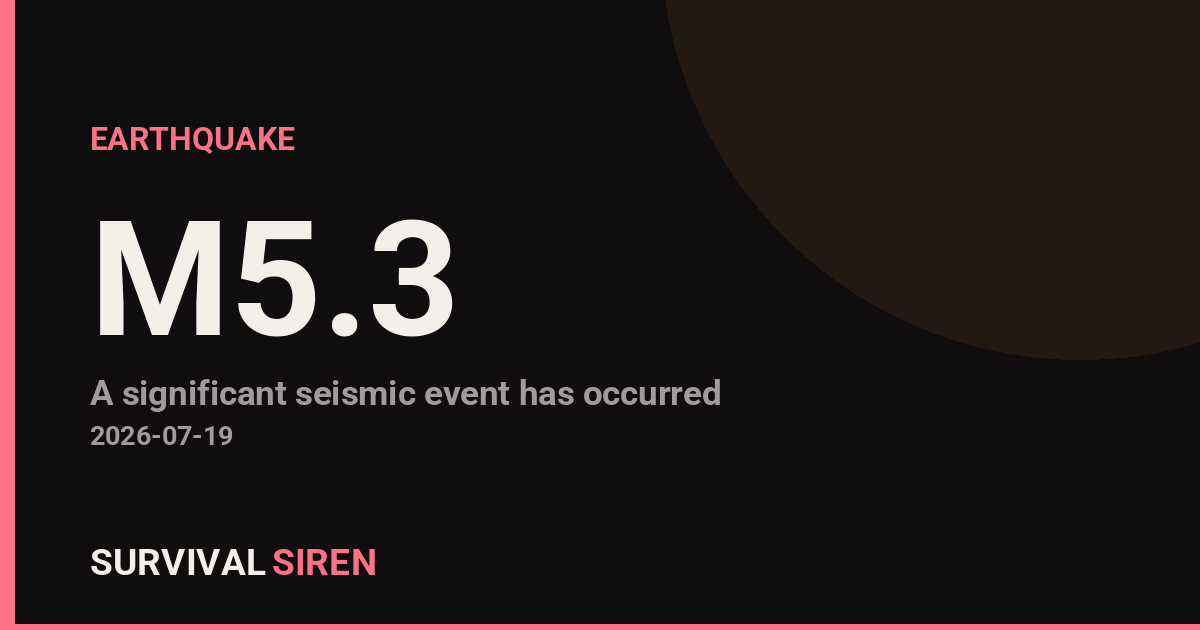
A magnitude 5.3 earthquake occurred approximately 190 kilometers south-southeast of Vilyuchinsk, Russia, at a shallow depth of about 10 kilometers. The tremor was reported by the U.S. Geological Survey (USGS) and would have been felt across the surrounding region.
What You Might Notice
A magnitude 5.3 earthquake is considered moderate. People in the immediate area—particularly within 50-100 km of the epicenter—likely felt noticeable shaking that could last several seconds. Furniture may have shifted, and unsecured items could have fallen. Damage to buildings is possible but typically limited to older or poorly constructed structures in seismically active zones.
Who Is Affected
The primary impact zone includes Kamchatka Peninsula communities and surrounding settlements. Vilyuchinsk is a coastal town in Russia’s far east, located in a tectonically active region where earthquakes are relatively common. The shallow depth (10 km) means the shaking was stronger at the surface than it would have been for a deeper event of the same magnitude.
What to Monitor
1. Aftershocks: Magnitude 5.3 earthquakes often produce aftershocks within hours or days. Watch USGS earthquake reports for activity in the same region. Aftershocks are typically smaller but can occasionally approach the main quake’s strength.
2. Regional Updates: If you have connections to Kamchatka or monitor the region, check local Russian emergency services and news outlets for damage assessments or safety advisories.
3. Preparedness Reminder: If you live in an earthquake zone, this is a useful reminder to secure heavy furniture, stock emergency supplies, and practice your family’s earthquake response plan—drop, cover, and hold on during shaking.
For real-time earthquake tracking and space weather updates, visit our live dashboard at https://survivalsiren.com/spaceweather/feed.html. Data sourced from NOAA and USGS.
Source: USGS