
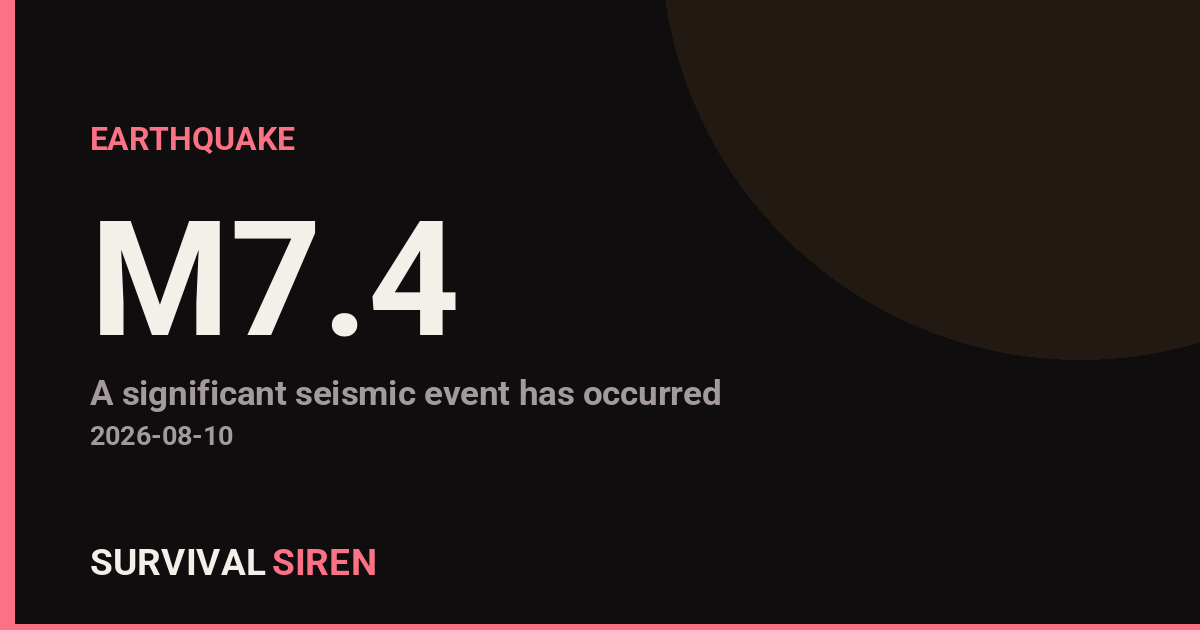
A magnitude 7.4 earthquake occurred approximately 5 kilometers east of San José del Palmar, Colombia at 10:41 AM local time today. The quake was centered at a depth of about 107 kilometers (66 miles) beneath the surface.
At this magnitude and depth, the earthquake would have been felt across a wide region of western Colombia and potentially in neighboring countries. Ground shaking in areas near the epicenter may have caused moderate to significant structural damage, though the relatively deep location reduces surface-level intensity compared to shallower events.
What You Might Notice
Residents within 100+ kilometers of the epicenter likely experienced strong shaking lasting 30–60 seconds. Building contents may have shifted, and minor infrastructure disruptions—such as brief power outages or water service interruptions—are common following earthquakes of this size. No tsunami warning was issued because the quake occurred on land rather than under the ocean.
Who Is Affected: The primary impact zone includes Colombia’s western departments, particularly regions around Chocó and Córdoba. Aftershocks are normal and should be expected over the coming days and weeks.
What to Monitor
1. Aftershocks: Check USGS earthquake data regularly. Magnitude 5.0+ aftershocks are possible and could cause additional damage to already-weakened structures.
2. Building Safety: If you’re in the affected region, inspect your home and workplace for cracks, fallen items, or structural concerns. Stay alert for additional tremors.
3. Emergency Services Updates: Local Colombian authorities and international relief organizations may issue damage assessments and recovery information over the next 24–48 hours.
For real-time earthquake monitoring, seismic data, and updates on this event, visit NOAA’s live space weather dashboard at https://survivalsiren.com/spaceweather/feed.html.
Source: USGS
Related Reading
- Earthquake Survival: Precautions, Kit & Early Warning in 2026
- Analyzing Low-Radiation Nuclear Explosions: Tactical Assessments and Survival Strategies
Sky & Solar Conditions at the Time
Moon: Waning Crescent (7% illuminated), in Cancer.
Notable planetary angles: Mercury sextile Venus (62°), Sun trine Saturn (123°), Moon square Saturn (93°).
Concurrent space weather: planetary Kp index 2.0; strongest recent solar flare: nothing notable.
This is a factual snapshot, not a claim of cause and effect – researchers are divided on whether lunar, planetary or solar factors influence seismic or weather activity. It’s included so readers can track the pattern for themselves over time.
Earthquakes Within ~400 km, Past 30 Days
For context, here is other recent seismic activity in the surrounding region (M2.5+, via USGS):
| Date & Time (UTC) | Magnitude | Location |
|---|---|---|
| 2026-08-02 17:12 UTC | M4.4 | 24 km NNW of Riosucio, Colombia |
| 2026-07-26 02:13 UTC | M4.7 | 18 km ESE of Monterrey, Colombia |
| 2026-07-25 06:29 UTC | M4.4 | 148 km WSW of Santa Genoveva de Docordó, Colombia |
| 2026-07-23 17:50 UTC | M4.5 | 5 km S of Jordán, Colombia |
| 2026-07-18 08:40 UTC | M4.4 | 136 km NW of Mosquera, Colombia |
| 2026-07-15 20:13 UTC | M4.3 | 5 km NE of Villanueva, Colombia |
Emergency number for Colombia: 123 (General guidance – always verify locally, as this can vary by region.)