
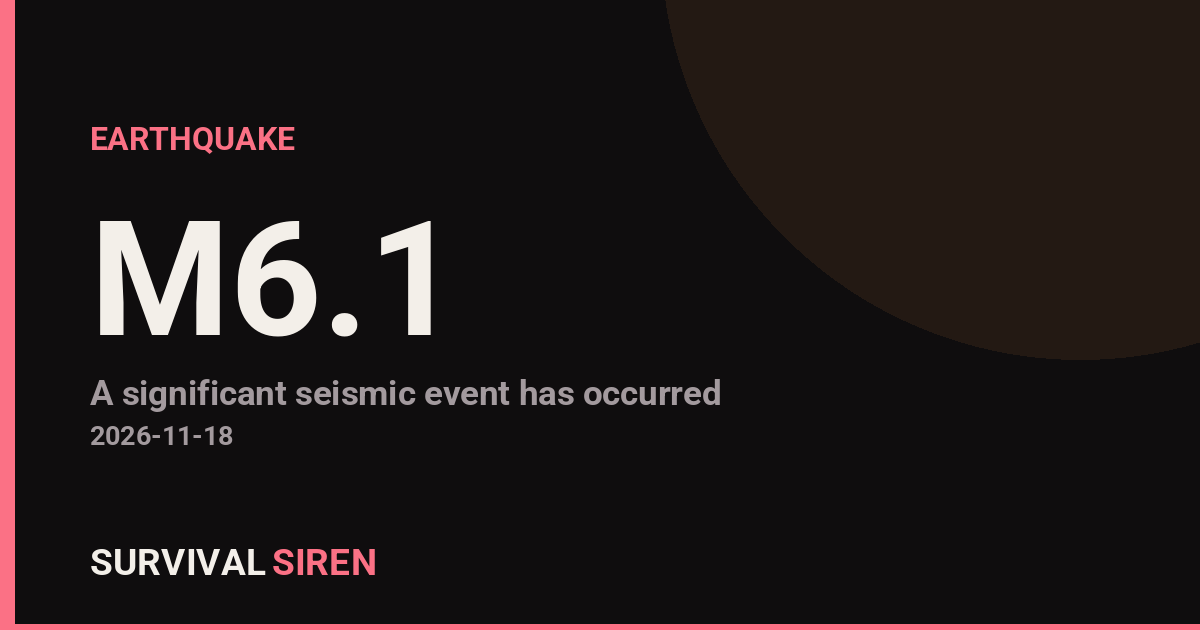
A magnitude 6.1 earthquake struck the Pacific-Antarctic Ridge today, according to the U.S. Geological Survey (USGS). The quake occurred at a shallow depth of about 10 kilometers (roughly 6 miles), which is typical for earthquakes along mid-ocean ridges.
The Pacific-Antarctic Ridge is an underwater mountain chain in the far southern Pacific Ocean where two of Earth’s tectonic plates are slowly pulling apart. This type of boundary produces frequent moderate earthquakes as the seafloor spreads and new crust forms. Today’s event fits that pattern — the region is seismically active, and this is at least the third magnitude 5.0 or stronger earthquake recorded within about 300 kilometers of this spot in the past year.
What This Means for People
In practical terms, very little. The earthquake occurred in one of the most remote stretches of ocean on the planet. The nearest major population center, Christchurch, New Zealand, is roughly 3,204 kilometers (about 1,990 miles) away — far too distant for the shaking to be felt. There are no inhabited islands anywhere near the epicenter, so there is no risk of damage to buildings or infrastructure, and no injuries have been reported or are expected.
While magnitude 6 earthquakes can cause serious damage when they strike near populated areas or beneath vulnerable structures, location is everything. An earthquake of this size in the empty Southern Ocean is a routine geological event, not a disaster.
What to watch for:
1. Aftershocks: Quakes of this size are commonly followed by smaller aftershocks in the hours and days afterward. These pose no risk to land given the remote location, but they are normal and expected.
2. Tsunami assessment: Shallow, moderate earthquakes in the open ocean occasionally generate small, localized waves, but an event of this magnitude and setting is very unlikely to produce a destructive tsunami. No tsunami warnings have been issued for populated coastlines.
3. Regional context: Continued moderate quakes along this ridge are part of normal plate movement and do not, by themselves, signal that a larger earthquake is imminent elsewhere.
Data for this alert comes from the U.S. Geological Survey (USGS) earthquake monitoring network.
Frequently Asked Questions
Was this earthquake felt in New Zealand or anywhere else?
No. The epicenter is roughly 3,204 km from Christchurch, the nearest major city — far too far away for the shaking to be felt on land.
Could this earthquake cause a tsunami?
It's very unlikely. Magnitude 6.1 quakes rarely generate significant tsunamis, and no tsunami warnings have been issued. Any waves produced would likely be small and localized to the open ocean.
Are aftershocks expected?
Yes, smaller aftershocks are common after a magnitude 6 earthquake and may continue for days, but given the remote mid-ocean location they pose no threat to people or property.
Does this mean a bigger earthquake is coming?
Not necessarily. The Pacific-Antarctic Ridge is naturally active — this is at least the third magnitude 5+ quake in the area over the past year — and such swarms are a normal part of seafloor spreading, not a reliable sign of a larger event.
Keep tracking this:
Source: USGS
Related Reading
- Bug Out Bags: What the Best-Selling 72-Hour Kits on Amazon Actually Deliver
- Top 10 YouTube Videos on How to Prepare for an Earthquake
- Global Seismic Stress Report: Southern Ocean Activity Rises While Six Segments Go Quiet
Reported Impact
USGS’s automated PAGER system currently estimates a Green alert level (minimal expected casualties or damage).
Impact figures are from USGS as of when this alert was generated and can rise as more reports come in – this is not a final damage assessment.









Map centered on the epicenter (-57.75, -146.75). Map data © OpenStreetMap contributors.
Sky & Solar Conditions at the Time
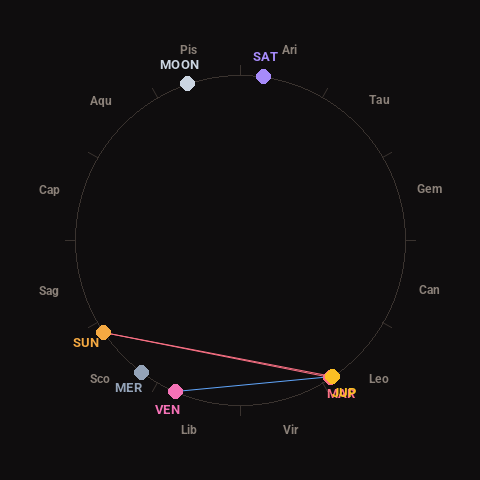
Moon: First Quarter (63% illuminated), in Pisces.
Notable planetary angles: Sun square Jupiter (90°), Sun square Mars (89°), Mars conjunct Jupiter (1°), Venus sextile Jupiter (57°).
Concurrent space weather: planetary Kp index 2.7; strongest recent solar flare: nothing notable.
This is a factual snapshot, not a claim of cause and effect – researchers are divided on whether lunar, planetary or solar factors influence seismic or weather activity. It’s included so readers can track the pattern for themselves over time.