
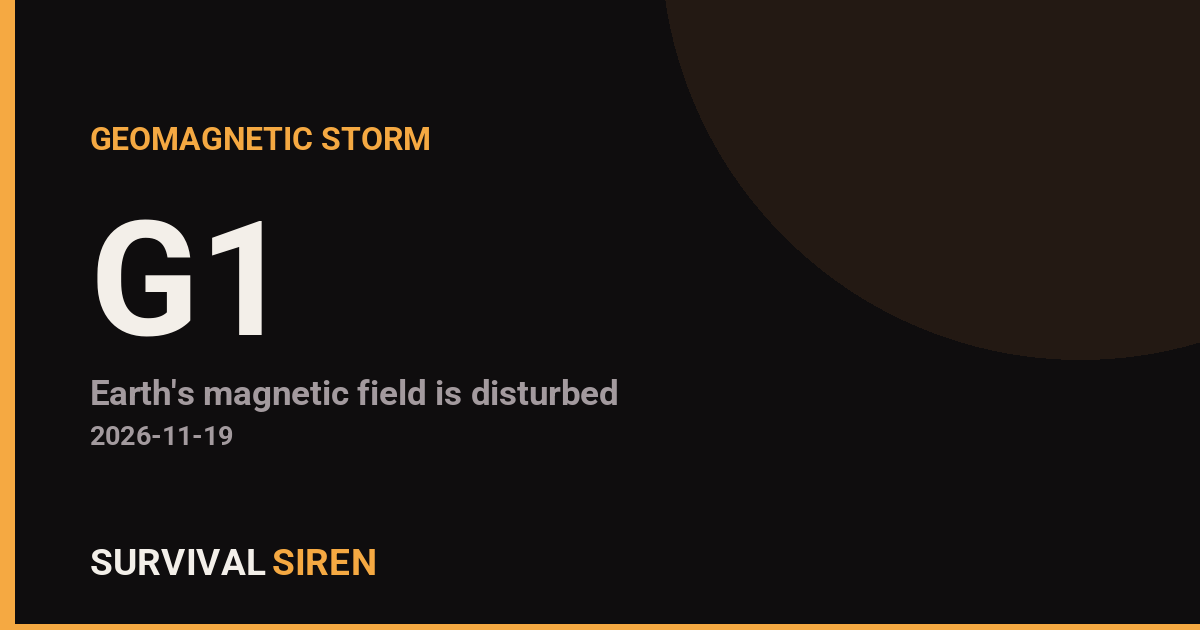
The planetary Kp index – a measure of how disturbed Earth’s magnetic field is – has reached 5.0, putting conditions at NOAA’s G1 level, the lowest rung on the five-step geomagnetic storm scale. This is a minor event, and most people will notice nothing at all.
The most visible effect will be auroras. At Kp 5.0, the northern lights are likely to be visible at high latitudes, including Canada, Scandinavia, Scotland, and possibly the northern-tier US states such as Minnesota, North Dakota, Montana, and Maine. If you live in those areas and skies are clear and dark tonight, it may be worth stepping outside and looking north.
On the infrastructure side, G1 storms can cause minor fluctuations in power grids and slight impacts on satellite operations, but these are typically absorbed by normal grid management. No widespread outages are expected from a storm at this level. Migratory animals that navigate using Earth’s magnetic field can also be affected, though this is not something most readers will notice.
What to Watch For
1. Aurora viewing: If you’re in a northern location, check local cloud cover and get away from city lights for the best chance to see the display.
2. Storm strength updates: Kp values can rise or fall over several hours. If the index climbs toward 6 or higher, impacts to satellites and grids become more significant, so it’s worth checking back for updated alerts.
3. No special action needed: At G1, there is no need to unplug electronics, stock supplies, or change travel plans. This is routine space weather.
Data for this alert comes from NOAA’s Space Weather Prediction Center.
Frequently Asked Questions
Can I see the northern lights from my location?
At Kp 5.0, auroras are likely visible in Canada, Alaska, Scandinavia, and Scotland, and possibly across the northern-tier US states like Minnesota and Maine under dark, clear skies. The farther south you are, the less likely you'll see anything.
Will this storm knock out my power or internet?
Very unlikely. G1 is the weakest storm category and typically causes only minor grid fluctuations that utilities manage routinely. No outages are expected from an event at this level.
Is this dangerous to people or electronics?
No. Geomagnetic storms at G1 strength pose no health risk and do not harm household electronics. You don't need to unplug anything or take precautions.
How long will this storm last?
Geomagnetic storm conditions at a given Kp level typically persist for several hours and can fluctuate up or down. NOAA updates conditions continuously, so check back for the latest Kp readings.
Keep tracking this:
Source: NOAA Space Weather Prediction Center
Sky & Solar Conditions at the Time
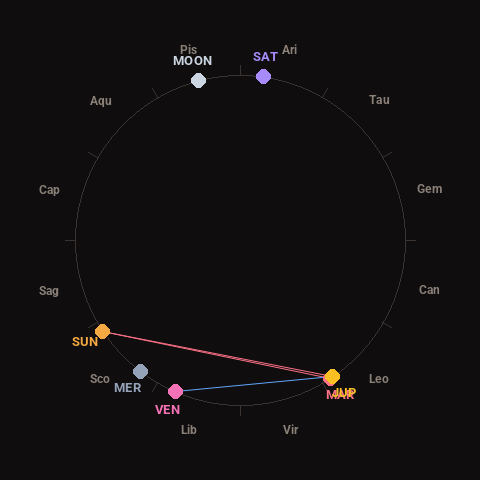
Moon: First Quarter (66% illuminated), in Pisces.
Notable planetary angles: Sun square Mars (90°), Sun square Jupiter (91°), Mars conjunct Jupiter (1°), Venus sextile Jupiter (57°).
Concurrent space weather: planetary Kp index 5.0; strongest recent solar flare: nothing notable.
This is a factual snapshot, not a claim of cause and effect – researchers are divided on whether lunar, planetary or solar factors influence seismic or weather activity. It’s included so readers can track the pattern for themselves over time.