
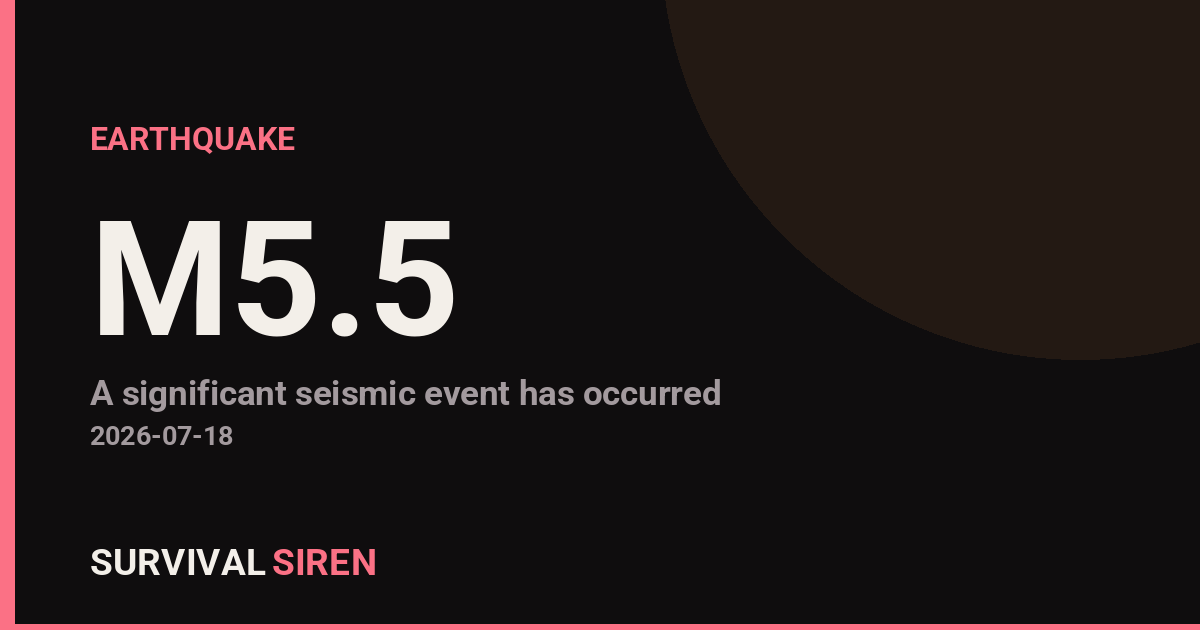
A magnitude 5.5 earthquake occurred in the Scotia Sea on Tuesday, with its epicenter located approximately 10 kilometers (about 6 miles) below the ocean floor, according to the U.S. Geological Survey.
The Scotia Sea, a body of water between South America’s southern tip and the Antarctic Peninsula, is a seismically active region where the Scotia tectonic plate meets adjacent plates. At this magnitude and depth, shaking would likely be felt across a limited area near the epicenter, primarily affecting research stations and maritime operations in the immediate vicinity.
What This Means
Because the Scotia Sea is sparsely populated, with no major coastal cities nearby, impacts on people are minimal. However, researchers at Antarctic research facilities and vessels operating in the Southern Ocean may have felt moderate shaking. There is no tsunami risk associated with this earthquake, as magnitude 5.5 events at this depth typically do not displace enough water to create dangerous waves.
The Scotia Sea regularly experiences earthquakes due to its complex geology. This event is consistent with typical seismic activity in the region and does not indicate any unusual trend.
What to Watch
1. USGS Earthquake Alerts: If you monitor seismic activity for any reason—whether for scientific interest, maritime planning, or general awareness—bookmark the USGS Earthquake Hazards Program website for real-time updates on global seismic events.
2. Regional Monitoring: Those with interests in Antarctic operations or Southern Ocean research should stay informed about seismic activity, as it can affect infrastructure and safety planning.
3. Aftershock Potential: Magnitude 5.5 earthquakes occasionally produce minor aftershocks. These are typically smaller and pose no additional hazard but may be recorded by seismic networks.
This event is part of normal Earth activity and serves as a reminder of how dynamic our planet’s crust remains. No preparedness actions are needed by the general public.
Live space and seismic data is tracked by NOAA and available on our real-time dashboard.
Source: USGS