
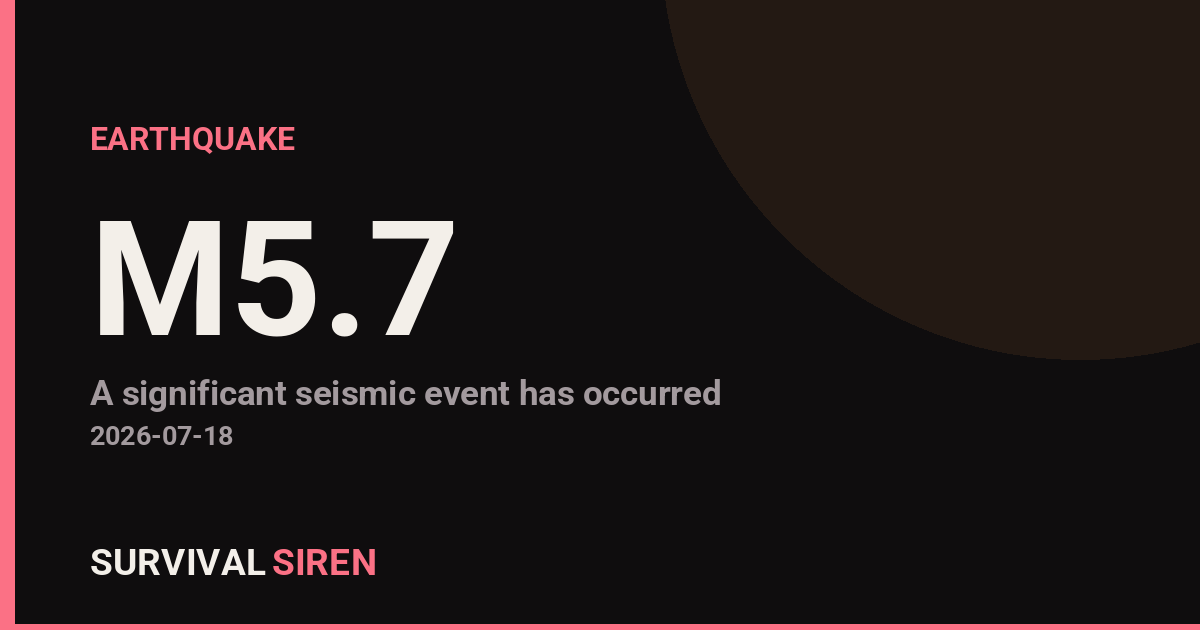
A magnitude 5.7 earthquake occurred approximately 72 kilometers southwest of Puerto Madero, Mexico, at a shallow depth of about 10 kilometers, according to the U.S. Geological Survey (USGS). The quake struck in the Pacific Ocean off Mexico’s southern coast in Chiapas state.
At this magnitude and depth, moderate shaking would have been felt across the immediate region. People in Puerto Madero and nearby coastal communities likely experienced noticeable ground movement. Depending on local building standards and distance from the epicenter, some minor damage to older structures is possible, though widespread serious damage is unlikely at this magnitude.
Who Is Affected
Communities in southern Chiapas, particularly those within 50-100 kilometers of the epicenter, experienced the strongest shaking. Coastal areas also warrant attention due to the ocean location—though the USGS monitors for tsunami potential with any significant offshore earthquake, the Pacific Tsunami Warning Center makes official tsunami assessments.
What to Watch
1. Aftershock activity: Moderate earthquakes commonly produce aftershocks in the hours and days following. Smaller quakes (magnitude 3-4) are normal and generally cause no additional damage.
2. Official tsunami updates: Check the Pacific Tsunami Warning Center and Mexican civil protection authorities for any coastal advisories, even though most Pacific earthquakes at this depth pose minimal tsunami risk.
3. Local infrastructure reports: Monitor local Chiapas news sources for damage assessments to roads, utilities, or buildings in affected towns. Most communities in this region are prepared for seismic activity, but any disruptions are usually reported quickly.
If you live in or near affected areas, the standard earthquake safety reminder applies: secure heavy items, know your safe spots indoors, and keep emergency supplies accessible. Stay informed through official channels rather than social media speculation.
For real-time earthquake data and monitoring, visit the USGS Earthquake Hazards Program at earthquake.usgs.gov.
Source: USGS