
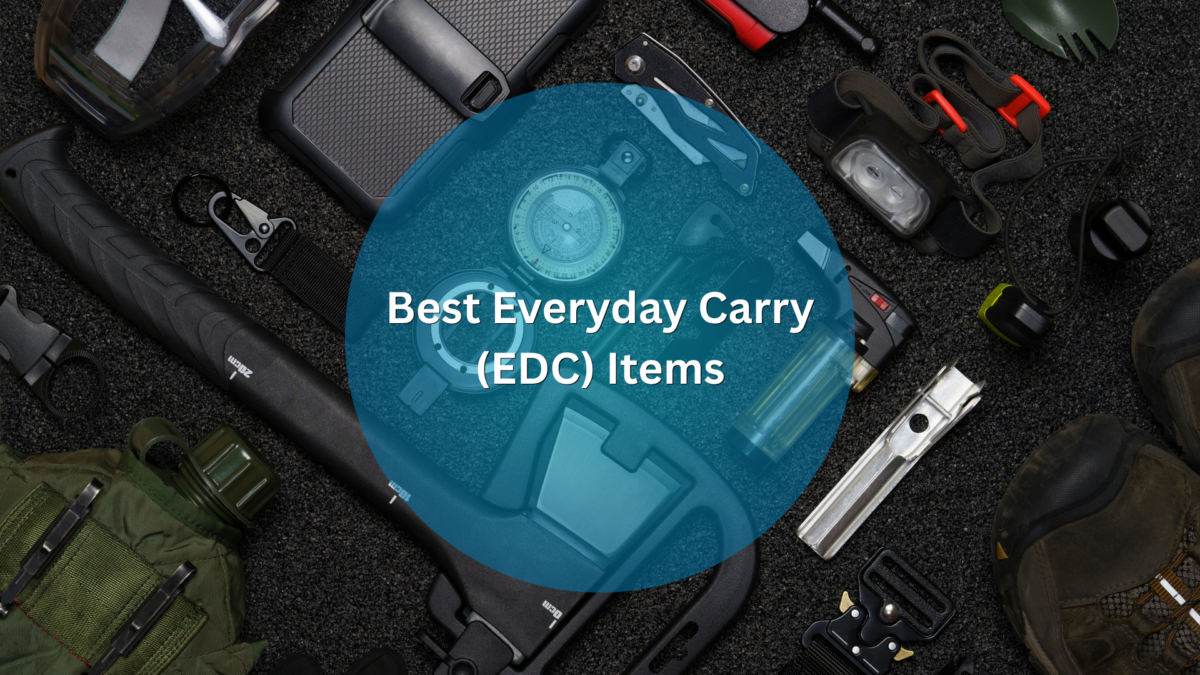
Everyone already carries keys, a phone, and a wallet. Everyday carry, or EDC, is what you add to that baseline: a handful of deliberately chosen tools that turn a pocket into a small, self-contained kit for the problems ordinary life keeps producing, from a dead phone to a jammed lock to something worse. The idea traces back to the Swiss Army Knife, patented in the late 19th century on the premise that one compact object should solve several unrelated problems. The modern EDC community hasn’t changed that instinct, it’s just gotten more deliberate about which tools earn the space.
The Core Kit
Pocket knife. The first deliberate addition for most people, and it earns its place for reasons that have nothing to do with self-defence: opening packages, cutting cordage, food prep, dozens of small daily tasks that go faster with a blade than without one.
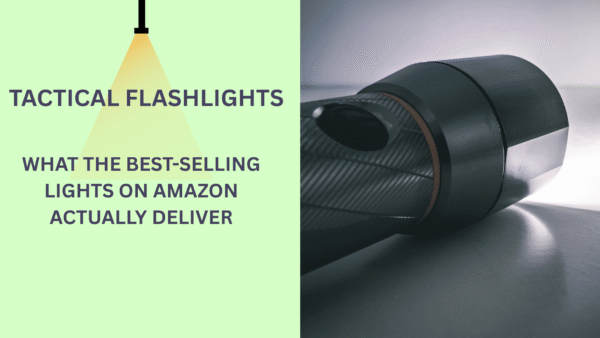
Flashlight. A compact light in the 300–600 lumen range covers indoor and everyday use. Save anything above 1,000 lumens for outdoor use or long throw distance. More lumens isn’t automatically better, a light that can blind someone in a stairwell is a poor choice for finding keys under a car seat.
Multitool. Rounds out the practical core, covering the gaps a knife alone won’t.
Pen. Fisher’s pressurised Space Pen, originally built for zero gravity, is a quiet EDC staple because it writes in wet, cold, or upside-down conditions where an ordinary ballpoint gives up.
None of this needs to be expensive or heavily branded. The goal is reliability under conditions ordinary gear wasn’t built to handle.
Know the Law Before You Buy
Knife law is rarely set at one national level, it’s usually layered: broad national rules, then regional or city rules that tighten things further. In the US, most states allow folding blades under three inches, but D.C. caps it at three inches, New York City at four, Chicago at two and a half, while Arizona has no statewide length limit at all. The UK sets a national three-inch, non-locking limit for carry without good reason. Canada, Australia, and the EU each layer their own national and local rules on top of each other, and in parts of the Gulf and South Asia, legality often comes down to intent rather than blade length.
The rule of thumb: a knife that’s legal at home can become a problem across a city, state, or border, so check local rules before you buy, not after.
Air travel is stricter and far more consistent worldwide, security checkpoints ban virtually all blades from carry-on regardless of length. A one-inch knife gets the same treatment as a six-inch one. Anything with an edge goes in checked baggage, sheathed, or gets swapped out of a travel kit entirely.
Build Around Your Actual Routine
Copying someone else’s setup is the most common mistake in EDC. A tradesperson needs a sturdier blade and a headlamp; an office worker’s toughest daily task might be opening a delivery box. Build around the specific, recurring problems your own routine produces, not around what looks most prepared.
The Items People Forget Until They Need Them
Battery bank. Daily navigation, payment, and communication all run through a phone that can die at the worst moment.
Small first-aid kit. Even just adhesive bandages and antiseptic wipes close the gap between a minor injury and an unnecessary pharmacy trip.
Cash. In whatever the local currency is. Card readers and payment apps fail in exactly the situations, power outages, network issues, remote areas, where cash still works.
None of these need to be carried by everyone every day. The point is matching the kit to actual risk: someone who drives long distances has different priorities than someone working from a downtown office, and a useful kit comes down to being honest about which scenarios are actually plausible.