
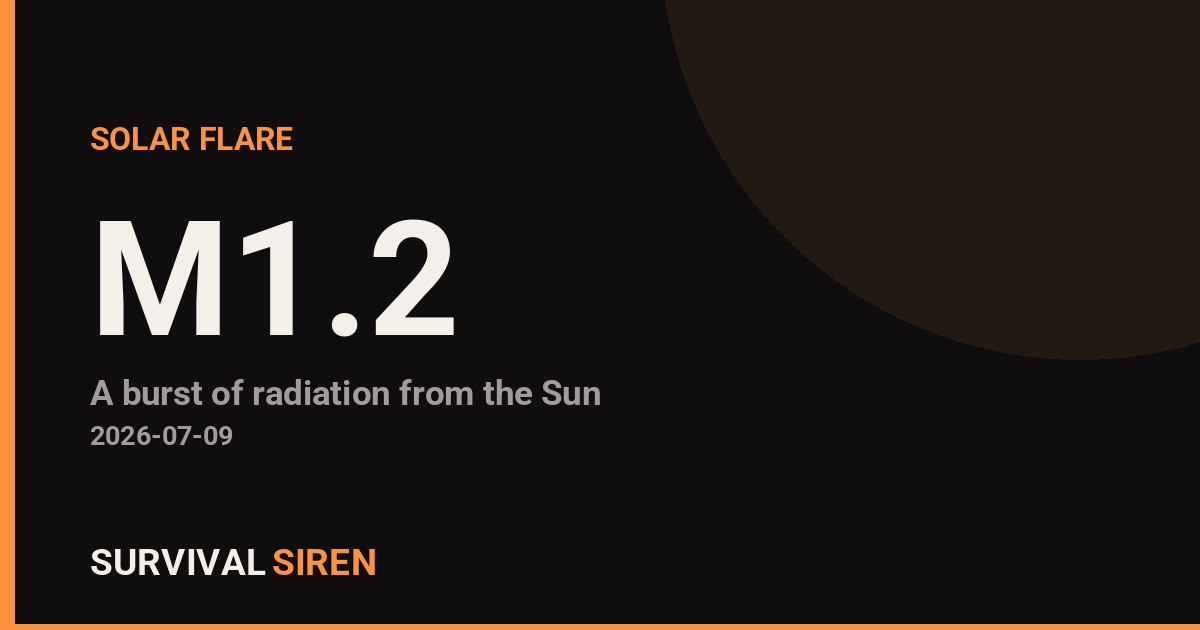
A moderate solar flare (M1.2-class) erupted on the sun on July 9 at 2:27 AM UTC. This event triggered a brief radio blackout on Earth’s sunlit side—classified as R1 on NOAA’s scale, meaning minor disruptions to shortwave radio communications.
What You Might Notice
Most people will see no effects. However, amateur radio operators, aviators on polar routes, and those relying on shortwave communications may experience temporary signal degradation lasting minutes to a few hours. GPS-dependent systems (surveying, precision farming, some financial networks) could see minor accuracy hiccups.
What Happens Next
The key question: did this flare launch a coronal mass ejection (CME) toward Earth? If so, we could see a geomagnetic storm develop within 1–3 days. This would amplify auroral displays at high latitudes and potentially cause wider disruptions to power grids and satellites. NOAA’s space weather forecasters are monitoring the sun for signs of an incoming CME.
Practical Watch Items
1. Monitor the Kp index daily — This measures geomagnetic activity. A jump to Kp 5 or higher would signal a developing geomagnetic storm worth your attention.
2. Check infrastructure status — If you rely on GPS, shortwave radio, or satellite services, keep backup systems or analog alternatives on hand (paper maps, phone numbers written down, battery-powered radio).
3. Stay informed — Watch NOAA’s alerts for any CME confirmation. Space weather rarely arrives without warning.
For an M1.2 flare, this is routine solar activity. We’ll have answers about a potential CME within hours. Check the live feed below for real-time updates.
Data sourced from NOAA. Monitor live conditions at https://survivalsiren.com/spaceweather/feed.html.
Source: NOAA GOES X-ray Flux
Sky Conditions at the Time
Moon: Last Quarter (34% illuminated), in Taurus.
Notable planetary angles: Sun square Saturn (92°), Moon square Jupiter (86°).
This is a factual snapshot (timed to this post’s publish time, as an approximation), not a claim of cause and effect – researchers are divided on whether lunar, planetary or solar factors influence seismic or weather activity. It’s included so readers can track the pattern for themselves over time.
1 Comment