
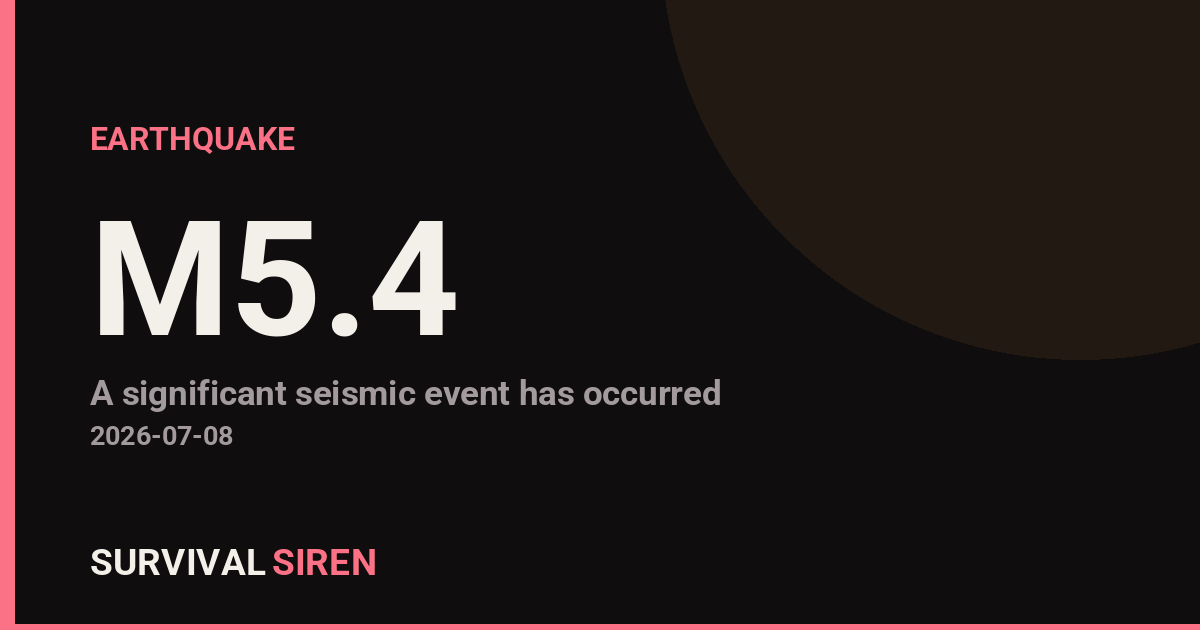
A magnitude 5.4 earthquake occurred in the Chagos Archipelago region at a shallow depth of approximately 10 kilometers, according to the U.S. Geological Survey (USGS). The shallow depth means shaking was likely felt across the surrounding region, though the remote location of the archipelago limits the number of people in the immediate impact zone.
Magnitude 5.4 earthquakes are considered moderate and typically cause light to moderate shaking. In populated areas, such tremors can rattle dishes, move lightweight furniture, and cause minor concern, but significant structural damage is uncommon at this magnitude unless buildings are poorly constructed or the ground is unstable.
What You Might Notice
Residents and visitors within several hundred kilometers of the epicenter may have felt noticeable shaking lasting 10–30 seconds. Some people report feeling dizzy or unsettled during moderate earthquakes. If you were in the region and felt shaking, it’s normal to experience a brief surge of adrenaline—this is your body’s natural response.
The Chagos Archipelago is a remote British Overseas Territory in the Indian Ocean with a small population, primarily on Diego Garcia. The earthquake poses minimal risk to widespread infrastructure, though local officials typically monitor seismic activity for aftershocks.
Practical Preparedness Reminders
1. Know Your Local Seismic Risk: Even if earthquakes aren’t common where you live, understand your region’s earthquake history. The USGS Hazards Program provides maps showing earthquake risk by location.
2. Secure Heavy Furniture and Objects: Bolting tall furniture, securing water heaters, and anchoring televisions can prevent injuries and property damage during stronger seismic events.
3. Practice Drop, Cover, Hold On: Familiarize yourself and your household with the proper response to earthquake shaking. Practicing this simple technique takes minutes and could protect you during a stronger event.
For real-time earthquake and space weather monitoring, visit the live dashboard at https://survivalsiren.com/spaceweather/feed.html. Data sourced from NOAA and USGS.
Sky Conditions at the Time
Moon: Last Quarter (42% illuminated), in Aries.
Notable planetary angles: Sun square Saturn (92°), Moon square Mercury (88°), Moon trine Venus (123°).
This is a factual snapshot, not a claim of cause and effect – researchers are divided on whether lunar, planetary or solar factors influence seismic or weather activity. It’s included so readers can track the pattern for themselves over time.