
The U.S. State Department has raised its travel advisory for North Korea (officially the Democratic People’s Republic of Korea, or DPRK) to Level 4 — the highest level, meaning ‘Do Not Travel.’ The advisory cites the continuing serious risk of arrest, long-term detention, and the threat of wrongful detention of U.S. citizens.
In practical terms, this means the U.S. government is telling citizens not to go to North Korea for any reason. U.S. passports are not valid for travel to, in, or through the DPRK unless specially validated by the Secretary of State, which is granted only in very limited circumstances, such as certain humanitarian or journalistic travel. Standard tourist travel is not permitted.
Who Is Affected
Anyone with travel plans involving North Korea should cancel them. This also affects dual nationals, aid workers, journalists, and anyone who might transit through the region — travelers heading to South Korea, China, or Russia should double-check itineraries to ensure no routing touches DPRK territory or airspace connections. U.S. citizens currently in North Korea (a very small number) are urged to leave if possible, though consular assistance inside the country is extremely limited because the U.S. has no embassy there; Sweden serves as the protecting power for U.S. interests.
What readers might notice: tour operators offering DPRK trips (usually via Beijing) may cancel or restrict bookings for American passport holders, and travel insurance will generally not cover travel taken against a Level 4 advisory.
Watch-items and practical pointers:
• If you have any planned travel near the Korean Peninsula, confirm your itinerary stays clear of DPRK territory and follow airline routing updates.
• U.S. citizens abroad anywhere in the region should enroll in the State Department’s Smart Traveler Enrollment Program (STEP) so they can receive alerts and be located in an emergency.
• Check the State Department’s advisory page before booking any international travel — Level 4 countries also include several others, and advisories can change quickly.
This information comes from the U.S. Department of State’s Bureau of Consular Affairs travel advisory system.
Frequently Asked Questions
Can I legally travel to North Korea as an American?
Not with a standard U.S. passport. Passports are invalid for travel to, in, or through North Korea unless specially validated by the Secretary of State, which is rare and limited to cases like certain humanitarian or journalistic work.
What happens if an American is detained in North Korea?
The risk of wrongful and long-term detention is the core reason for this advisory. The U.S. has no embassy in the DPRK, so help is extremely limited — Sweden acts as the protecting power for U.S. citizens there.
Does this affect travel to South Korea or China?
No. This advisory applies only to North Korea. Travel to South Korea and China continues normally, though you should verify that no flight or tour itinerary routes through DPRK territory.
Will my travel insurance cover a trip to North Korea?
Almost certainly not. Most travel insurance policies exclude coverage for travel to countries under a Level 4 'Do Not Travel' advisory.
Keep tracking this:
Source: U.S. Department of State
Related Reading
Sky & Solar Conditions at the Time
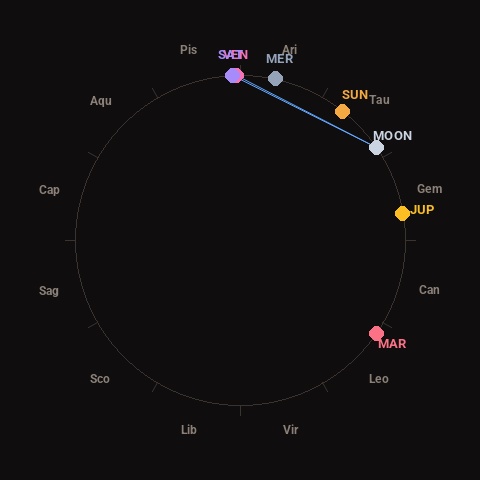
Moon: New Moon (2% illuminated), in Taurus.
Notable planetary angles: Venus conjunct Saturn (1°), Moon sextile Saturn (58°), Moon sextile Venus (57°).
Concurrent space weather: planetary Kp index 0.7; strongest recent solar flare: nothing notable.
This is a factual snapshot, not a claim of cause and effect – researchers are divided on whether lunar, planetary or solar factors influence seismic or weather activity. It’s included so readers can track the pattern for themselves over time.