
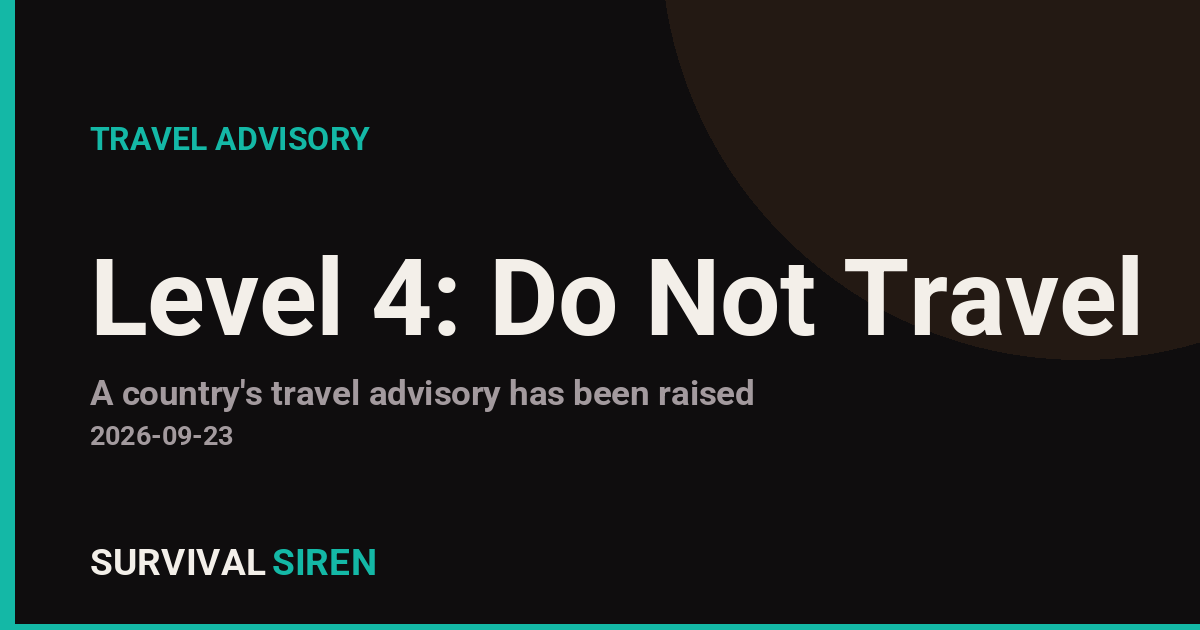
The U.S. State Department has raised its travel advisory for Gaza to Level 4, the highest level on its four-tier scale, meaning “Do Not Travel.” The advisory cites terrorism, civil unrest, and limited health infrastructure as the reasons for the escalation.
Level 4 is the State Department’s most serious warning and is reserved for destinations where the risks to travelers are considered life-threatening. In practical terms, the advisory notes that U.S. government employees are prohibited from traveling to Gaza for any reason, and that the U.S. government is unable to provide routine or emergency consular services to American citizens there. That means if a U.S. citizen in Gaza runs into trouble — lost passport, medical emergency, arrest, or security incident — the embassy cannot send help in the usual way.
The advisory also warns that terrorist groups, lone-actor attackers, and other violent extremists continue to plot possible attacks in Gaza, and that medical care options are extremely limited for anyone injured or taken ill.
Who is affected
This applies to all U.S. citizens. Aid workers, journalists, dual nationals, and people with family in the region are the groups most likely to be directly affected. U.S. citizens already in Gaza are urged to leave when it is safe to do so and to have a personal departure plan that does not depend on U.S. government assistance.
Practical pointers:
• If you have family or colleagues in Gaza, make sure they are enrolled in the Smart Traveler Enrollment Program (STEP) so they receive security updates, and confirm they have communication check-in plans in place.
• Anyone with planned travel to the broader region should check the separate advisory levels for Israel and the West Bank, as conditions and border crossings can change with little notice.
• Aid organizations and journalists should review their security protocols and verify medical evacuation coverage before any deployment.
Advisory data comes from the U.S. Department of State’s Bureau of Consular Affairs.
Frequently Asked Questions
What does Level 4 actually mean?
Level 4 is the highest U.S. travel advisory level and means "Do Not Travel." It signals a life-threatening risk environment where the government cannot guarantee help if something goes wrong.
Can the U.S. embassy help Americans already in Gaza?
No — the State Department says it cannot provide routine or emergency consular services in Gaza. Americans there are urged to have their own departure and emergency plans that don't rely on U.S. government assistance.
Does this advisory affect travel to Israel or the West Bank?
This specific alert covers Gaza only; Israel and the West Bank have their own separate advisory levels. Check the State Department's current ratings before any regional travel, as they can change quickly.
I'm an aid worker or journalist — does this ban me from going?
The advisory is a strong warning, not a legal ban for private citizens, though U.S. government employees are prohibited from traveling there. Journalists and aid workers who do go should have robust security and medical evacuation plans in place.
Keep tracking this:
Source: U.S. Department of State
Related Reading
Sky & Solar Conditions at the Time
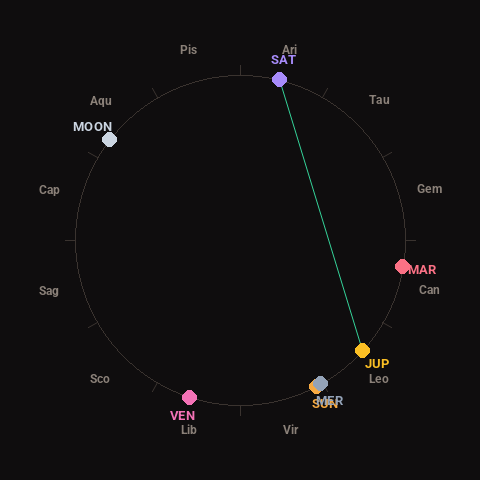
Moon: Waxing Gibbous (95% illuminated), in Aquarius.
Notable planetary angles: Jupiter trine Saturn (118°), Sun conjunct Mercury (2°).
Concurrent space weather: planetary Kp index 0.7; strongest recent solar flare: nothing notable.
This is a factual snapshot, not a claim of cause and effect – researchers are divided on whether lunar, planetary or solar factors influence seismic or weather activity. It’s included so readers can track the pattern for themselves over time.