
The U.S. State Department has raised its travel advisory for Bahrain to Level 3: Reconsider Travel, citing terrorism and armed conflict. Level 3 is the second-highest tier on the department’s four-level scale, just below Level 4: Do Not Travel, and it means travelers should seriously weigh postponing or canceling trips.
The escalation follows the onset of hostilities between the United States and Iran on February 28, 2026. Since then, officials report an ongoing threat of drone and missile attacks from Iran and significant security concerns across the Gulf region. Bahrain hosts the U.S. Navy’s Fifth Fleet headquarters, which makes the country a notable potential target during any U.S.-Iran confrontation.
The advisory also includes specific restrictions on U.S. government personnel. U.S. government employees now need special authorization to travel to Bahrain, and only family members aged 18 or older may accompany employees stationed there. Restrictions like these are a practical signal of how seriously the government assesses the risk on the ground.
What this means for everyday travelers
If you have a trip planned to Bahrain, this advisory does not ban travel, but it is a formal recommendation to reconsider. Americans already in Bahrain should consider enrolling in the Smart Traveler Enrollment Program (STEP) so the embassy can reach them, keep travel documents current, and review departure options while commercial flights remain available. Travelers should also check with airlines, as carriers sometimes adjust routes or schedules in response to regional tensions, and travel insurance policies may treat a Level 3 advisory differently than a lower-level one.
Family members of U.S. military or government personnel in Bahrain should pay close attention to official guidance, since dependent travel rules have already tightened and could change further if the security situation shifts.
Sensible watch-items going forward: first, monitor whether the advisory escalates to Level 4 or whether the embassy orders or authorizes departure of non-emergency personnel, which would mark a significant deterioration. Second, watch commercial flight availability out of Bahrain International Airport, since airspace closures in the Gulf can happen with little warning during missile or drone activity. Third, if you must remain in Bahrain, identify shelter locations, keep a charged phone and basic supplies on hand, and follow local authority instructions during any alert.
Data for this alert comes from the U.S. Department of State’s Bureau of Consular Affairs travel advisory system.
Frequently Asked Questions
Does a Level 3 advisory mean I can't travel to Bahrain?
No. Level 3 is a strong recommendation to reconsider travel, not a prohibition. However, it reflects serious risks, and the ongoing threat of drone and missile attacks tied to the U.S.-Iran conflict is the driving concern here.
I'm an American currently in Bahrain. Should I leave now?
The State Department is not ordering private citizens to leave, but it advises reconsidering whether to stay. Enroll in the STEP program, monitor embassy messages, and keep a departure plan ready in case conditions worsen or flights become limited.
Will flights to and from Bahrain be canceled?
Commercial flights are operating, but airlines can reroute or suspend service quickly during regional missile or drone activity. Check directly with your airline before heading to the airport and consider flexible or refundable tickets.
Why does the advisory mention restrictions on U.S. government employees?
U.S. government employees now need special authorization to travel to Bahrain, and only family members 18 or older may accompany stationed personnel. These internal restrictions reflect how seriously the government views the current threat level.
Keep tracking this:
Source: U.S. Department of State
Related Reading
Sky & Solar Conditions at the Time
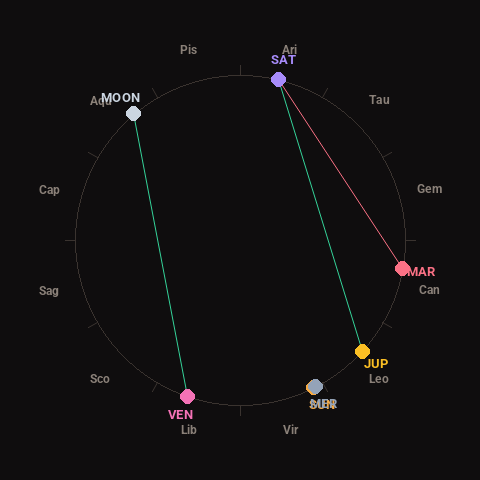
Moon: Full Moon (99% illuminated), in Aquarius.
Notable planetary angles: Sun conjunct Mercury (1°), Moon trine Venus (121°), Jupiter trine Saturn (119°), Mars square Saturn (86°).
Concurrent space weather: planetary Kp index 0.3; strongest recent solar flare: nothing notable.
This is a factual snapshot, not a claim of cause and effect – researchers are divided on whether lunar, planetary or solar factors influence seismic or weather activity. It’s included so readers can track the pattern for themselves over time.