
The U.S. State Department has raised its travel advisory for Kuwait to Level 3: Reconsider Travel, citing the threat of armed conflict, landmines, and crime. This is the second-highest level on the department’s four-tier scale, sitting just below Level 4 (Do Not Travel), and it applies to all U.S. citizens considering trips to the country.
The advisory points to the onset of hostilities involving the United States in the region as a key factor behind the escalation. Officials warn that the U.S. government’s ability to assist American citizens in Kuwait is limited due to safety risks – meaning that if you run into trouble there, embassy help may be slow, restricted, or unavailable in some areas.
Reflecting the elevated risk, the State Department has also tightened rules for its own personnel. U.S. government employees now need special authorization to travel to Kuwait, and only family members aged 18 or older may accompany employees posted there. Restrictions like these on official staff are often an early signal that conditions on the ground are deteriorating.
What this means for you
If you have travel booked to Kuwait, this is a good moment to review your plans. Check with your airline about rebooking or cancellation options, and review your travel insurance – many policies treat Level 3 and Level 4 advisories differently, and some exclude coverage for destinations under active advisories. If you have family, friends, or business contacts in Kuwait, confirm they have a communication plan and know how to reach the U.S. Embassy in an emergency.
Practical steps worth taking now: enroll any upcoming regional travel in the State Department’s free Smart Traveler Enrollment Program (STEP) so you receive real-time alerts, keep digital and paper copies of your passport and key documents, and monitor the advisory level – an escalation to Level 4 would typically trigger stronger restrictions and could affect commercial flight availability.
Data source: U.S. Department of State – Bureau of Consular Affairs travel advisory system.
Frequently Asked Questions
Does Level 3 mean I can't travel to Kuwait?
No – it is an advisory, not a ban. It means the State Department recommends you reconsider your plans, but the decision remains yours; just be aware consular help may be limited if something goes wrong.
Will my travel insurance still cover a trip to Kuwait?
It depends on your policy. Many insurers reduce or exclude coverage for destinations under Level 3 or 4 advisories, so contact your provider directly before traveling.
I'm a U.S. citizen already in Kuwait – what should I do?
Enroll in the Smart Traveler Enrollment Program (STEP) if you haven't, keep your documents accessible, stay aware of local conditions, and know the U.S. Embassy's contact details in case you need assistance.
Could this advisory get worse?
Yes – if hostilities in the region escalate, the advisory could move to Level 4 (Do Not Travel), which often coincides with reduced embassy staffing and possible disruptions to commercial flights.
Keep tracking this:
Source: U.S. Department of State
Related Reading
Sky & Solar Conditions at the Time
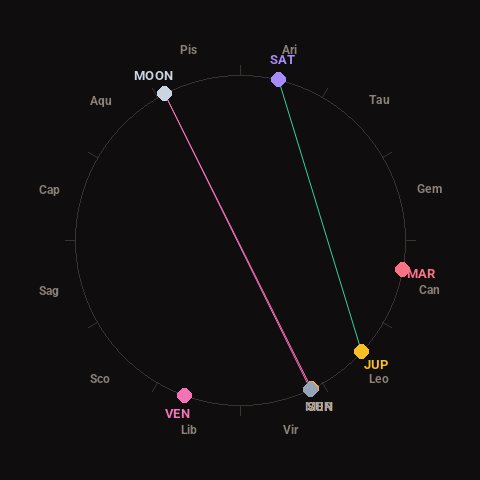
Moon: Full Moon (100% illuminated), in Pisces.
Notable planetary angles: Sun conjunct Mercury (0°), Jupiter trine Saturn (119°), Sun opposite Moon (178°), Moon opposite Mercury (178°).
Concurrent space weather: planetary Kp index 1.0; strongest recent solar flare: nothing notable.
This is a factual snapshot, not a claim of cause and effect – researchers are divided on whether lunar, planetary or solar factors influence seismic or weather activity. It’s included so readers can track the pattern for themselves over time.