
The U.S. State Department has updated its travel advisory for Macau to Level 3: Reconsider Travel. The advisory summary was revised in this update, while the broader guidance for the region remains unchanged: mainland China and Hong Kong remain at Level 2: Exercise Increased Caution.
For context, the State Department uses a four-level system. Level 1 means exercise normal precautions, Level 2 means exercise increased caution, Level 3 means reconsider travel, and Level 4 means do not travel. A Level 3 designation does not ban travel — it is an official recommendation that U.S. citizens think carefully about whether their trip is necessary and take extra steps if they do go.
Why the caution?
The regional advisories center on the arbitrary enforcement of local laws, including the use of exit bans — legal measures that can prevent travelers, including U.S. citizens, from leaving the country, sometimes without a fair or transparent legal process. The State Department also cites the risk of unjust arrest or detention in mainland China, and arbitrary enforcement of local laws in Hong Kong.
Who is affected?
This applies to U.S. citizens planning travel to Macau, as well as Americans currently in Macau, mainland China, or Hong Kong. Dual nationals and business travelers should pay particular attention, as exit bans have affected people traveling for work, family matters, or legal disputes in the past.
Practical steps to consider
If you have a trip planned to Macau, review whether it can be postponed or rerouted. If you must travel, enroll in the State Department’s Smart Traveler Enrollment Program (STEP) so the nearest embassy or consulate can reach you in an emergency, and keep digital and paper copies of your passport and key documents in separate locations. Make sure family members at home know your itinerary and how to reach you, and review your travel insurance policy — some policies change coverage when a Level 3 advisory is in effect, so check before departure.
Advisory levels can move up or down as conditions change, so if travel to the region is on your horizon, it’s worth rechecking the advisory before booking or departing.
This information comes from the U.S. Department of State’s Bureau of Consular Affairs travel advisory system.
Frequently Asked Questions
Does Level 3 mean I'm not allowed to travel to Macau?
No. Level 3 is a recommendation to reconsider travel, not a ban. U.S. citizens can still legally travel to Macau, but the State Department is advising you to weigh the risks carefully before going.
What is an exit ban, and could it affect me?
An exit ban is a legal measure that prevents someone from leaving the country, and the State Department warns these have been used in the region without a fair or transparent process. They have affected U.S. citizens involved in business disputes, legal matters, or family issues, even when the traveler was not charged with a crime.
I'm already in Macau. Should I leave immediately?
There is no instruction to evacuate — the advisory recommends caution, not emergency departure. If you're currently in Macau, enroll in STEP, keep your documents accessible, and stay in contact with the nearest U.S. consulate.
Do mainland China and Hong Kong have the same advisory level?
No. Mainland China and Hong Kong remain at Level 2 (Exercise Increased Caution), while Macau has been raised to Level 3 (Reconsider Travel). All three advisories cite concerns about arbitrary enforcement of local laws.
Keep tracking this:
Source: U.S. Department of State
Related Reading
Sky & Solar Conditions at the Time
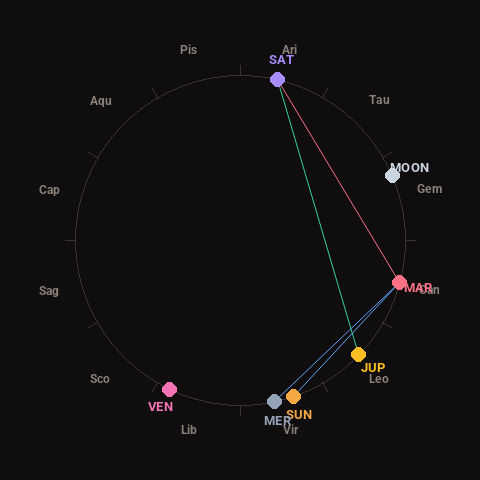
Moon: Last Quarter (53% illuminated), in Gemini.
Notable planetary angles: Jupiter trine Saturn (121°), Mars square Saturn (92°), Mercury sextile Mars (63°), Sun sextile Mars (56°).
Concurrent space weather: planetary Kp index 0.3; strongest recent solar flare: nothing notable.
This is a factual snapshot, not a claim of cause and effect – researchers are divided on whether lunar, planetary or solar factors influence seismic or weather activity. It’s included so readers can track the pattern for themselves over time.