
The U.S. State Department has raised its travel advisory for North Korea (officially the Democratic People’s Republic of Korea, or DPRK) to Level 4: Do Not Travel — the highest warning level the agency issues. The advisory, updated this week, urges Americans not to travel to the country for any reason, citing the continuing serious risk of arrest, long-term detention, and the threat of wrongful detention of U.S. citizens.
Level 4 is reserved for destinations where the U.S. government believes the risks to travelers are life-threatening or where it has very limited ability to help citizens in trouble. In North Korea’s case, there is no U.S. embassy in the country, and the U.S. government cannot provide emergency services to Americans there.
What this means for everyday travelers
Most Americans are not planning a trip to North Korea, but the advisory has practical implications worth knowing. U.S. passports are not valid for travel to, in, or through North Korea unless they receive special validation from the Secretary of State — a rarely granted exception. Tourist travel from the United States to North Korea has effectively been banned since 2017, following the detention and death of American student Otto Warmbier.
Anyone with family ties, humanitarian work, journalism assignments, or business interests touching the region should be aware that transit through North Korea is also covered by the passport restriction. Travelers heading to South Korea, China, or elsewhere in Northeast Asia are not affected — those routes remain open and operate normally.
Sensible watch-items and pointers:
1. If you or someone you know holds dual U.S. citizenship or has pending travel involving the DPRK, confirm that no itinerary transits North Korean territory or airspace-adjacent border crossings without explicit State Department validation.
2. Americans already in the region should enroll in the State Department’s Smart Traveler Enrollment Program (STEP) to receive alerts if conditions change.
3. Monitor the advisory level for neighboring countries separately — this escalation applies only to North Korea and does not change guidance for South Korea or Japan.
Data for this alert comes from the U.S. Department of State’s Bureau of Consular Affairs travel advisory system.
Frequently Asked Questions
Can I legally travel to North Korea as an American?
No — U.S. passports are not valid for travel to, in, or through North Korea unless the Secretary of State grants a special validation, which is rare and typically limited to journalists, humanitarian workers, or those with a demonstrated national interest.
Does this affect my trip to South Korea, Japan, or China?
No. The Level 4 advisory applies only to North Korea. Travel to South Korea, Japan, and China continues under their own separate advisory levels, and flights and tours in the region are operating normally.
Why was the advisory raised?
The State Department cites the continuing serious risk of arrest, long-term detention, and wrongful detention of U.S. citizens. Several Americans have been detained in North Korea in past years, and the U.S. has no embassy there to provide assistance.
What should I do if a family member is currently in North Korea?
Contact the State Department immediately — the U.S. has no diplomatic presence in the DPRK, and Sweden serves as the protecting power for U.S. interests there through its embassy in Pyongyang.
Keep tracking this:
Source: U.S. Department of State
Related Reading
Sky & Solar Conditions at the Time
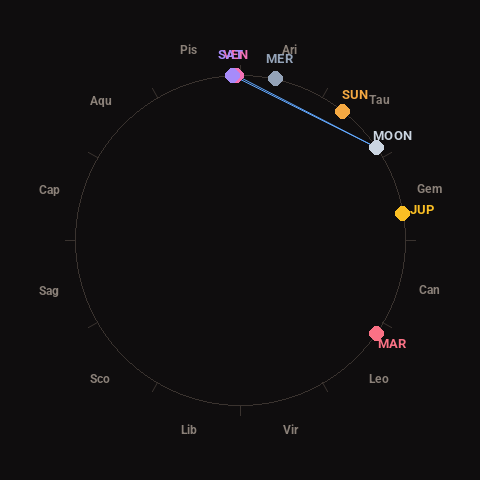
Moon: New Moon (2% illuminated), in Taurus.
Notable planetary angles: Venus conjunct Saturn (1°), Moon sextile Saturn (58°), Moon sextile Venus (57°).
Concurrent space weather: planetary Kp index 0.3; strongest recent solar flare: nothing notable.
This is a factual snapshot, not a claim of cause and effect – researchers are divided on whether lunar, planetary or solar factors influence seismic or weather activity. It’s included so readers can track the pattern for themselves over time.