
Cuba’s national power grid has suffered another island-wide collapse, knocking out electricity for millions of people across the country. Reports indicate the failure cascaded through the national system, affecting Havana and provinces across the island. This is the latest in a series of nationwide blackouts Cuba has experienced, driven by an aging grid, fuel shortages at power plants, and generating equipment that has struggled to keep up with demand.
For residents, this means no lights, no refrigeration, limited running water in areas that depend on electric pumps, and disrupted communications as cell towers exhaust their backup power. Hospitals and critical facilities typically switch to generators, but fuel for those generators has also been scarce in past events.
Why this happened
There is no indication this outage is connected to space weather or a geomagnetic storm. Cuban officials and independent reporting have consistently attributed the island’s recurring grid failures to decades of underinvestment, breakdowns at aging thermoelectric plants, and shortfalls in imported fuel. When one major plant trips offline under these fragile conditions, the whole system can cascade into a nationwide shutdown.
Practical takeaways, wherever you live:
Cuba’s situation is an extreme case, but extended outages can happen anywhere after storms, equipment failures, or wildfires. Three sensible steps: (1) keep a few days of water and non-perishable food on hand, plus a way to charge your phone such as a battery bank; (2) know that food in a closed refrigerator stays safe for about 4 hours, and a full freezer about 48 hours, so keep doors shut; (3) if you rely on powered medical equipment, have a backup plan and know where your nearest facility with generator power is located.
Restoration in past Cuban collapses has taken anywhere from many hours to several days, with power returning unevenly as plants are brought back online one by one. Watch for official updates from Cuban authorities on restoration progress.
Data on grid conditions and any related space-weather activity is monitored via NOAA’s Space Weather Prediction Center, which shows no geomagnetic storm driving this event.
Frequently Asked Questions
How long until power is restored in Cuba?
Based on previous island-wide collapses there, restoration typically takes from many hours to several days, with service returning unevenly as individual power plants are restarted and reconnected. There is no confirmed timeline yet for this event.
Is this outage connected to a solar storm or space weather?
No. There is no geomagnetic storm currently affecting Earth, and Cuban grid failures have been consistently traced to aging power plants, fuel shortages, and grid fragility – not space weather.
Could an outage like this affect the United States or other countries?
No. Cuba's grid is isolated to the island, so this failure has no impact on the US grid or other countries' power systems.
How do people cope during a multi-day blackout like this?
Residents typically rely on generators where fuel is available, ration refrigerated food early, and conserve phone batteries. The same basics apply anywhere: stored water, shelf-stable food, flashlights, and a charged power bank.
Keep tracking this:
Source: democracynow.org
Related Reading
Sky & Solar Conditions at the Time
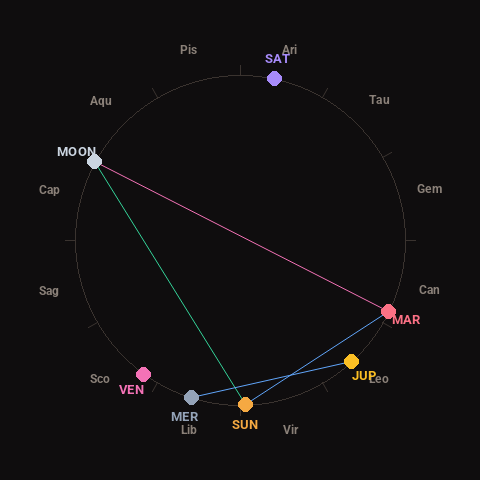
Moon: Waxing Gibbous (75% illuminated), in Capricorn.
Notable planetary angles: Sun trine Moon (120°), Mercury sextile Jupiter (60°), Sun sextile Mars (62°), Moon opposite Mars (177°).
Concurrent space weather: planetary Kp index 0.3; strongest recent solar flare: nothing notable.
This is a factual snapshot, not a claim of cause and effect – researchers are divided on whether lunar, planetary or solar factors influence seismic or weather activity. It’s included so readers can track the pattern for themselves over time.