
Cuban authorities say electricity has been restored across the island after a nationwide blackout knocked out power to the country’s roughly 11 million residents. The outage affected the entire national grid, leaving homes, businesses, hospitals, and public services without electricity until crews brought the system back online.
Events like this in Cuba have typically been traced to failures within the island’s aging power infrastructure – breakdowns at major generating plants or faults in the transmission network – rather than external causes. There is no indication this blackout was connected to a geomagnetic storm or other space-weather activity. Strong solar storms can, in rare cases, induce damaging currents in large transformers, but Cuba’s grid troubles in recent years have been driven by fuel shortages, worn equipment, and limited generating capacity.
What residents and observers should keep in mind
For people in Cuba, restoration after a full grid collapse is often gradual. Some neighborhoods may come back online before others, and brief additional outages are common while the system stabilizes. Practical steps during and after a major outage include:
Conserve phone battery – keep devices charged when power is available and use low-power mode during outages.
Protect food and medicine – keep refrigerator and freezer doors closed; a full freezer can keep food safe for roughly 48 hours if unopened.
Watch for follow-on disruptions – water pumping, fuel distribution, and communications can lag behind power restoration by hours or days.
For readers elsewhere, this event is a useful reminder that large-scale grid failures – whatever their cause – are a standing reason to keep flashlights, backup power banks, and a few days of water and non-perishable food on hand.
Data and updates on grid conditions come from official Cuban government and utility statements; space-weather context, when relevant, is monitored by NOAA’s Space Weather Prediction Center.
Frequently Asked Questions
Is power fully restored in Cuba?
Cuban authorities say the national grid has been restored after the nationwide blackout. In practice, restoration after a total collapse can be uneven, so some areas may experience brief additional outages as the system stabilizes.
Was this blackout caused by a solar storm or space weather?
There is no indication of that. Cuba's repeated grid failures have been attributed to aging infrastructure, fuel shortages, and power plant breakdowns, and no significant geomagnetic storm was in effect during this event.
How common are nationwide blackouts in Cuba?
Cuba has experienced several island-wide or near-nationwide outages in recent years as its generating plants and transmission network have deteriorated. They are among the most frequent large-scale grid failures reported anywhere in the world.
Could a blackout like this happen where I live?
Total nationwide collapses are rare in countries with modern, redundant grids, but large regional outages do happen from storms, equipment failure, and extreme demand. Keeping basic supplies – light, water, charged battery banks – is sensible preparation anywhere.
Keep tracking this:
Source: Modern Ghana
Related Reading
Sky & Solar Conditions at the Time
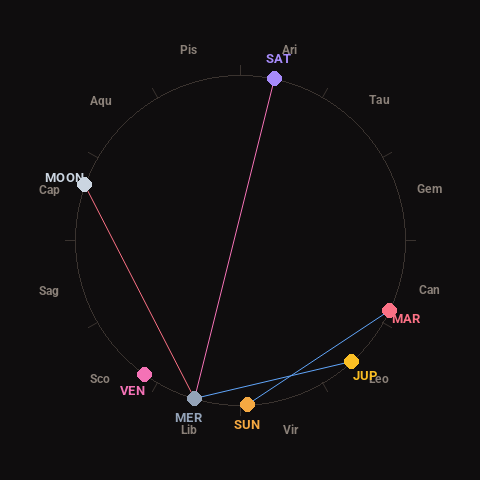
Moon: First Quarter (69% illuminated), in Capricorn.
Notable planetary angles: Mercury sextile Jupiter (59°), Sun sextile Mars (62°), Moon square Mercury (94°), Mercury opposite Saturn (176°).
Concurrent space weather: planetary Kp index 1.0; strongest recent solar flare: nothing notable.
This is a factual snapshot, not a claim of cause and effect – researchers are divided on whether lunar, planetary or solar factors influence seismic or weather activity. It’s included so readers can track the pattern for themselves over time.