
The U.S. State Department has issued its highest-level travel warning for North Korea (officially the Democratic People’s Republic of Korea, or DPRK), raising the country to Level 4: Do Not Travel. Level 4 is the top tier of the State Department’s four-level advisory system and is reserved for destinations where the risks to U.S. citizens are considered severe.
The advisory cites the continuing serious risk of arrest, long-term detention, and the threat of wrongful detention of U.S. citizens. North Korea has a documented history of detaining Americans, sometimes for years, often on charges related to minor or ordinary activities. The U.S. government has no embassy in North Korea and cannot provide routine or emergency consular services to Americans there; Sweden serves as the protecting power, but its ability to assist detained U.S. citizens is limited.
As part of this restriction, U.S. passports are not valid for travel to, in, or through North Korea unless they are specially validated for such travel by the Secretary of State. These special validations are granted only in very limited circumstances, typically involving journalism or humanitarian work that serves the U.S. national interest.
What This Means for Readers
For most Americans, nothing changes in daily life — this advisory applies to anyone considering travel to the DPRK, which is already extremely rare. The practical watch-items are:
• Check your itinerary: If you are planning travel in Northeast Asia, confirm your trip does not transit through North Korean territory or airspace on any connecting route.
• Know the passport rule: Attempting travel to the DPRK on a standard U.S. passport is prohibited and can carry legal consequences in addition to the safety risks.
• Family members of dual nationals: If you have relatives with ties to the region, make sure they are aware of the advisory and the limits on U.S. government assistance inside North Korea.
Travel advisories are updated as conditions change, so travelers to the broader region should review current guidance before departure. This alert is based on data from the U.S. Department of State’s travel advisory program.
Frequently Asked Questions
Why did North Korea get a Level 4 advisory?
The State Department cites the continuing serious risk of arrest, long-term detention, and wrongful detention of U.S. citizens. Level 4 ('Do Not Travel') is the highest warning level the department issues.
Can I legally travel to North Korea as a U.S. citizen?
Not on a regular passport. U.S. passports are invalid for travel to, in, or through the DPRK unless specially validated by the Secretary of State, which is granted only in very limited cases such as certain journalism or humanitarian work.
If an American is detained in North Korea, can the U.S. government help?
Only in a very limited way. The U.S. has no embassy in North Korea; Sweden acts as the protecting power, but its ability to visit and assist detained Americans is restricted by the DPRK government.
Does this affect travel to South Korea or other nearby countries?
No. This advisory applies only to North Korea. South Korea and other destinations in the region have their own, separate advisory levels, and normal travel to them is not restricted by this action.
Keep tracking this:
Source: U.S. Department of State
Related Reading
Sky & Solar Conditions at the Time
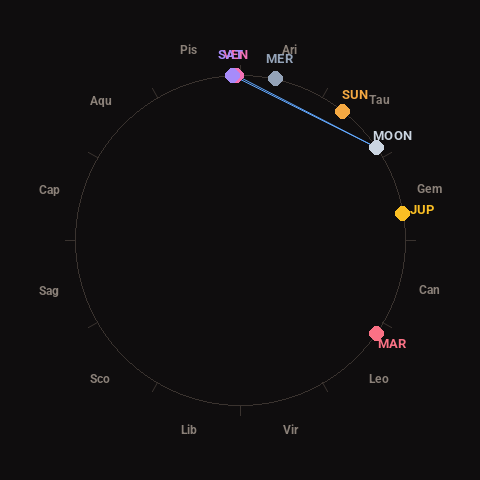
Moon: New Moon (2% illuminated), in Taurus.
Notable planetary angles: Venus conjunct Saturn (1°), Moon sextile Saturn (58°), Moon sextile Venus (57°).
Concurrent space weather: planetary Kp index 0.7; strongest recent solar flare: nothing notable.
This is a factual snapshot, not a claim of cause and effect – researchers are divided on whether lunar, planetary or solar factors influence seismic or weather activity. It’s included so readers can track the pattern for themselves over time.