
The U.S. State Department has raised its travel advisory for Bahrain to Level 3: Reconsider Travel, citing terrorism and armed conflict. The upgrade follows the onset of hostilities between the United States and Iran on February 28, 2026, and reflects what the advisory describes as an ongoing threat of drone and missile attacks from Iran in the region.
Bahrain is a small Gulf island nation that hosts the U.S. Navy’s Fifth Fleet headquarters, making it a location of particular strategic sensitivity during a U.S.-Iran conflict. The advisory notes that U.S. government employees now need special authorization to travel to Bahrain, and only family members aged 18 or older may accompany U.S. government personnel stationed there. Those restrictions on official personnel are often an early signal that conditions on the ground have become less predictable.
What this means for travelers and families
Level 3 is the second-highest of the State Department’s four advisory levels. It is not a ban on travel, but it is a formal recommendation to reconsider non-essential trips. Airlines continue to fly to Bahrain, but routes and schedules through Gulf airspace can change quickly when missile or drone threats rise, so travelers should expect possible delays, rerouting, or cancellations.
If you have travel planned to Bahrain or have family or friends there, sensible steps include: enrolling in the State Department’s Smart Traveler Enrollment Program (STEP) so the U.S. Embassy can reach you, confirming your flights directly with the airline before heading to the airport, and making sure travel documents and an exit plan are in order should commercial options tighten. U.S. citizens already in Bahrain should stay in touch with the U.S. Embassy in Manama and follow local security guidance.
This alert is based on the U.S. State Department’s official travel advisory for Bahrain, which is updated as conditions change.
Frequently Asked Questions
Does Level 3 mean I can't travel to Bahrain?
No. Level 3 is a recommendation to reconsider travel, not a legal prohibition. Airlines are still operating flights, but you should weigh the risks carefully and check with your carrier, since Gulf airspace disruptions can occur with little notice.
I have family in Bahrain. Are they in immediate danger?
The advisory cites an ongoing threat of drone and missile attacks from Iran, which is a real but not necessarily imminent risk to any specific person. Encourage family members to enroll in STEP, follow U.S. Embassy Manama guidance, and keep documents and an exit plan ready.
Will flights to or through the Gulf be cancelled?
Flights are currently operating, but missile and drone activity in the region can trigger sudden airspace closures or rerouting. Confirm your flight status directly with the airline on the day of travel and build flexibility into your plans.
Why are U.S. government employees restricted from traveling there?
The State Department now requires special authorization for official travel to Bahrain and limits accompanying family members to those 18 or older. Such restrictions typically reflect a security environment that has become less predictable, and they often precede or accompany broader advisory changes.
Keep tracking this:
Source: U.S. Department of State
Related Reading
Sky & Solar Conditions at the Time
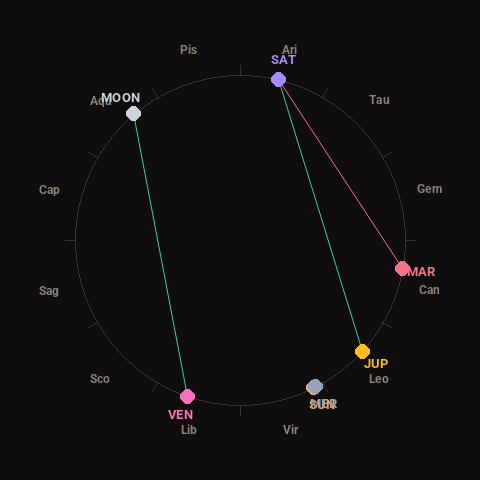
Moon: Full Moon (99% illuminated), in Aquarius.
Notable planetary angles: Sun conjunct Mercury (1°), Moon trine Venus (121°), Jupiter trine Saturn (119°), Mars square Saturn (86°).
Concurrent space weather: planetary Kp index 0.7; strongest recent solar flare: nothing notable.
This is a factual snapshot, not a claim of cause and effect – researchers are divided on whether lunar, planetary or solar factors influence seismic or weather activity. It’s included so readers can track the pattern for themselves over time.