
A report circulating under power-outage tracking feeds is actually a broadcast disruption, not an electrical grid failure. During Asian Games tennis coverage, fans in the Philippines lost the ability to watch matches featuring Filipino star Alexandra Eala after the broadcasting arrangement broke down. According to the report, the situation forced an expense of roughly 1 million pesos to secure coverage of Eala’s matches – a cost tied to broadcast rights and production, not to any damaged infrastructure.
What readers might notice
If you were following the Asian Games tennis tournament, you may have found that Eala’s matches were unavailable on the channels or streaming services you expected, or that coverage appeared late or only partially. Your electricity, internet, and phone service are not affected by this event. There are no reports of power failures, transformer damage, or grid instability connected to it.
Who is affected
The impact is limited to sports viewers – primarily fans in the Philippines hoping to watch Eala, one of the country’s top young tennis players, compete. Organizers and broadcasters bear the financial cost. There is no public safety or infrastructure impact of any kind.
Practical takeaways
First, check the official Asian Games broadcaster or streaming platform in your region for updated match schedules, as coverage arrangements can change quickly during a live tournament. Second, be cautious of outage-tracking alerts you see shared online – automated feeds sometimes mislabel news stories, and a quick check of the actual source can save confusion. Third, if you monitor grid conditions as part of your preparedness routine, nothing in this event changes the current picture for power reliability.
This alert was cross-checked against grid and geomagnetic monitoring data from NOAA’s Space Weather Prediction Center, which shows no storm conditions capable of affecting power systems at this time.
Frequently Asked Questions
Is there an actual power outage happening?
No. Despite the alert label, this event is a television/streaming broadcast blackout of Asian Games tennis coverage – no electrical grid failures or outages have been reported in connection with it.
Is this connected to space weather or a geomagnetic storm?
No. NOAA's Space Weather Prediction Center shows no significant geomagnetic activity, and the disruption is purely a broadcasting rights and coverage issue.
Why couldn't I watch Alexandra Eala's matches?
The broadcast arrangement for Asian Games tennis in the Philippines broke down, requiring an additional expense of about 1 million pesos to secure coverage, which caused gaps or delays in availability.
Should I prepare for any disruption from this?
No preparedness steps are needed. The only people affected are sports viewers, and the workaround is simply finding the official broadcaster or streaming service carrying the tournament in your region.
Keep tracking this:
Source: Tennis Tonic
Related Reading
Sky & Solar Conditions at the Time
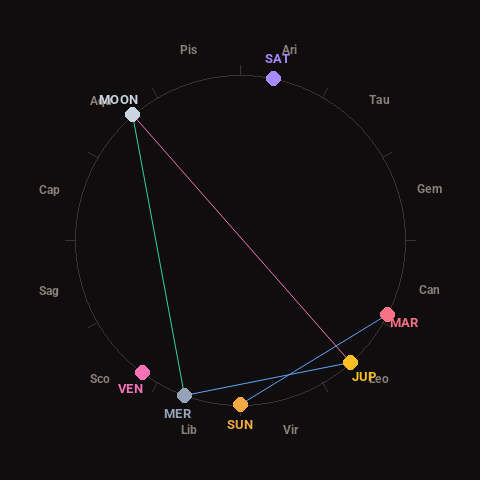
Moon: Waxing Gibbous (88% illuminated), in Aquarius.
Notable planetary angles: Moon trine Mercury (120°), Moon opposite Jupiter (178°), Mercury sextile Jupiter (62°), Sun sextile Mars (63°).
Concurrent space weather: planetary Kp index 0.3; strongest recent solar flare: nothing notable.
This is a factual snapshot, not a claim of cause and effect – researchers are divided on whether lunar, planetary or solar factors influence seismic or weather activity. It’s included so readers can track the pattern for themselves over time.