
The U.S. State Department has reissued its travel advisory for North Korea (officially the Democratic People’s Republic of Korea, or DPRK) at Level 4 — the highest level on its four-tier scale, meaning “Do Not Travel.” The advisory was reissued following a routine periodic review, with only minor edits, and the core warning remains unchanged: Americans should not travel to North Korea for any reason.
The reason cited is the continuing serious risk of arrest, long-term detention, and wrongful detention of U.S. nationals. North Korea has detained a number of American citizens over the years, sometimes for long periods, and the U.S. government has extremely limited ability to help anyone held there.
One important detail many readers may not know: a standard U.S. passport is not valid for travel to, in, or through North Korea. It can only be used if the Secretary of State grants a special validation, which is rare and typically reserved for urgent humanitarian or official purposes. If you don’t have that special validation in hand, attempting the trip is not just dangerous — it isn’t legally permitted under U.S. passport rules.
Who is affected? Primarily journalists, humanitarian workers, academics, and tourists who may have considered visiting via third-country tour operators, most commonly through China. There is no U.S. embassy in Pyongyang; Sweden serves as the protecting power for U.S. interests, meaning consular help is slow and limited even in the best circumstances.
What to keep in mind
First, if you or a family member had any travel plans involving North Korea, they should be canceled — full stop. Second, U.S. citizens currently anywhere in the region should make sure they are enrolled in the State Department’s Smart Traveler Enrollment Program (STEP) so they receive alerts. Third, if you know an American currently in the DPRK, the State Department urges that they depart as soon as safely possible and that family maintain regular contact plans.
This advisory is issued and maintained by the U.S. Department of State Bureau of Consular Affairs, which reviews country advisories on a regular cycle.
Frequently Asked Questions
Did something new happen in North Korea to trigger this?
No new incident is cited — this was a routine periodic reissue with minor edits. North Korea has been at Level 4 for years due to the ongoing risk of wrongful detention of Americans.
Can I legally visit North Korea as a U.S. citizen?
Not with a normal passport. U.S. passports are invalid for travel to, in, or through the DPRK unless the Secretary of State grants a special validation, which is rarely given.
What happens if an American is detained there?
The U.S. has no embassy in Pyongyang, so assistance is extremely limited and handled indirectly through Sweden. Past cases have involved months or years of detention, which is exactly why the advisory exists.
Does this affect travel to South Korea, Japan, or China?
No. This advisory applies only to North Korea. South Korea remains a popular, lower-level destination, though travelers in the region should still enroll in STEP for updates.
Keep tracking this:
Source: U.S. Department of State
Related Reading
Sky & Solar Conditions at the Time
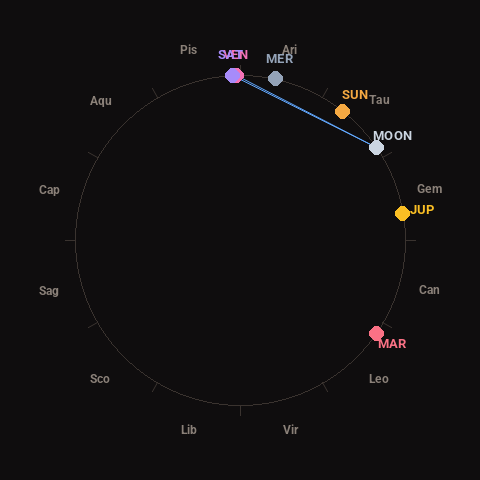
Moon: New Moon (2% illuminated), in Taurus.
Notable planetary angles: Venus conjunct Saturn (1°), Moon sextile Saturn (58°), Moon sextile Venus (57°).
Concurrent space weather: planetary Kp index 0.3; strongest recent solar flare: nothing notable.
This is a factual snapshot, not a claim of cause and effect – researchers are divided on whether lunar, planetary or solar factors influence seismic or weather activity. It’s included so readers can track the pattern for themselves over time.