
The U.S. State Department has reissued its highest-level travel warning for North Korea, keeping the country at Level 4: Do Not Travel. The advisory was renewed after a routine periodic review, with only minor edits, but the core message is unchanged: Americans should not travel to the Democratic People’s Republic of Korea (DPRK) for any reason.
The reason for the warning is the continuing serious risk of arrest, long-term detention, and wrongful detention of U.S. nationals. North Korea has a documented history of detaining foreign visitors, sometimes for years, often over minor or unclear alleged offenses. Because the United States has no diplomatic relations with North Korea and no embassy in Pyongyang, the U.S. government cannot provide consular services to Americans detained there. Sweden serves as the protecting power for U.S. interests, but its ability to help is limited.
There is also a legal restriction most travelers may not realize: U.S. passports are not valid for travel to, in, or through North Korea unless the Secretary of State grants a special validation. These validations are rare and are generally limited to narrowly defined purposes, such as certain humanitarian or journalistic travel. Attempting to visit without one can carry legal consequences at home in addition to the dangers abroad.
What this means for you
For most readers, nothing changes day to day. There is no commercial tourism from the U.S. to North Korea, and no direct flights. This advisory matters mainly to aid workers, journalists, academics, and anyone with family ties to the region who might otherwise consider travel through a third country such as China.
Sensible watch-items: First, if you know anyone considering travel that would route through or into North Korea, make sure they understand a U.S. passport is not valid for that trip without special validation. Second, dual U.S. nationals and Korean-American travelers should be aware that North Korea may treat them solely as its own citizens, further limiting any outside assistance. Third, anyone with a legitimate need to travel should monitor State Department updates and contact the department directly about the special validation process well before making any plans.
This advisory is issued and maintained by the U.S. Department of State’s Bureau of Consular Affairs, which reviews country travel advisories on a regular schedule.
Frequently Asked Questions
Is this a new warning or a change in the situation?
No. North Korea has been at Level 4, the highest advisory level, for years. This reissue followed a routine periodic review with only minor edits; the underlying risk assessment did not change.
Can I legally travel to North Korea as a U.S. citizen?
Not with a standard U.S. passport. U.S. passports are invalid for travel to, in, or through North Korea unless the Secretary of State grants a special validation, which is rarely approved.
What happens if an American is detained in North Korea?
The U.S. has no embassy in Pyongyang and no diplomatic relations with North Korea, so consular help is extremely limited. Sweden acts as the protecting power for U.S. interests, but detained Americans have in past cases been held for extended periods.
Does this affect travel to South Korea or elsewhere in the region?
No. This advisory applies only to North Korea. South Korea remains at a much lower advisory level, and normal travel to other countries in the region is unaffected.
Keep tracking this:
Source: U.S. Department of State
Related Reading
Sky & Solar Conditions at the Time
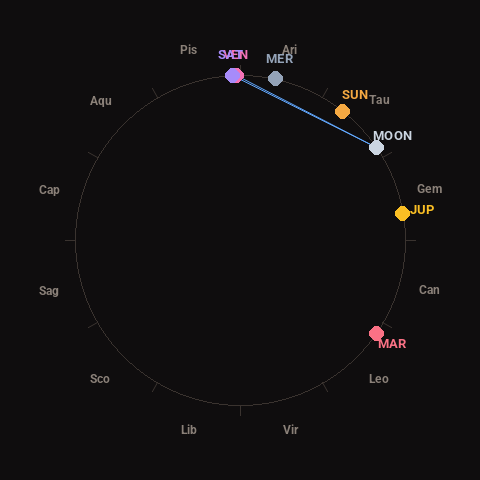
Moon: New Moon (2% illuminated), in Taurus.
Notable planetary angles: Venus conjunct Saturn (1°), Moon sextile Saturn (58°), Moon sextile Venus (57°).
Concurrent space weather: planetary Kp index 0.3; strongest recent solar flare: nothing notable.
This is a factual snapshot, not a claim of cause and effect – researchers are divided on whether lunar, planetary or solar factors influence seismic or weather activity. It’s included so readers can track the pattern for themselves over time.