
The U.S. State Department has raised its travel advisory for Oman to Level 3: Reconsider Travel, citing risks of armed conflict and terrorism. Level 3 is the second-highest of the department’s four travel alert levels, meaning Americans are advised to think carefully before traveling and to have firm reasons for any planned trips.
The escalation follows the onset of hostilities between the United States and Iran on February 28, 2026. Since then, there has been an ongoing threat of drone and missile attacks from Iran affecting the wider region, including Oman, which sits directly across the Strait of Hormuz from Iranian territory. The advisory also notes a risk of terrorist violence, including potential terrorist attacks within Oman, and warns that some areas of the country carry increased risk.
One detail worth noting: as of August 30, 2026, family members are once again permitted to join U.S. government employees working in Oman. This suggests conditions are being managed rather than rapidly deteriorating, but the Level 3 designation reflects real and continuing regional risk.
Who is affected
American citizens in Oman or with upcoming travel plans, U.S. military families, business travelers, and tourists transiting Gulf airspace or seaports. Travelers with connecting flights through the region should monitor their itineraries, as airspace restrictions can shift with little notice during periods of regional tension.
Sensible steps: If you are in Oman or planning to go, enroll in the State Department’s Smart Traveler Enrollment Program (STEP) so the embassy can reach you in an emergency. Review your travel insurance for conflict-related exclusions, keep your documents current, and know the location of the nearest U.S. embassy or consulate. Consider deferring nonessential trips until the advisory level changes.
Data and advisory language come from the U.S. Department of State’s official Travel Advisory for Oman.
Frequently Asked Questions
I'm already in Oman — should I leave immediately?
The advisory does not order departure; it advises reconsidering travel. If you are there, enroll in STEP, stay aware of local news and embassy messages, and keep a contingency plan to leave on short notice if conditions worsen.
What does Level 3 actually mean?
It is the State Department's second-highest level, meaning 'Reconsider Travel' — a step below Level 4 'Do Not Travel.' It signals serious risks but not a mandatory evacuation.
Why is Oman at risk if the conflict is between the U.S. and Iran?
Oman lies directly across the Strait of Hormuz from Iran, and the advisory cites an ongoing threat of drone and missile attacks from Iran since hostilities began on February 28, 2026, along with terrorism risk inside the country.
Will flights to or through the Gulf be disrupted?
Possibly. Airspace over the region can close or reroute with little warning during active hostilities, so check directly with your airline before departure and allow flexibility in your plans.
Keep tracking this:
Source: U.S. Department of State
Related Reading
Sky & Solar Conditions at the Time
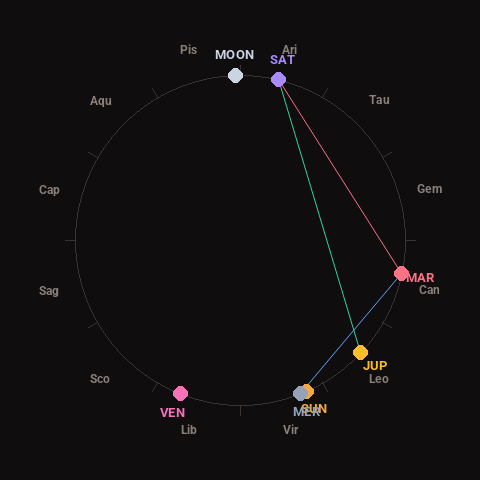
Moon: Full Moon (96% illuminated), in Pisces.
Notable planetary angles: Jupiter trine Saturn (119°), Mars square Saturn (88°), Sun conjunct Mercury (2°), Mercury sextile Mars (57°).
Concurrent space weather: planetary Kp index 1.0; strongest recent solar flare: nothing notable.
This is a factual snapshot, not a claim of cause and effect – researchers are divided on whether lunar, planetary or solar factors influence seismic or weather activity. It’s included so readers can track the pattern for themselves over time.