
The U.S. State Department has raised its travel advisory for Bahrain to Level 3: Reconsider Travel, citing terrorism and armed conflict. The escalation follows the onset of hostilities between the United States and Iran on February 28, 2026, and an ongoing threat of drone and missile attacks from Iran targeting the region.
What changed
Bahrain sits just across the Persian Gulf from Iran and hosts the U.S. Navy’s Fifth Fleet headquarters, making it a potential target during regional conflict. Under the updated advisory, U.S. government employees now need special authorization to travel to Bahrain, and only family members aged 18 or older may accompany employees stationed there. That kind of restriction is a meaningful signal: when the State Department limits who can join personnel in-country, it reflects a genuine safety concern, not routine caution.
Who is affected: Americans currently in Bahrain, anyone with upcoming travel to the island nation, and family members of U.S. personnel stationed there. Bahrain is a major Gulf aviation hub, so travelers transiting through Bahrain International Airport should also check with their airline about schedule changes, rerouting, or airspace restrictions in the region.
What readers might notice: Higher airline ticket prices or cancelled flights on Gulf routes, airlines rerouting around affected airspace (which can add hours to flights between Europe and Asia), and heightened security at U.S. facilities in the region.
Practical pointers:
First, if you are in Bahrain now, enroll in the Smart Traveler Enrollment Program (STEP) so the U.S. Embassy can reach you, keep your documents accessible, and know where the nearest shelter or hardened structure is in case of a missile or drone alert. Second, if you have upcoming travel, contact your airline and travel insurer now — Level 3 advisories can affect cancellation coverage and rebooking options. Third, monitor the situation daily; regional hostilities can shift quickly, and the advisory level could move up or down with little notice.
This information comes from the U.S. Department of State’s Bureau of Consular Affairs travel advisory system.
Frequently Asked Questions
Should I cancel my trip to Bahrain?
The State Department is advising Americans to reconsider travel, not forbidding it. Given the ongoing threat of drone and missile attacks tied to the U.S.-Iran conflict, postponing nonessential travel is the prudent choice; contact your airline and insurer about rebooking options now.
I'm an American in Bahrain right now — what should I do?
Enroll in the Smart Traveler Enrollment Program (STEP) so the U.S. Embassy can contact you, keep your travel documents handy, and stay alert to local emergency warnings. Follow instructions from Bahraini authorities and the embassy if air-raid or missile alerts sound.
Will flights through the Gulf be disrupted?
Possibly. Bahrain is a regional aviation hub, and conflict in the Gulf often leads to airspace restrictions or rerouting, which can delay or lengthen flights between Europe, the Middle East, and Asia. Check directly with your airline before departing.
Why is Bahrain specifically at risk?
Bahrain hosts the U.S. Navy's Fifth Fleet headquarters and lies close to Iran, placing it within range of drone and missile threats tied to the hostilities that began February 28, 2026. That military presence is a key reason the advisory was raised.
Keep tracking this:
Source: U.S. Department of State
Related Reading
Sky & Solar Conditions at the Time
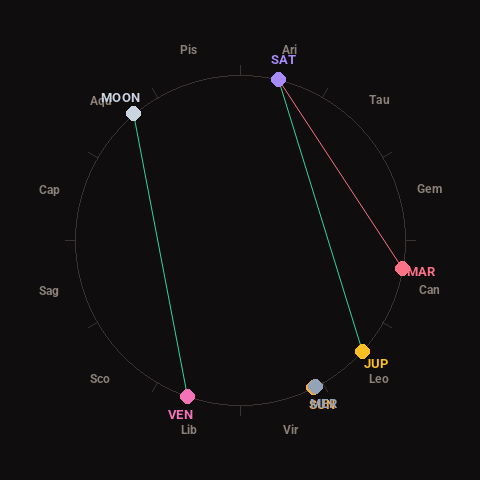
Moon: Full Moon (99% illuminated), in Aquarius.
Notable planetary angles: Sun conjunct Mercury (1°), Moon trine Venus (121°), Jupiter trine Saturn (119°), Mars square Saturn (86°).
Concurrent space weather: planetary Kp index 1.0; strongest recent solar flare: nothing notable.
This is a factual snapshot, not a claim of cause and effect – researchers are divided on whether lunar, planetary or solar factors influence seismic or weather activity. It’s included so readers can track the pattern for themselves over time.