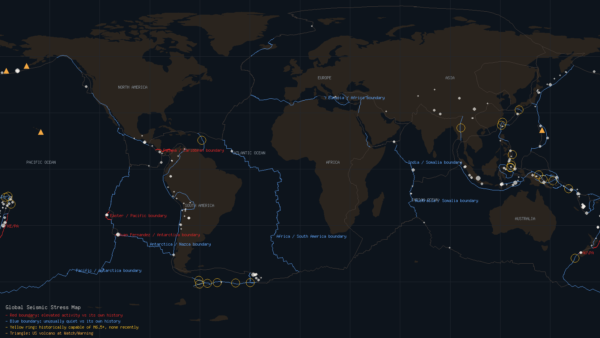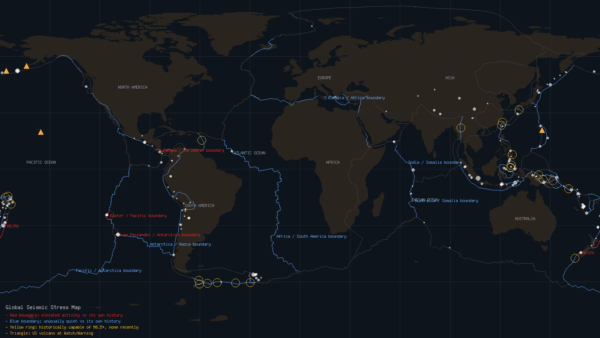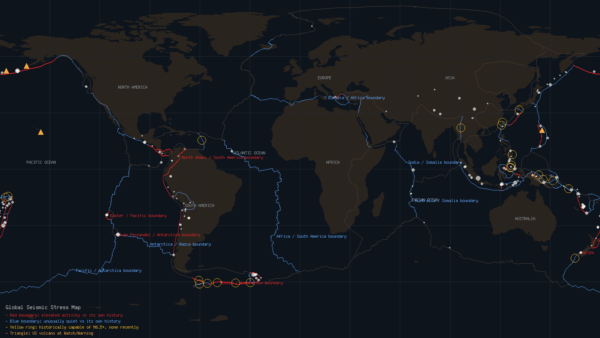

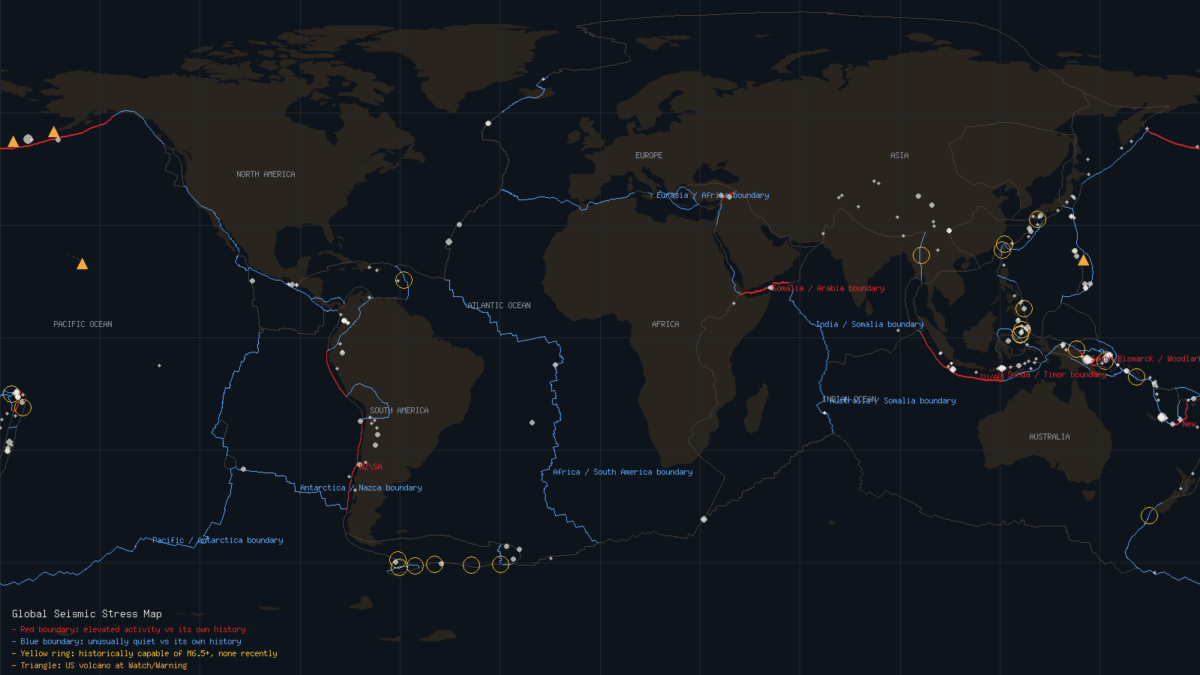
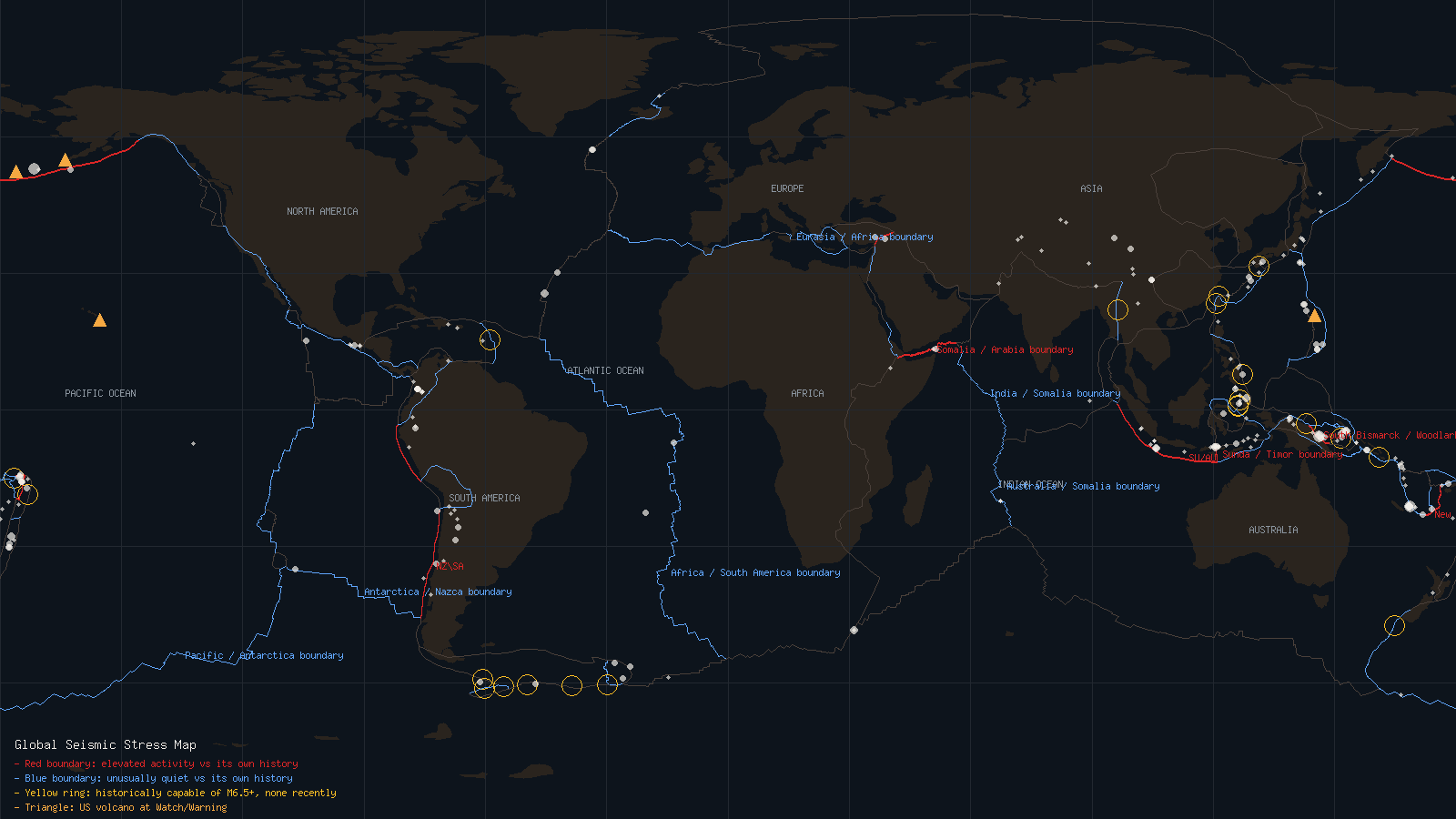
Every two weeks, we compare earthquake activity in major fault zones worldwide against each zone’s own long-term average. A zone that’s normally active but has gone unusually quiet may be building up pressure instead of releasing it regularly – here’s what the data shows as of September 28, 2026.
Zones With More Earthquakes Than Usual
- New Hebrides / Australia boundary: 2 earthquakes in the last 14 days, releasing about 18.79x the seismic energy this zone usually releases in two weeks
- NZ\SA: 1 earthquakes in the last 14 days, releasing about 14.15x the seismic energy this zone usually releases in two weeks
- Sunda / Timor boundary: 2 earthquakes in the last 14 days, releasing about 11.92x the seismic energy this zone usually releases in two weeks – mostly from one large earthquake and its aftershocks
- SU/AU: 1 earthquakes in the last 14 days, releasing about 9.81x the seismic energy this zone usually releases in two weeks
- Somalia / Arabia boundary: 2 earthquakes in the last 14 days, releasing about 7.13x the seismic energy this zone usually releases in two weeks
- South Bismarck / Woodlark boundary: 5 earthquakes in the last 14 days, releasing about 6.85x the seismic energy this zone usually releases in two weeks – mostly from one large earthquake and its aftershocks
Zones That Have Gone Quiet
- Australia / Somalia boundary: only 0 earthquakes in the last 14 days, vs a usual average of about 0.05
- Eurasia / Africa boundary: only 0 earthquakes in the last 14 days, vs a usual average of about 0.04
- India / Somalia boundary: only 0 earthquakes in the last 14 days, vs a usual average of about 0.08
- Africa / South America boundary: only 0 earthquakes in the last 14 days, vs a usual average of about 0.06
- Antarctica / Nazca boundary: only 0 earthquakes in the last 14 days, vs a usual average of about 0.05
- Pacific / Antarctica boundary: only 0 earthquakes in the last 14 days, vs a usual average of about 0.08
Our Track Record So Far
We just started tracking outcomes for this report – check back here in a few months, once enough flagged zones are old enough to evaluate, for real track-record numbers.
This is a pattern-tracking report over real USGS data, not an earthquake prediction – no scientist can predict exactly when or where an earthquake will strike, and a “quiet” zone is not guaranteed to have a big one.